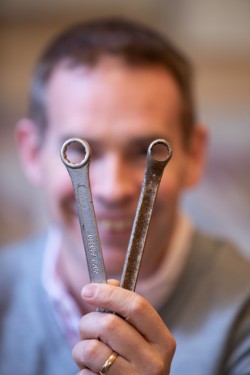
When it comes to securing exclusivity in the life sciences sector, few bring the depth of insight and strategic clarity that Francis Tierney offers. A qualified UK and European patent attorney since the 1990s, Francis blends decades of in-house experience with a boutique advisory approach that gives life sciences companies a genuine edge—particularly in pharmaceuticals and small molecule therapeutics. In this article PatWorld discusses with Francis Exclusivity in Pharma, and Navigating the Life Sciences Patent Landscape.
From In-House to Boutique: A Unique Perspective
Francis began his IP career in-house, spending nearly three decades advising on agrochemical and pharmaceutical innovations before moving into private practice. This “poacher turned gamekeeper” transition, as he jokingly puts it, equips him with an intuitive understanding of how clients operate and what they truly need from their IP counsel.
Now at Patent Boutique, he works closely with clients on prosecution, opposition, appeal work, due diligence, and strategic portfolio development. His tailored, hands-on approach is a hallmark of the firm.
The Five Pillars of Patent Strategy in Pharma
Francis sees five key IP considerations for life sciences companies today:
Confidentiality: With increased pressure to publish and attract investors, ensuring non-disclosure before filing is vital.
Timing of Filings: Filing too early can lead to protection ending earlier during peak sales; too late, and companies risk being scooped.
Collaboration with R&D: Patent attorneys need to work closely with research teams to react quickly to emerging data and shape strategy in real time.
Market Awareness: Limited budgets mean companies must prioritise filings in jurisdictions most critical to commercial success.
AI: Keeping abreast of developments in, and the increasing capabilities of, AI.
Getting Patent Drafting Right
Drafting for small molecules brings its own hazards. “If you draft too broadly, not only might your claims be rejected, but you risk creating your own most damaging prior art,” Francis warns. He emphasises the importance of including strong biological data—especially for markets like China—and ensuring that patents will remain enforceable 20+ years down the line, particularly when linked to SPCs.
US vs. Europe: Avoiding a Common Pitfall
One of the most frequent issues Francis sees is US-based companies underestimating global disclosure rules. “There’s a grace period in the US, but not in Europe. Smaller companies often publish during the priority year, which can be problematic for later filings,” he explains.
He also notes how different legal frameworks—such as the EPO’s problem-solution approach versus the US’s obviousness standard—can yield very different outcomes from the same prior art.
Early-Stage Advice: Flexible, Focused, and Fast
Emerging biotech companies often need more tailored support, especially when balancing speed, disclosure, and credibility for investors. Francis helps them navigate this by streamlining prosecution strategies and ensuring they have grantable, meaningful patents to support licensing or M&A activities.
“Established pharma companies have structured IP processes. Start-ups don’t—so we help them build systems and strategies that are credible and cost-effective,” he says.
Patent Portfolios as Deal Enablers
Whether supporting collaborations or preparing for acquisition, Francis views robust IP portfolios as central. “You need to show what you’ve got, but also what you might be developing. Priority filings before a deal are key to demonstrating value,” he advises.
AI in Drug Discovery: A New Frontier, with Caveats
Francis acknowledges AI as a potential game-changer in small molecule R&D, but with caution. “If AI knows everything, where’s the inventive step?” he asks. He sees a possible future where narrower, more focused patent claims become the norm due to more precise AI targeting—but also where validity could well be questioned if algorithms become standardised tools.
A Call for Change: Grace Period Reform
If he could change one thing in the UK or EU IP landscape, Francis would introduce a broader grace period. “It would protect researchers from the kind of accidental disclosures that can destroy patentability. A safety net—not to rely on, but to support honest mistakes.”
The Boutique Advantage
At Patent Boutique, Francis and his colleagues offer flexibility, cost transparency, and a collaborative approach. “We were cloud-based from the start, so our clients benefit from seamless document transfer, real-time communication, and scalable support,” he notes. Clients also gain access to a wider network of trusted attorneys—competency, not size or shine, is what counts.
Outside the Office: Gardening and Grandkids
Beyond the world of SPCs and claim drafting, Francis is a proud grandfather and a keen (and increasingly enthusiastic) gardener. “It’s such a contrast to patent law—where you wait years for a result. In the garden, you plant something and within weeks, there’s colour, texture, and reward,” he says. His latest pride? A set of stunning Alstroemeria —particularly a variety called Indian Summer.
Connect with Francis Tierney 🔗 Francis Tierney on LinkedIn 🔗 Patent Boutique – A specialist firm offering high-level, strategic patent services tailored to life sciences and beyond.
P.S. How PatWorld Supports Patent Attorneys Like Francis PatWorld supports IP professionals with expert-led Patent, Trademark, and Design Search services. Whether you’re advising clients on exclusivity strategies, preparing for prosecution or opposition, or managing complex portfolios, our tailored search solutions deliver the clarity and confidence you need to move forward.
From defense to design, gas turbines to gadgets, Vikki Townsend’s three-decade journey through the world of intellectual property (IP) is as dynamic and multidimensional as the technologies she helps protect. Currently Senior Managing Attorney at Pure Ideas, Vikki leads a team of patent and trademark attorneys with a focus on helping SMEs not only secure their innovations but also understand how to maximize their commercial value.
Falling into IP — and Finding a Calling
“I sort of fell into IP by happy accident,” Vikki recalls. With dual master’s degrees in engineering and biomedical engineering, she was on a path toward medical technology when job opportunities in the field proved elusive. A patent officer role at the Ministry of Defense opened the door to a whole new world. “I didn’t know what to expect,” she says, “but I found I really enjoyed it.”
Her early experiences included interrogating the inner workings of everyday objects in job interviews and working with inventions that reminded her of her grandfather’s love of quirky gadgets. It quickly became clear: this wasn’t just a job, it was a perfect fit.
From Jet Engines to Software to SatNav
Over the years, Vikki has worked across engineering, aerospace, medical devices, and software. One standout experience involved reverse-engineering gas turbine engines to better understand geared architectures. Another was working on early patents for satellite navigation systems, before satnav became a staple in every smartphone.
What links these disparate sectors? “You see things go from concept to something really cool and everywhere,” she says. “You never stop learning.”
A Practical IP Partner for SMEs
At Pure Ideas, Vikki’s passion lies in helping small and medium-sized businesses use IP as a strategic tool, not just a legal checkbox.
“Many SMEs come to us thinking ‘I need to protect this,’ but often they don’t realize the bigger picture,” she explains. Vikki and her team begin by understanding a client’s commercial goals: Will the product be made in-house? Will they need collaborators? What are the real risks and opportunities?
“We give them a wider understanding, not just of registered rights like patents and trademarks, but also how to safeguard trade secrets, negotiate access to third-party IP, and avoid unintentional infringement.”
IP in Action: Webinars, Podcasts, and Warzones
A natural communicator, Vikki has become an influential voice in IP education. Through webinars and podcasts, she tackles real-world challenges SMEs face, from drafting effective IP agreements to navigating collaborative innovation.
One compelling initiative is her work with Remote Area Risk International, a network helping to solve medical challenges in remote and high-risk areas. With her defense and medtech background, Vikki offers guidance on protecting innovations in extreme environments.
“It’s amazing what people can come up with using limited resources. That ingenuity deserves protection,” she says.
Championing Inclusion and Innovation
Vikki is also a vocal advocate for diversity and inclusion in the IP world, having worked with Rolls-Royce’s Inclusion Council and IP Inclusive. Her passion project? Supporting the IP sector’s menopause initiative — a topic she believes is long overdue for open discussion.
“I’ve always felt a bit of a square peg,” she admits. “But I’ve found communities where difference is celebrated. That’s where I belong.”
Life Beyond Law: Boxing, Theater, and the Big Screen
To decompress from the pressures of senior IP practice, Vikki turns to karate, boxing, and the performing arts. She volunteers at a local performing arts academy and even made a cameo as a barmaid in a short horror film that went on to win awards at the Brighton Rocks International Film Festival.
“It was a happy accident,” she laughs, echoing the phrase that started her IP journey.
Advice for Aspiring IP Professionals
To young professionals, especially women, Vikki says: “Go for it. Believe in yourself. You’ll face challenges, but this is a rewarding career that never gets boring.”
She adds, “You don’t need to come from an elite university. Curiosity, creativity, and communication are just as valuable.”
Why This Matters to SMEs
Vikki’s story embodies the ethos behind PatWorld’s mission: connecting innovators with the tools, insights, and people they need to succeed. SMEs often underestimate the value of their ideas or overestimate what IP registration alone can achieve. Through expert insights from professionals like Vikki, and by providing access to comprehensive IP searches, PatWorld helps demystify intellectual property and supports innovation from idea to industry.
To get in contact with Vikki visit Pure Ideas or connect with her on LinkedIn.
PatWorld IP Search Services
PatWorld supports patent attorneys like Vikki with professional, reliable IP search services that underpin smart, strategic decision-making. Whether you’re preparing to file, evaluating prior art, or advising clients on freedom to operate, our search solutions are built to support your success.
Stephen Carter, a seasoned UK Patent Attorney and founder of The Intellectual Property Works, stumbled into the world of intellectual property (IP) almost by accident. With a background in engineering, inspired by his grandfather’s work on steam catapults for aircraft carriers and his father’s knack for dismantling and rebuilding Volkswagen Beetles, Stephen pursued an engineering degree and a master’s at Bath University. Unsure of his next step, a visit to the university’s career center introduced him to the profession of patent attorney, a role he had never heard of before. After spending half a day with a Bath-based firm, he was hooked. “It sounded quite interesting,” Stephen recalls, and that curiosity led him to apply to various firms, landing a role that ignited a decades-long career.
What keeps Stephen passionate after over 30 years in the field? It’s the blend of cutting-edge technology and the chance to make a tangible impact on businesses. “Initially, it was the technology side of things, seeing new innovations all the time,” he explains. Over time, his focus expanded to include the business side, where he helps companies leverage IP to drive success, particularly for startups and scale-ups.
Founding The Intellectual Property Works: A Return to Impactful Work
After years in large law firms, Stephen founded The Intellectual Property Works to reconnect with the types of clients he enjoyed most: innovative startups and scale-ups. “I was moving away from working with exciting, smaller technology businesses,” he says, reflecting on his time in corporate IP. Going independent allowed him to focus on these dynamic companies, where IP is often a cornerstone of their value. “Those are the businesses I enjoyed working with most,” he notes, driven by the opportunity to make a real difference in their growth and success.
IP as a Business Tool, Not Just a Legal Checkbox
For Stephen, IP is far more than a legal necessity—it’s a strategic business tool. He emphasizes the importance of aligning IP strategies with a company’s broader goals. “The first conversation I have with a small or medium-sized business isn’t about IP at all,” he says. “It’s about understanding what they’re trying to achieve, their growth plans, and whether they’re seeking investment or planning an exit.” This approach ensures that IP efforts, whether securing patents or protecting trade secrets, directly support the business’s objectives.
One common misconception Stephen encounters is that startups equate IP solely with patents, assuming they’re too expensive or irrelevant. “They think IP is just patents, and patents are costly, so they dismiss it,” he explains. To counter this, he educates clients about the broader IP landscape, including copyright and trade secrets, which often arise automatically and require no registration fees. By focusing on the underlying intellectual assets, like technical know-how or software code, Stephen helps businesses recognize and protect the value they’re already creating.
Simplifying the Complex for Founders
Balancing the technical depth of IP with accessibility for non-legal founders is a key part of Stephen’s approach. He avoids overwhelming clients with legal jargon or intricate processes. “Most small businesses don’t care about the mechanics of getting a patent,” he says. Instead, he focuses on the business impact, offering clear recommendations tailored to their goals. For example, when addressing patent office objections, Stephen assesses whether pursuing a patent still aligns with the company’s current strategy and provides straightforward options, such as, “Here’s what I think you should do, and here’s the impact on protection and costs.”
His frameworks, like conducting IP audits, help businesses understand their intellectual assets and devise tailored strategies. “It’s not one-size-fits-all,” he stresses, ensuring each client receives a customized approach that reflects their unique needs.
The Evolving Role of IP in Business
Reflecting on his career, Stephen notes a significant shift in how IP is perceived across the business lifecycle. “Thirty years ago, IP was often an afterthought, handled within R&D budgets,” he says. Today, it’s a board-level priority, driven by increased awareness of IP’s role in business value and risk management. High-profile IP disputes, like those in the cell phone industry, have further elevated its visibility in mainstream media, making businesses more conscious of both their own IP and potential risks from competitors.
Missed Opportunities and Strategic Solutions
One of the biggest missed opportunities Stephen sees is the underuse of trade secrets, especially for software-driven innovations. “There’s still too much focus on patents from both businesses and investors,” he says. He advocates a “trade secret first” approach, where businesses prioritize protecting confidential information and selectively pursue patents when strategic. During fundraising, Stephen helps clients craft a compelling IP narrative that reassures investors by demonstrating how their approach protects business value, even if it doesn’t involve extensive patent filings.
A standout project involved helping a client prepare for a successful fundraise by addressing IP ownership issues well before due diligence. “Ownership problems are ticking time bombs,” Stephen warns, noting that issues often surface only during investment or sale processes. By conducting early audits and ensuring IP flows correctly into the business, he helps clients avoid costly surprises and build investor confidence.
Building an IP-Conscious Culture
For Stephen, embedding IP into a company’s culture starts with mindset. He encourages founders to see their innovations, whether technical know-how or product development, as valuable IP assets. Through his role as a fractional IP counsel, Stephen conducts bite-sized training sessions tailored to each business, focusing on practical steps like safeguarding trade secrets. “I tie it to the reality of their business,” he says, avoiding abstract legal discussions in favor of real-world examples that resonate with employees.
The Power of Relationships
Networking has been a cornerstone of Stephen’s career. Relationships with overseas attorneys, UK firms, and past clients have not only driven referrals but also enabled him to connect clients with the right expertise globally. “Relationships are everything,” he says, crediting his network for helping him find trusted partners for clients’ international IP needs and for sustaining his consultancy through referrals and repeat engagements.
Beyond the Office: CrossFit and Balance
When not strategizing with clients, Stephen unwinds with CrossFit, a passion that keeps him energized. “It allows me to switch off and feel ready for the day,” he says. While his son competes at a high level, Stephen enjoys team-based competitions for their social and fun atmosphere, even if he occasionally questions why a 54-year-old is pushing himself so hard. “It keeps me sane,” he laughs.
Connect with Stephen & The Intellectual Property Works
Stephen Carter’s blend of engineering expertise, business acumen, and strategic IP insight makes him a trusted partner for innovators. To learn more about how he helps startups and scale-ups protect and grow their value, visit The Intellectual Property Works or connect with him on LinkedIn.
PatWorld IP Search Services
PatWorld supports patent attorneys like Vicki with professional, reliable IP search services that underpin smart, strategic decision-making. Whether you’re preparing to file, evaluating prior art, or advising clients on freedom to operate, our search solutions are built to support your success.
In the dynamic world of intellectual property (IP), protecting innovation requires a tailored approach that resonates with clients’ unique needs. PatWorld sat down with Vicki Strachan, UK and European patent attorney and founder of Strachan IP, to explore her career journey, the evolving IP landscape, and how she helps innovators safeguard their ideas with a personalized, client-centric strategy.
From Engineering to IP Expertise
Vicki Strachan’s career began with a degree in electrical and electronic engineering, but she quickly realized hands-on engineering wasn’t her calling. “I wanted to use my degree differently,” she says. In 1992, she joined the UK Patent Office as an examiner, leveraging her technical background to assess patent applications with precision. This role honed her ability to dissect complex inventions, a skill she now uses to provide insightful advice to clients. However, the civil service’s lack of drive for excellence didn’t suit her ambition.
This led her to train as a patent attorney in Cardiff, followed by roles in London and a year in Jersey. Over the years, she gained extensive experience across various firms, including managing an office in Oxford. Her time as a patent examiner gave her a deep understanding of patentability criteria, which she applies to craft robust patent applications and guide clients through the intricacies of the IP system. While these roles offered valuable insights, Vicki saw opportunities to better support smaller clients, who could sometimes find traditional firm structures challenging, particularly when faced with complex language or unexpected costs. The 2020 lockdown reinforced the idea that a more flexible, client-centered approach was possible without the need for a physical office. This realization led her to establish Strachan IP, where she focuses on delivering bespoke services tailored to each client’s business and personality. “It’s about adapting to who they are and how they work,” she explains.
Addressing Common IP Challenges
Vicki identifies two key challenges in the IP space: a lack of awareness and negative perceptions. “Some innovators don’t know what IP is,” she notes, “while others think it’s costly or ineffective.” Drawing on her examiner experience, she helps clients understand patent requirements and avoid common pitfalls, ensuring their applications are both strategic and cost-effective. She prioritizes education through plain-English blogs, answering common questions, and securing speaking engagements to reach business owners and founders. “We need to show what IP can do for them,” she says, debunking myths like the idea that big companies ignore IP rights.
Her approach emphasizes clear communication, avoiding jargon to make complex IP concepts accessible, helping clients understand how IP can protect their products and add value to their businesses.
Navigating a Global IP Landscape
In an increasingly globalized market, ensuring IP compliance across jurisdictions is critical. Vicki drafts patent specifications with both US and European patent systems in mind, leveraging her examiner experience to anticipate the scrutiny applications will face. “Most Western jurisdictions align with either the US or European model,” she says. “By considering both from the outset, we cover most bases.” This strategic approach helps clients protect their innovations internationally, whether they operate locally or explore global licensing opportunities.
The Impact of AI and Technology
The rise of AI is transforming the IP landscape, raising complex questions about ownership. “Who owns AI-generated innovations or creative works?” Vicki asks. “In Europe, it’s leaning toward the person who set the AI’s conditions, but there’s no clear answer yet.” The rapid pace of technological advancement, far outstripping legislative updates, creates a gap in IP law. “Technology moves so fast,” she says, “from brick-sized mobile phones to smartphones in decades. IP laws struggle to keep up.” Vicki stays informed by tracking case law, guiding clients through these uncertainties with insights gained from her examiner background.
She also highlights the relevance of trade secrets in today’s software-driven world, drawing parallels to famous recipes like KFC or Coca-Cola. “Registered IP isn’t for everyone,” she notes, “but we encourage clients to consider what adds value to their business.”
Booming Sectors for IP
Vicki points to three sectors where IP is increasingly vital: AI and machine learning, autonomous vehicles, and green technology. “AI innovation is booming,” she says, “but autonomous vehicles and electric cars, especially range improvements, remain hot patenting areas.” Green tech continues to drive innovation as sustainability takes center stage, with companies competing to secure first-mover advantage through robust IP strategies.
A Tailored Approach to IP Strategy
Strachan IP’s hallmark is its bespoke service. Vicki shares two examples: for early-stage startups referred by product development companies, she engages throughout the development process, using her examiner expertise to identify patentable elements and potential infringement risks before filing. For larger founder-led tech businesses, she conducts regular IP portfolio reviews, ensuring clients maintain only relevant IP tied to active products. “This prevents spending on obsolete patents while protecting their core business,” she explains. Her approach considers the client’s business stage, cash flow, and communication preferences. “Every client is unique,” Vicki says. “We tailor our service to their needs and personality.”
Evolving Client Expectations
Over her 30-year career, Vicki has seen a shift in how clients approach IP. “When I started, the legal field was transactional and self-important,” she recalls. “Lawyers dictated terms without much explanation.” Today, clients, especially younger ones, demand clarity and involvement. “They want complex issues explained so they can apply them to their business,” she says. Her examiner background enables her to break down technical and legal complexities clearly, aligning with this demand for transparency and fostering client involvement in decision-making to align strategies with their goals.
The Future of IP
Vicki envisions a future where the IP industry continues to prioritize education. “It’s about helping clients use the IP system to their advantage,” she says. By empowering businesses to strategically leverage IP, she sees a path for innovators of all sizes to drive growth and protect their creations.
Leadership and Client Relationships
Vicki’s leadership and client relationship style is adaptable and empathetic. “I’m good at reading what clients or employees need and adjusting my approach,” she says. Leading by example, she tailors communication to suit individual personalities, fostering trust and clarity. This skill, refined over decades, underpins Strachan IP’s client-centric model.
Rewarding Moments at Strachan IP
For Vicki, every day at Strachan IP is rewarding. “Running my own business and delivering work I love in a way clients appreciate is a privilege,” she says. Mentoring her employee through exams, earning merits and distinctions, is a highlight. “Helping someone grow their career is fulfilling,” she adds, “as is the loyalty of clients who’ve stayed with me over the years.”
Advice for Aspiring IP Professionals
To aspiring IP lawyers, particularly women, Vicki advises staying true to personal values. “Working against your values is stressful and unrewarding,” she says. Despite entering the profession when women faced skepticism, she encourages aligning work with personal principles for a fulfilling career. “Times have changed,” she notes, “but authenticity is key.”
Beyond the Office: Vicki’s Passions
Outside work, Vicki is a creative and curious soul. She enjoys watercolor painting and fine pencil drawing, though she needs the right headspace to dive in. A medieval history enthusiast, she also practices skipping—not just jumping rope, but mastering complex steps in her garden with her three dogs as her audience. “It’s tougher than it looks,” she laughs.
Vicki’s Recommendation
A true crime enthusiast, Vicki recommends Emma Kenny’s YouTube channel. “She analyzes cases from a psychological perspective, exploring what makes people tick,” Vicki says. Based in Manchester, Emma’s engaging storytelling is a must-watch for those fascinated by human behavior.
About Strachan IP
Vicki Strachan is a UK and European patent attorney and founder of Strachan IP, a firm dedicated to providing tailored IP solutions for innovators, from solo entrepreneurs to growing tech businesses. Learn more at www.strachanip.com. Connect with Vicki on LinkedIn: Vicki Strachan.
PatWorld IP Search Services
PatWorld supports patent attorneys like Vicki with professional, reliable IP search services that underpin smart, strategic decision-making. Whether you’re preparing to file, evaluating prior art, or advising clients on freedom to operate, our search solutions are built to support your success.
When you think of a patent attorney, you might picture someone firmly rooted in legal texts. But for Lewis Mullholland, the path into IP began thousands of miles from home—embedded in an R&D team at Cisco Systems in Shanghai, tackling early cloud computing challenges.
“It was a fascinating time,” Lewis recalls. “We were pushing the boundaries of what cloud computing could do. That’s where I first encountered IP—not in theory, but as a practical force shaping innovation.” What began as a hurdle—navigating standards full of patented technologies—became an inspiration. “I saw patents not as obstacles but as drivers of invention. You had to think creatively around them, and that mindset stayed with me.”
Today, Lewis is a Chartered and European Patent Attorney at WP Thompson, with a practice spanning mechanical, electrical, and software technologies. He’s also a registered representative before the Unitary Patent Court, making him one of the legal professionals shaping Europe’s evolving IP landscape.
Serendipity and Strategy
Lewis’s route into the profession wasn’t entirely planned. “After returning from China, I had a potential opportunity to train as a patent attorney in Japan. But a conversation with my grandad led to a different route—a chance meeting with a Liverpool-based firm that ultimately launched my career.”
That was over a decade ago, and Lewis has stayed with WP Thompson ever since. “It just felt right,” he says.
His engineering background remains central to how he works. “Engineers solve problems. Patent law, especially at the EPO, is also about solving problems—framing arguments with clarity. I always try to describe an invention as though I’m talking to my nan. If she can understand it, it’s probably a good specification.”
Listening to Clients, Staying on the Front Line
Lewis’s approach to staying current isn’t just about journals or legal updates. “I like to visit clients, talk to their R&D teams, see what’s happening on the ground. That’s often where you get the best insights—seeing what innovations are bubbling up before they hit the headlines.”
This on-the-ground approach also helps tailor strategies for clients of all sizes. “For startups, it’s about making every penny count. Tools like the UKIPO’s IP Audit scheme can be game changers. For multinationals, it’s about managing large portfolios and aligning strategy with business goals.”
On AI, Ownership, and the Wild West
AI is an unavoidable topic in IP law—and Lewis doesn’t shy away from its challenges. “It’s a quagmire,” he admits, pointing to thorny issues like authorship of AI-generated works and ownership rights over training data. “The UK needs a more robust framework. The tech’s evolving fast, and the UK’s principles-based approach to AI regulation has to keep pace.”
Lewis is pragmatic about AI’s place in his own profession. “AI won’t replace patent attorneys—but it can enhance us. We are incorporating AI into our practice, enhancing and streamlining its normal operation. However, there’s a big caveat: it only works well in the hands of someone who knows what they’re doing. You need expertise to ask the right questions and spot the hallucinations.”
High Stakes, Higher Standards
Lewis also has an insider’s view of the UPC, Europe’s new patent enforcement regime. “It’s faster and cheaper—but also higher risk. If a core piece of IP is critical to your business, you need to tread carefully. Many clients are cautiously sticking with the national systems, at least for now.”
His attention to detail has paid off in difficult cases. He recounts one where the client’s own journal publication was blocking a grant. “It came down to a date in the metadata. I challenged the examiner’s assumption and found the proof. That was the turning point. Once we removed that document from consideration, all the related objections fell away.” The lesson? “Never assume the examiner is right—go back to first principles.”
Beyond the Desk
Outside the office, Lewis has a few unexpected pursuits. He’s currently tackling the Couch to 5K programme and recently walked 35 miles of the Wirral Way. “It’s not quite a marathon yet,” he laughs, “but I’m enjoying the journey.” He’s also revisiting classic Stephen King novels. “I read ‘Thinner’ recently—his early stuff has a certain edge to it.”
These interests, Lewis says, help him connect with clients. “It’s about more than just law. Clients are people. If you can relate to them, they’re more likely to trust you with their ideas.”
Looking Ahead
As for the future of IP law? “All eyes are on AI. It’ll reshape how we examine, register, and enforce IP. But we need to stay human in how we use those tools. There will always be a place for patent attorneys—so long as we evolve with the technology.”
PatWorld supports patent attorneys like Lewis Mullholland with professional, reliable IP search services that underpin smart, strategic decision-making. Whether you’re preparing to file, evaluating prior art, or advising clients on freedom to operate, our search solutions are built to support your success.
From ground-breaking materials research to CrossFit competitions, and from optoelectronics to intellectual property (IP) law, Dr Elliott Davies has carved a multifaceted career that bridges science, law, and leadership. In this edition of Meet the IP Professional, we sit down with Elliott Davies, Patent Attorney, to discuss the journey from physics to patents, the evolving IP landscape, and the values that drive his work with clients across the UK and beyond.
A Journey from the Lab to Legal Practice
After earning a Master’s and a PhD in Physics from the University of Bath, Elliott made the leap from academia into the world of IP—a profession he admits was largely unknown to him at the time.
“There wasn’t a clear path from academia to IP law back then,” Elliott explains. “I had a vague idea I liked law, but I also wanted to hold onto the scientific knowledge I’d built up. Becoming a patent attorney offered the best of both worlds.”
A Methodical Mindset—and an Eye for Detail
It was Elliott’s methodical approach during his final year university project—developing soft magnetic materials for submarine stealth applications—that earned him the British Aerospace Prize for outstanding research. That same precision now serves him well in his legal work.
“In patent law, language is critical. Something as small as a misplaced comma can completely alter the scope of protection,” he says. “Learning to write clearly and concisely has been one of the most valuable skills I brought with me.”
From Football Coaching to IP Mentorship
Elliott’s leadership skills aren’t just forged in the office. As a local football coach for young children, he’s learned the value of patience, clarity, and breaking complex ideas into manageable steps—skills he applies when mentoring trainees in the IP profession.
“It’s about getting the basics right before progressing,” he says. “Whether it’s coaching or onboarding a new attorney, small steps and steady support make all the difference.”
Facing Fears and Growing Through Challenges
Though he jokes about a fear of heights, Elliott identifies public speaking and workplace conflict resolution as his true professional challenges. “We’re trained in law, not necessarily in managing people or speaking in front of large audiences,” he reflects. “But you learn. You keep working at it.”
Innovation, Protection—and the Rise of AI
With over 20 years of experience, Elliott has seen the IP landscape evolve significantly. While legal frameworks often lag behind emerging technologies, he points to artificial intelligence as the most pressing frontier.
“People are using AI to generate patent applications or seek legal advice, but the quality can be superficial. It’s shiny on the surface but lacks depth,” he warns. “AI won’t replace attorneys, but it will transform how we work. We need to be ready.”
Supporting Start-ups and SMEs from Day One
Through his work with the Welsh Government and academic institutions, Elliott has championed early IP engagement for SMEs and start-ups.
“Too often, people wait too long to think about IP. Whether it’s a patent, trademark, or design, these protections should be in place before you go public, certainly with patents” he says. “And good contracts are just as important as registrations.”
Design Rights: The Unsung Hero
Design rights, often overlooked in favour of patents or trademarks, are another area where Elliott sees hidden value.
“They can be quick and cost-effective to secure—but get them wrong, and they’re hard to enforce,” he says, citing the well-known Trunki suitcase case. “It’s not about just filing a form. It’s about doing it right.”
A Portfolio Approach to Innovation
Elliott’s work with clients like Alesi Surgical—known for their Ultravision™ medical technology—highlights the importance of ongoing innovation.
“You start with a core idea, but to stay protected, you need a ring-fence of patents that cover improvements and developments over time. That’s how you build a long-term competitive edge.”
Education and Outreach
Passionate about raising awareness of IP, Elliott regularly teaches at Cardiff University’s School of Dentistry, delivering a module on IP Law as part of their qualification. In addition, Elliott gives presentations to early-stage innovators.
“IP was under the radar when I was a student. I want to change that. Helping people understand and protect their ideas is incredibly rewarding.”
Staying Ahead in a Fast-Moving World
With expertise spanning semiconductors, photonics, telecoms, and medical tech, staying up to date is no small feat.
“It’s tough,” Elliott admits. “I lean on newsletters, industry briefings, and—frankly—my clients. They’re at the forefront, and we’re riding that wave with them.”
Mentorship and Team Culture
As Head of Legal Practice and Compliance Director at Wynne-Jones IP, Elliott plays a central role in shaping both client services and internal culture.
“At Wynne-Jones, we’re not a huge firm. Everyone plays a vital role. That gives us agility and a genuine team ethos. We try to make sure everyone understands how the whole business works.”
He’s especially passionate about mentorship. “When I started, I had a brilliant mentor. I try to offer that same calm, patient guidance to those entering the field today—especially with so many working remotely. It can be difficult to learn soft skills from behind a screen alone.”
Life Outside the Office
When he’s not working on patents or compliance, Elliott pushes his limits with Hyrox events—a mix of endurance running and fitness challenges.
“It’s a bit like a hangover. You always say ‘never again’, but then you sign up for the next one,” he laughs.
And his favourite childhood memory? “Family trips to Blackpool or simple days out at the beach or zoo. It wasn’t about the destination—it was about doing it all together.”
Final Thoughts
Elliott Davies embodies the blend of technical precision, legal expertise, and human connection that defines today’s leading IP professionals. Whether mentoring the next generation, protecting cutting-edge tech, or navigating the fast-evolving world of AI, his work continues to shape the future of innovation.
P.S. At PatWorld, we’re proud to support patent attorneys like Elliott and firms like Wynne-Jones through our expert IP search services. Whether you’re looking for prior art, freedom to operate, or patentability searches, our team delivers high-quality, reliable results to help you make confident decisions. Explore our search options here: https://patworld.com/us/order-a-search/.
Patent litigation and opposition proceedings often come down to one thing: prior art. A successful legal strategy requires a robust body of evidence that can challenge the novelty or inventive step of a granted patent. PatWorld partners with patent attorneys to deliver strategic invalidity analysis that supports stronger legal outcomes.
With a combined experience of over 200 years supporting IP professionals, our expert team delivers high-quality reports and results you can trust. We leverage a broad range of databases, resources, and proprietary methodologies to provide insight-driven solutions that meet the highest standards.
The technical scope of patents is broad — so is our expertise. PatWorld employs a team of highly trained professionals covering all major areas of science and engineering, including life sciences, software, electronics, mechanical devices, and green technologies.
When you need to move fast, we move with you. Our confidential, responsive service ensures you receive comprehensive support at every stage of your legal process.
Why Work with PatWorld?
Expertise across all scientific and engineering domains
Reports formatted to support legal proceedings
Non-obvious prior art sources explored thoroughly
Fast, confidential service trusted by UK and EU attorneys
In today’s hyper-competitive and complex global marketplace, Freedom to Operate searches for multinationals are no longer a luxury — they are a necessity. For multinational corporations navigating diverse legal frameworks, launching a product without a detailed understanding of the surrounding patent landscape can lead to costly delays, litigation, or even a forced market exit.
PatWorld supports in-house legal, innovation, and R&D teams with jurisdiction-specific analysis that pinpoints potential IP risks before they become roadblocks. Our professional team, experienced in patent searching across all technology fields, delivers results for that are accurate, timely, and easy to act upon.
Speed and precision matter at scale. That’s why our search services integrate advanced patent tools with deep sectoral expertise. Whether your organisation is moving into a new jurisdiction or developing a breakthrough product, our reports are built to slot seamlessly into your internal decision-making process.
Our multidisciplinary team includes professionals with backgrounds in pharmaceuticals, engineering, IT, materials science, and more. This diversity enables us to understand the innovations you’re developing and deliver high-quality results in any technical domain.
Why Choose PatWorld?
Trusted by leading multinational in-house legal teams
Skilled in every major area of technology
Reports tailored for strategic decision-making
Access to a global network of patent data
Responsive, confidential and collaborative support
From ballroom dancing and ten-pin bowling to guiding cutting-edge startups through the complexities of intellectual property, Andrew Flaxman has certainly had a diverse journey. Today, as a partner at Bristol-based IP firm Stevens Hewlett & Perkins (SH&P), Andrew is a passionate advocate for startups and a specialist in software, computing, and AI-related patents.
The Path to Patents
Andrew didn’t set out to become a patent attorney. In fact, it wasn’t until the final week of university that he picked up a leaflet that introduced him to the profession. With a love of physics, a knack for language, and a curiosity about the law, the role seemed like the perfect fit. He began his career in London before making the move to Bristol, eventually rising to partner level, and joining SH&P earlier this year.
A Day in the Life (Is Never the Same)
“There’s no typical day,” Andrew says. “I might be dealing with emails, drafting patents, speaking to clients, attending partner meetings, or at a conference. Every day brings something new.”
That dynamic workday is part of what makes the job so compelling—especially for someone who thrives on innovation and the unknown.
Championing Startups
Andrew’s enthusiasm shines when it comes to supporting early-stage ventures. He works closely with the SetSquared Bristol community and is especially proud of SH&P’s initiative Pitch and Protect, which awarded £10,000 in IP support to a start-up to help them get their first patent on file.
“Startups are looking for advisors who genuinely want to help,” he says. “We’re flexible and hands-on—being part of a firm that can adapt quickly is a real advantage.”
Debunking IP Myths
One of the most common misconceptions Andrew encounters? “Startups often think there’s no point in filing patents because they can’t afford to enforce them,” he explains. “But having IP can deter infringement and is a valuable business asset. It’s normally better to have rights than to have none at all.”
He also frequently hears from clients in computing and software who wrongly believe their ideas can’t be patented. “It’s a grey area, but certainly not impossible. I spend about 80% of my time working in this space. If in doubt, just have a conversation with a patent attorney.”
IP Trends and Tech Frontiers
Andrew is especially excited about the potential in robotics and automated systems—particularly when combined with AI.
“AI is already being used to help diagnose medical conditions, but we’re not far from seeing robotic surgery controlled by AI, even without a human surgeon. It’s incredible—and IP plays a crucial role in protecting that innovation.”
He’s also watching how generative AI is shaking up the IP profession itself. While some tools can assist with tasks like drafting, Andrew believes the nuance of legal language and strategic thinking still firmly requires a human touch.
Advice to Aspiring IP Professionals
“You need a strong technical foundation, but also great communication skills and an eye for detail,” he says. “So much of our work comes down to how we use words and what they mean.”
Keeping Skills Sharp
Andrew stays current the same way many of us do: reading articles, attending seminars, and yes—occasionally checking Wikipedia. “We learn a lot from our clients too,” he adds. “Conversations with inventors are often the best education.”
The Reward? Seeing Clients Succeed
“The most fulfilling part of my job is helping startups on their journey—from first filing to commercial success. You feel like part of the team, and their wins feel like your own.”
Fun Fact: From the Dance Floor to the Finish Line
Not many patent attorneys can say they were once a ballroom dancing champion, but Andrew can. Taught by his mother, he won several competitions as a child before trading dance shoes for rugby boots. He later became a ten-pin bowling champ, and today, he’s an Ironman triathlete who completed Ironman Wales and is training for his next race in Leeds.
If He Could Invent Anything…
“A time machine,” Andrew says without hesitation. “Not to go to the future, but to visit key moments in history—just to see what life was really like.”
PatWorld works with patent attorneys like Andrew to provide expert patent searching across all technology sectors. Whether you’re exploring an idea or protecting a breakthrough, our patent search reports helps professionals make informed IP decisions.
To find out how PatWorld can support your firm or in-house team, check out the links below or contact us directly on [email protected].
Freedom to Operate Searches: Why Quality, Experience, and Communication Are Essential
For patent attorneys, the importance of a thorough and reliable Freedom to Operate (FTO) search is well understood. As a crucial step in assessing potential patent infringement risks before product launch or market entry, the quality of the FTO search has direct implications for strategic decision-making and risk management.
With many search providers available, it’s important to choose a partner who not only understands the technical and legal dimensions of FTO work but also aligns with your standards of responsiveness and quality.
At PatWorld, our goal is to support attorneys with detailed, jurisdiction-specific analyses that help inform sound legal opinions and provide confidence in complex commercial environments. This post outlines what sets our FTO search services apart—and why attorneys across the globe continue to trust PatWorld with their most critical IP assessments, time and again.
What Defines a High-Quality FTO Search?
An effective FTO search is characterised by its relevance, clarity, and depth. It should:
Identify potentially relevant third-party rights with precision.
Focus on enforceable patents within jurisdictions of interest.
Be tailored to the specific product or process in question.
Deliver findings in a format that facilitates legal interpretation and advice.
At PatWorld, we combine claim analysis with technical experience to ensure that each search reflects the practical needs of attorneys and their clients. We take the time to understand the commercial context and align our approach accordingly.
Why the Right Search Provider Matters
Selecting the right FTO search partner can significantly affect the reliability and usability of the results. At PatWorld, we prioritise:
Clear and proactive communication: We work closely with clients to define scope and expectations. Pre-search consultations with the search team, and regular progress updates are readily available to ensure alignment throughout the project.
Extensive experience: Our team has over 200 years of combined IP search experience, across a wide range of subject matters.
Efficient turnaround: We understand time pressures and deliver searches promptly, without compromising quality.
Competitive pricing: We offer clear, fixed-rate quotes wherever possible, ensuring confidence in cost and avoiding last-minute surprises.
These qualities contribute to long-term client relationships built on trust and consistent delivery.
Reducing Risk Through Reliable Support
Our reports are structured to be both comprehensive and easy to interpret, allowing attorneys to quickly assess key issues and determine next steps. We are also available to provide clarification and support throughout the process.
A Professional Relationship You Can Rely On
At PatWorld, we value the professional relationships we have built with our clients. For some, we have conducted hundreds of FTO searches, providing consistent support across multiple projects, sectors, and jurisdictions. We understand that trust is earned through experience, reliability, and results.
We take pride in being a responsive and dependable extension of your team. Whether it’s adjusting to evolving requirements, meeting urgent deadlines, or collaborating across time zones, we adapt to your needs. Our commitment to ongoing partnership ensures a seamless and effective working relationship, built on mutual respect and shared standards of excellence.
Conclusion: Trusted by IP Professionals Worldwide
The value of a dependable FTO search provider cannot be overstated. At PatWorld, we combine experience, communication, and efficiency to support attorneys in delivering the highest quality advice to their clients.
We take pride in the trust we’ve earned from attorneys and IP professionals worldwide. If you’re seeking a partner who brings not only expertise, but consistency and responsiveness, we’d be pleased to support your next FTO search.
Patent, Design, and Trademark Research Experts with a combined experience of over 200 years in Intellectual Property searching. Highly trained, dynamic in-house research teams specialising in a wide range of subject matter. All our analysts follow a training program developed by former IPO Examiners. Our teams are available to discuss any specific technical points regarding your search enquiries.





 Order a Search Now