


Meet the IP Professional: Gerard Byrne – Bringing a Strategic Lens to Patent Practice
Gerard Byrne is a part-qualified patent attorney at Knights, with a background spanning patent examination, searching, and in-house analysis. His experience across the IP lifecycle gives him a distinctive perspective, particularly on how patent information can be used more strategically to support innovation and commercial decision-making.
Name: Gerard Byrne
Role: Part-Qualified Patent Attorney
Organisation: Knights
Location: UK
Areas of expertise: Patent drafting and prosecution, patent analysis, IP strategy, freedom-to-operate
A career shaped by perspective
Gerard’s route into IP began at the UK Intellectual Property Office, where he joined as a patent examiner after completing a degree in Mechanical Engineering. It wasn’t a carefully mapped decision, but it was the most interesting opportunity at the time, and one that quickly proved to be a strong fit.
From there, his career evolved steadily. After moving into private practice patent searching, he went on to work as an in-house analyst supporting engineering-led businesses, before securing a trainee patent attorney role. While the early steps were not always intentional, the direction became clearer over time.
“I always kind of wanted to be an attorney after entering the profession,” he reflects, noting that breaking into the profession can be challenging. His varied experience, however, has provided a strong foundation.
Seeing IP through different lenses
Few patent attorneys begin their careers across such a wide range of roles. For Gerard, each stage has shaped how he approaches his work today.
As a searcher, he developed a broad technical awareness, reviewing large volumes of patent literature across multiple fields. This gave him a practical understanding of how patent landscapes evolve and what makes a strong application.
His time as an in-house analyst shifted that perspective further. Patents became more than legal tools; they became part of the innovation process itself. “You start to see patents not just as legal instruments but as tools for driving and mapping innovation,” he explains.
Now, as a part-qualified attorney, those perspectives come together. His role involves balancing technical detail, strategic thinking, and commercial realities to deliver outcomes that align with client objectives.
From analysis to application
Gerard’s current role spans drafting applications, prosecuting cases before the UK and European patent offices, and advising on freedom-to-operate questions. The variety is a key part of its appeal.
“No two days look the same,” he says, describing work that ranges from drafting claims for mechanical inventions to advising clients on competitor activity.
His background in analysis continues to influence how he approaches drafting. In particular, it has made him more aware of the risks posed by prior art. Rather than treating drafting as a purely technical exercise, he sees it as a purposeful process, shaped by what may emerge during examination.
Patents as strategic tools
A consistent theme in Gerard’s experience is the idea that patents are often underused as strategic assets.
He points to the practical barriers that prevent wider engagement. Patent databases can be difficult to navigate, and the documents themselves are dense and technical. For many engineers, extracting meaningful insight from patent literature is not straightforward.
Yet the value is clear. Patent information can guide product development, highlight competitive activity, and inform commercial decisions at every stage of a project. Without that foundation, decisions risk being made without a full understanding of the landscape.
For Gerard, the future lies in better integration, embedding analytical thinking throughout the innovation process, rather than treating it as a standalone step.
Bridging roles and improving collaboration
Having worked both in-house and in private practice, Gerard has seen how differently IP can be approached. In-house roles bring a closer connection to commercial outcomes, while private practice offers broader exposure to technologies and industries.
“The ideal, honestly, is to have experienced both,” he notes, highlighting how each perspective helps to correct the blind spots of the other.
Collaboration plays a central role in making that work effectively. Whether working with inventors, litigators, or commercial teams, success often comes down to clear communication and mutual understanding. Translating between technical, legal, and business language is a key skill.
Developing as a patent attorney
Working towards qualification brings its own challenges. The exams are demanding, and success often depends on understanding exactly what is being asked.
For Gerard, managing that process comes down to consistency. “It’s just doing a little bit every day quite regularly,” he explains.
He also highlights the importance of a supportive training environment, with access to a varied caseload and structured guidance. Without that, candidates can find themselves struggling on multiple fronts.
His advice to others is practical: make full use of past papers and available resources and focus on understanding how to answer the question being asked.
Outside the office
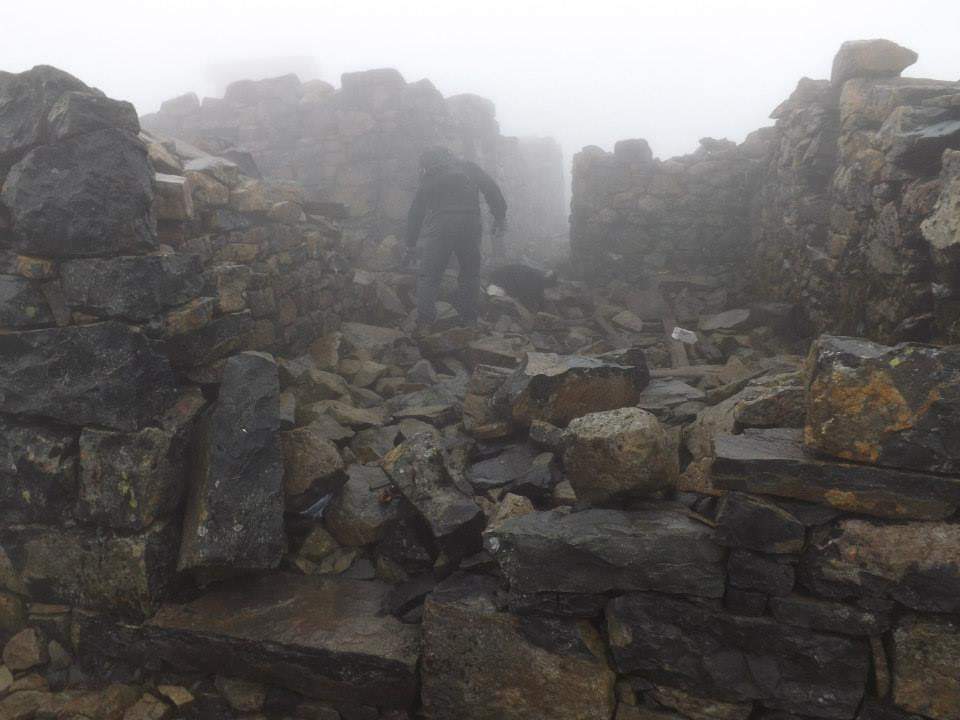
Away from work, Gerard prefers to stay active. Skiing, scuba diving and hiking all feature, although the time of year often dictates which takes priority.
More recently, cooking has become a favourite way to unwind, particularly during the winter months when outdoor activities are less accessible. He enjoys experimenting with different cuisines, with a current focus on French cooking. It offers a creative contrast to the structure of his day-to-day work.
He also picked up the saxophone during the COVID pandemic, initially as a challenge and a long-term project. Largely self-taught, it remains a personal pursuit rather than a public one, but one that offers a different kind of focus outside the demands of IP work.
Looking ahead
As Gerard continues towards full qualification, his focus is on building a well-rounded practice that draws on all aspects of his experience. His journey highlights the value of seeing IP from multiple angles, and the benefits that brings to both clients and the profession.
With a growing emphasis on strategy, collaboration, and integration, he sees the role of the patent attorney continuing to evolve into something broader: not just a legal advisor, but a partner in innovation.
Contact
LinkedIn: https://www.linkedin.com/in/gerard-byrne/
Website: Knights
Meet the IP Professional is a PatWorld interview series exploring the people and perspectives shaping the intellectual property profession. Discover more interviews in the Meet the IP Professional hub, and find out more about PatWorld — a global IP search provider working with IP professionals worldwide to support informed patent, design and trade mark decisions — on our About Us page.
 Order a Search Now