Phil Sanger is the founder of Grey Wolf IP, where he advises startups and SMEs on patents with the benefit of a technical background in mechanical engineering. He talks about building a flexible, client-focused practice, helping smaller businesses make commercially sensible IP decisions, and using plain language to demystify patents. Name: Phil Sanger Role: Founder and patent attorney Firm / organisation: Grey […]
10th June 2026
Phil Sanger is the founder of Grey Wolf IP, where he advises startups and SMEs on patents with the benefit of a technical background in mechanical engineering. He talks about building a flexible, client-focused practice, helping smaller businesses make commercially sensible IP decisions, and using plain language to demystify patents.
Name: Phil Sanger Role: Founder and patent attorney Firm / organisation: Grey Wolf IP Location: Royal Leamington Spa, England Areas of expertise: Patents, startups and SMEs, mechanical engineering, software, telecoms, commercial IP advice, client strategy, patent education
From engineering to IP
Phil did not start out with a plan to become a patent attorney. He worked as an engineer for nearly four years after university, spending a year in Detroit in the automotive industry before deciding to return to the UK.
When he began looking at other options, a friend who was training as a patent attorney suggested the career might suit him. Phil was intrigued by the exams, the technical challenge and the long-term opportunity. He left engineering and took a role as a trainee at Withers & Rogers.
Building his own practice
The move into private practice eventually led to something more independent. Phil says he had reached a point where he was thinking about whether he really wanted partnership at a large firm or a different way of working.
He was drawn to SMEs, where he felt he could do the best work. A client (also a founder) encouraged him to set up on his own, and the timing felt right. He describes the decision as a mix of professional confidence and the simple belief that you only get one chance at these things.
Why smaller clients matter
Phil’s work now focuses strongly on startups and SMEs. He says every patent matters more to these clients because budgets are tighter and the commercial stakes are higher.
That means the advice has to be closely tied to business strategy. He wants to understand what the business is trying to do and how a patent application fits into that plan. In larger companies, he says, patents can sometimes be treated more like a numbers game. For smaller businesses, they are often core to the value of the business itself.
Engineering as an advantage
His engineering background still shapes the way he speaks with clients. Phil believes people often become guarded when they think they are talking to a lawyer, but technical familiarity from his experience as an engineer helps them relax.
He can talk to inventors in their own language because he has worked as an engineer in both large and small businesses. That experience, he says, helps him get closer to the business and give better advice. He is comfortable stepping beyond his strict technical comfort zone, too, as long as he can understand what the inventor is telling him.
Clear advice, not legal noise
Phil is keen on making IP accessible. He says the key is to understand the law, apply it to the facts and then explain the outcome in simple language.
He does not think attorneys should hide behind options. His preference is to explain the choices and then give a view on what he would do in the client’s position. Clients, he says, value that steer. He also sees education as part of the job, especially for people new to IP who need help understanding what the process means in practice.
Long-term client relationships
A strong client relationship, for Phil, is one where people feel able to pick up the phone without hesitation. He likes it when clients come to him early with ideas, problems and questions, not just with narrow patent instructions.
He also values being the trusted first call, whether that happens by phone, WhatsApp or voice note. Word-of-mouth referrals matter to him as a sign that the relationship is working. In his view, that is one of the best measures of success.
Changing landscape
Phil sees AI as one of the biggest shifts affecting the patent landscape, especially for startups and scaleups. He says many clients are already using AI tools to help shape early patent drafts, which raises questions about confidentiality and quality.
What interests him most is not the final output, but the conversation the client had with the AI while refining the invention. That can reveal useful detail for a quality patent draft.
Business lessons
Running his own firm has taught Phil that professional success and personal fulfilment often come from unexpected places. He says he still loves the work, but owning and running a business is a discipline in itself.
He works with a business coach, and he is still learning about strategy, hiring, marketing and finance. That ongoing learning is part of what he enjoys. He sees business ownership as a long-term skill, not a fixed destination.
Life beyond patents
Outside work, Phil spends much of his time with his two sons. He also plays squash, watches films and goes to gigs. More recently, he has started a year-long fitness programme focused on strength training and staying healthy.
He mentioned music and film with obvious enthusiasm, especially Sinners, which he found memorable for the way it mixes music, history and genre. He is also a fan of films that play with time, which connects neatly to the way he thinks about complex legal ideas.
Explaining law through film
For his pop-culture comparison, Phil chose Tenet. He sees a parallel between the film’s simple core idea and the way priority works in patent law.
Priority, he says, sounds straightforward at first. But once you start working through the practical consequences, it becomes complicated and a little mind-bending, much like how time works in the film. It is a playful but fitting way of showing how he likes to make technical subjects more relatable.
Advice for newcomers
Phil’s advice to anyone considering a move from engineering or another technical background into IP is to get some work experience first. He says the profession is rewarding, interesting and full of different career paths, but it is not engineering.
There is a lot of learning, a lot of exams and a major shift towards words and communication. Even so, he thinks the profession suits people who enjoy challenge and variety. After around 20 years in the field, he still loves it.
Meet the IP Professional is a PatWorld interview series exploring the people and perspectives shaping the intellectual property profession. Discover more interviews in the Meet the IP Professional hub, and find out more about PatWorld — a global IP search provider working with IP professionals worldwide to support informed patent, design and trade mark decisions — on our About Us page.
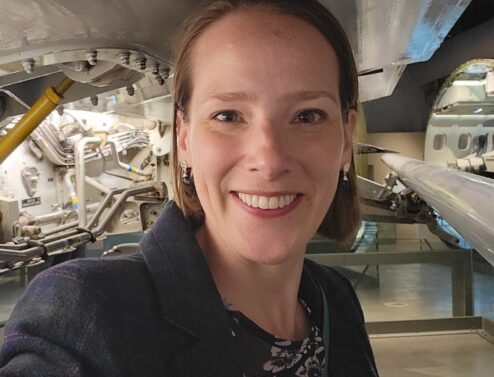
Peri Jones is a Chartered UK and European Patent Attorney at Abel + Imray, where she works across physics, engineering, and technology patents. Alongside her IP career, she has built a strong interest in STEM outreach and science communication, helping make complex subjects feel more accessible and encouraging more young people, particularly girls, to consider careers […]
27th May 2026
Peri Jones is a Chartered UK and European Patent Attorney at Abel + Imray, where she works across physics, engineering, and technology patents. Alongside her IP career, she has built a strong interest in STEM outreach and science communication, helping make complex subjects feel more accessible and encouraging more young people, particularly girls, to consider careers in science.
Quick Profile
Name: Peri Jones Role: Chartered UK and European Patent Attorney Firm / Organisation:Abel + Imray Location: Cardiff, Wales Areas of expertise: Physics, engineering and technology patents, science communication, STEM outreach
Finding the right blend of science and communication
Peri’s route into intellectual property began with a long-standing interest in science. Growing up in North Wales, astronomy was always present at home thanks to her father’s passion for telescopes and astrophotography.
“My dad had, and still has, a big interest in astronomy and astrophotography,” she explains. “The house always had telescopes in spare corners.”
She went on to study physics at Cardiff University before completing a PhD in the astronomy instrumentation group. During that time, she also realised she enjoyed communication and writing just as much as the technical side of science.
At university, a talk from a trainee patent attorney changed her perception of what a STEM career could look like.
“I remember thinking this sounds like the perfect job,” she says. “I could combine technical expertise with communication, writing and working with inventors.”
What appealed most was the variety. Rather than focusing on one narrow technical field, she was drawn to the idea of working across a wide range of technologies and industries.
Now part of the Physics, Engineering and IT team at Abel + Imray, Peri works with clients across diverse sectors, from optics and lenses through to aircraft technologies.
Leaving academia behind
Although she enjoyed academic research, moving away from university life was not an easy decision.
“There was a little hesitation,” she admits. “Once you step away from academia, it can be difficult to go back.”
She enjoyed the research process and the collaborative environment of university life, but also recognised the uncertainty that often comes with academic funding.
“I didn’t want to spend my future constantly fighting for funding every couple of years and always worrying about what would happen next.”
The move into patent law gave her a chance to apply the skills developed during her PhD in a more commercially focused environment. Those transferable skills quickly became apparent.
“Writing a thesis helped with writing patent applications, reading research papers helped with reading prior art, and collaborating with different departments helped with dealing with inventors.”
She was also surprised by how quickly trainees become involved in client work.
“I naïvely thought I’d spend the first couple of years training in the background,” she says. “But from day one, you’re involved in real client work.”
The qualification process also brought its own challenges.
“I underestimated how difficult the exams would be,” she admits. “Failing an exam for the first time was a shock, but it definitely made me more resilient.”
Bringing science to wider audiences
Alongside her legal career, Peri has remained heavily involved in STEM outreach and science communication. That interest developed during university, where she became increasingly aware of the gender imbalance in physics.
“I started realising there was quite a big divide between males and females in physics when I was at university,” she says.
During her PhD, she began giving talks and media interviews, often in Welsh, to help make science feel more approachable and visible to wider audiences.
“I really get a kick out of trying to communicate difficult topics to the public,” she explains. “If you break things down properly, they don’t need to feel complicated.”
After completing her doctorate, she spent a year working with science communication company Science Made Simple, delivering talks and workshops in schools and at public events across Wales and beyond.
Peri was also the first Welsh-speaking science communicator employed by the organisation. This allowed them to deliver outreach activities through the medium of Welsh for the first time.
That experience left a lasting impression, particularly when visiting small rural schools across Wales.
“It was really rewarding going into these schools and showing children what they could potentially do,” she says. “A lot of the pupils came from similar backgrounds to mine.”
She believes representation and accessibility are both important when encouraging young people into STEM.
“We need to abolish STEM stereotypes and make science feel fun and accessible to everyone, particularly young girls.”
Communication at the heart of IP
Peri sees strong communication skills as central to both outreach work and intellectual property law.
Recently, she visited a Cardiff primary school where pupils were challenged to invent solutions to everyday problems.
“They came up with brilliant inventions,” she says. “Some were a bit far-fetched, but they were creative and they solved a problem, which was the brief.”
Experiences like these have reinforced the importance of explaining technical ideas clearly and confidently.
“When discussing complex topics, I always try to relate them to something day to day,” she explains. “I think about how I’d explain something to my family.”
That same approach carries through into her work with clients.
“I think being a patent attorney has made me a clearer science communicator,” she says. “You always have to think carefully about your audience.”
Balancing innovation with caution around AI
Like many within the profession, Peri sees artificial intelligence as one of the biggest developments currently shaping the IP landscape.
She believes AI has genuine potential to improve efficiency, particularly when reviewing or summarising prior art documents.
“I’m hoping AI can help make some parts of the process to be more efficient and cost effective,” she says.
However, she is cautious about relying too heavily on the technology.
“AI is a useful tool, but it needs to be used carefully because it isn’t always right.”
She believes the strategic and human elements of patent work remain difficult to replace.
“Writing a good patent application is about much more than describing an invention,” she explains. “You need to understand the client, their business goals and what they want from the patent.”
For Peri, relationships and trust remain central to the profession.
“Patent attorneys work closely with clients and build trust with them. I don’t think that human element can be replaced by AI.”
Life beyond IP
Outside work, Peri enjoys running, cycling and spending time in the mountains of North Wales.
One of her proudest achievements was completing an ultra-marathon along the Welsh coastal path from Penarth to Ogmore.
“It was tiring, but fantastic,” she says. “The weather behaved for once, which was a miracle.”
She is currently focused on returning to pre-baby fitness and hopes to complete the Swansea Half Ironman in the future after postponing the event during pregnancy.
Whenever possible, she still heads back to Snowdonia.
“If you get a clear day in the Welsh mountains, you can’t beat it,” she says. “I’m probably biased because it’s home, but they’re just fantastic.”
Looking ahead
Reflecting on her career so far, Peri believes resilience has been one of the most valuable lessons she has learned.
“Being a patent attorney has definitely made me more resilient,” she says. “It’s a challenging profession, but also a very rewarding one.”
She also hopes more young people will become aware of intellectual property careers earlier in life.
“I didn’t know anything about the IP profession until university,” she says. “That’s why outreach and visibility are so important.”
Contact Details
LinkedIn: Peri Jones LinkedIn Firm Website:Abel + Imray
Meet the IP Professional is a PatWorld interview series exploring the people and perspectives shaping the intellectual property profession. Discover more interviews in the Meet the IP Professional hub, and find out more about PatWorld — a global IP search provider working with IP professionals worldwide to support informed patent, design and trade mark decisions — on our About Us page.
Matt Dixon is Executive Chair at Beck Greener LLP and a former President of the Chartered Institute of Patent Attorneys (CIPA). With more than three decades in the IP profession, he combines technical expertise, business leadership, and strategic insight to help innovative companies develop and protect intellectual property. Name: Matt Dixon Role: Executive Chair Firm: Beck Greener LLP Location: London, United Kingdom Areas of expertise: Patent strategy, IP leadership, […]
20th May 2026
Matt Dixon is Executive Chair at Beck Greener LLP and a former President of the Chartered Institute of Patent Attorneys (CIPA). With more than three decades in the IP profession, he combines technical expertise, business leadership, and strategic insight to help innovative companies develop and protect intellectual property.
Name:Matt Dixon Role: Executive Chair Firm:Beck Greener LLP Location: London, United Kingdom Areas of expertise: Patent strategy, IP leadership, business growth, engineering and physics-based technologies, innovation strategy
From physics student to patent attorney
Matt’s route into intellectual property began while studying physics at Imperial College London in the early 1990s. Originally from Yorkshire, he describes himself as “proudly comprehensively educated” and admits that, unlike many of his peers, he had little interest in pursuing a PhD after graduation.
“At the time, practically everybody on my course was looking at doing further academic study,” he says. “I thought, ‘I want a proper job.’”
A visit to the university careers service introduced him to a profession he had never previously encountered: patent law.
“I filled out one of those career questionnaires, and it suggested two jobs, actuary or patent attorney,” he explains. “I’d never heard of patent attorneys, but the description sounded interesting.”
After researching the profession and applying to firms across the UK, Matt joined what was then Frank B. Dehn, now Dehns. He qualified there and later received a Gill Prize for achieving the top mark in the UK patent examinations.
Shortly after qualifying, Matt moved to Munich to help build the firm’s new office.
“We spent about three and a half years there and had our children while we were in Germany,” he says. “It was a brilliant experience.”
Building teams and businesses
Matt’s career later moved into leadership and business development roles, including a period at IP21, where he helped establish a London office for what was then a start-up firm.
“That was a really formative experience for me,” he says. “It was one of the first times I’d worked alongside someone thinking purely from a business perspective rather than just from an IP perspective.”
He credits that period with helping him better understand how professional services businesses operate commercially.
Matt later joined HGF, where he spent around a decade leading the engineering team as the firm expanded significantly across the UK and Europe.
“When I started leading the engineering group, it was much smaller,” he says. “By the end, we had around 40 people across multiple offices, including Munich.”
Following a period away from full-time leadership, Matt joined Beck Greener initially in a consultancy capacity before becoming Executive Chair in 2024.
The role focuses less on direct client work and more on supporting the long-term commercial development of the business.
“My job is really about maximising the commercial effectiveness of the firm,” he explains. “I’m not ‘the boss’ in the traditional sense. I’m there to guide, support and help shape the direction of the business.”
Under his leadership, the firm has experienced strong growth, including the acquisition of another practice and significant organic expansion.
Helping businesses understand the value of IP
Throughout his career, Matt has worked with companies ranging from early-stage start-ups to established multinational organisations. He believes the approach to IP strategy changes significantly depending on the stage of the business.
“For start-ups, it’s often about getting maximum value from limited budgets,” he says. “You’re helping them build something investable before they may even have a product on the market.”
That uncertainty, he explains, creates a unique challenge.
“You’re trying to build a patent portfolio that could protect a future global business, but you’re doing it with start-up finances.”
By contrast, larger organisations often have clearer commercial objectives and established markets.
“With more established businesses, you usually know what the products are, who the competitors are, and where the revenue comes from,” he says. “The IP strategy becomes much more closely aligned to broader business strategy.”
Matt has also seen the role of patent attorneys evolve considerably during his career.
“Years ago, patent attorneys mostly spoke directly with technical teams,” he explains. “You’d spend hours discussing inventions with scientists and engineers.”
Today, however, IP professionals are increasingly expected to communicate at board level.
“You now need to explain intellectual property in commercial terms,” he says. “You have to answer questions about value, investment, and business impact, not just technology.”
Leadership, mentoring and learning to listen
When discussing leadership, Matt is candid about how his perspective has changed over time.
“When I was younger, I probably thought having the best strategy or the best spreadsheet was enough,” he says. “What I’ve learned is that how people feel matters.”
He believes successful leadership depends not only on sound commercial planning, but also on understanding how decisions affect colleagues and teams.
“You can have the best plan in the world, but if people feel uncomfortable or dismissed, they won’t buy into it,” he says.
That people-focused mindset also shapes how he mentors younger professionals entering the profession.
“The most important thing I try to teach trainees is to be comfortable saying, ‘I don’t know,’” he explains.
For Matt, honesty and intellectual curiosity are essential skills for any patent attorney.
“You’re not expected to know everything,” he says. “The job is to understand quickly, ask the right questions, and then find the answer.”
A changing global IP landscape
While many of the day-to-day challenges within IP remain consistent, Matt believes one of the biggest long-term shifts has been the rapid rise of China within the global innovation economy.
“The scale of Chinese engagement with intellectual property systems is enormous,” he says. “And the speed of change has been remarkable.”
He compares China’s development to Japan’s transformation from low-cost manufacturing economy to global innovation leader, but notes that China’s transition has happened much faster.
“The quality of innovation coming out of China has improved dramatically,” he says. “Once a country becomes one of the biggest users of the patent system, naturally it also becomes more invested in protecting intellectual property rights.”
Matt believes this shift is already influencing how IP systems operate internationally, particularly in areas such as trade marks and designs.
Outside the office
Away from work, Matt enjoys live music and performs in a rockabilly band called Ronnie Ripple and the Rip Chords, where he plays rhythm guitar.
“We don’t gig constantly, but I really enjoy it,” he says.
He is also refreshingly honest about how he switches off from work.
“I’m not one of those people getting up at 4am for a wheatgrass smoothie,” he jokes. “I watch Netflix, go to the pub, and go to concerts.”
One recent highlight was seeing the Pet Shop Boys live in Birmingham, where Matt says his “dad dancing” received unexpected praise from fellow concertgoers.
When it comes to walking, his favourite place remains close to his Yorkshire roots: Digley Reservoir near Holmfirth.
Looking ahead
Reflecting on his career, Matt believes one lesson stands out above all others.
“How people feel matters,” he says. “That’s probably the biggest thing I’ve learned.”
It is a philosophy that now underpins both his leadership style and his approach to working within the IP profession. For Matt, technical expertise and commercial strategy remain important, but building trust, understanding people, and communicating clearly are what ultimately make long-term success possible.
Meet the IP Professional is a PatWorld interview series exploring the people and perspectives shaping the intellectual property profession. Discover more interviews in the Meet the IP Professional hub, and find out more about PatWorld, a global IP search provider working with IP professionals worldwide to support informed patent, design and trade mark decisions, on our About Us page.
After a long career spanning private practice, in house support, training and even maternity services advocacy, Debbie has launched Granta IP, a consultancy that gives her the balance and autonomy she wants at this stage of life. She explains that she is not retiring but reshaping how she works so she can stay engaged in […]
11th December 2025
After a long career spanning private practice, in house support, training and even maternity services advocacy, Debbie has launched Granta IP, a consultancy that gives her the balance and autonomy she wants at this stage of life. She explains that she is not retiring but reshaping how she works so she can stay engaged in the profession on her own terms.
Granta IP brings together her strengths in IP management for small and growing businesses and her technical experience as a patent attorney. She enjoys the contrast, the structured focus of drafting and office actions alongside the broader strategic work of building good IP processes from the ground up.
From Australia to the UK, Learning to Adapt
Debbie spent fourteen years working in Western Australia before returning to the UK. Her client base may have shifted slightly, but the essential lesson remained the same, adapt to the needs of the business in front of you. Working with small companies that had limited understanding of IP taught her the value of meeting clients where they are and building systems that fit their reality.
Helping Businesses Avoid the IP Catch Up Problem
One issue she sees regularly is small companies leaving IP management until it becomes a problem. When portfolios expand without clear processes, it becomes harder to piece everything together later. At Granta IP, Debbie helps organisations get ahead of this by identifying their IP early, setting up workable systems and supporting in house teams who need extra capacity or guidance.
Supporting the Next Generation Through CIPA
Education is a major theme in Debbie’s career. She has taught, written and developed training materials, and now chairs the CIPA Education Committee. She is currently involved in IPReg’s wide ranging review of professional training and in developing apprenticeships as an accessible route into the profession. For her, seeing people grow in confidence is one of the most rewarding parts of the job.
Preparing for an AI Enabled Future
With AI entering the IP workflow, Debbie believes strong foundational skills matter more than ever. Tools can help with early drafting, but only if attorneys know how to evaluate and refine the output. She stresses the importance of critical thinking, client understanding and judgement, qualities no system can replace.
Beyond IP, Dance and Social History
Outside work, Debbie has two enduring passions, dance and family and social history. Although she once considered stage school, today she dances for fun, Latin, hip hop and fitness-based classes. She also spends time researching family history, uncovering stories that span miners, missionaries, textile workers and relatives across Europe, South America and Africa.
Looking Ahead
As she builds Granta IP and contributes to the future of professional education, Debbie’s focus remains the same, stay curious, stay adaptable and keep giving back. Her path has not been linear, but every stage has shaped the professional she is today, and she brings all of it into the work she now does with clients and colleagues.
About Granta IP
Granta IP Services Ltd is a UK-based consultancy providing practical patent, trademark and design protection for innovators, SMEs and growing businesses. Founded by an experienced Chartered Patent Attorney Debbie Slater, the firm blends technical expertise with hands-on industry insight to help clients secure and manage their IP as they scale. Granta IP delivers clear, flexible strategies that strengthen innovation, support commercial growth and ensure ideas are protected from the start.
At PatWorld, we’re proud to support IP firms like Granta IP with comprehensive patent search and intelligence services. From prior art and freedom-to-operate searches to competitor and landscape analysis, our tools help attorneys and their clients make informed, strategic decisions — saving time and improving the strength of every patent application. Get in touch with us today to learn how we can assist with your next project.
With more than four decades as a dual-qualified Chartered Patent Attorney and Chartered Trade Mark Attorney, Keith Loven, founder of Loven Patents & Trademarks in Lincolnshire, has built a reputation for frank, business-focused IP advice that prioritises the client’s commercial interests over billable hours. In a recent conversation, Keith reflected on his career journey, the […]
3rd December 2025
With more than four decades as a dual-qualified Chartered Patent Attorney and Chartered Trade Mark Attorney, Keith Loven, founder of Loven Patents & Trademarks in Lincolnshire, has built a reputation for frank, business-focused IP advice that prioritises the client’s commercial interests over billable hours. In a recent conversation, Keith reflected on his career journey, the evolving needs of SME clients, and why early, honest guidance remains the cornerstone of his practice.
From chemical engineering to a lifelong IP career
Keith’s route into intellectual property was far from planned. After studying chemical engineering at the University of Birmingham, he quickly realised that a career with large oil companies held little appeal, partly, he admits with a smile, due to the “bit of a hippie thing” prevalent at the time.
A university jobs brochure changed everything. A friend pointed out an advert for a London firm of patent agents. One rejection later, a second application succeeded, and Keith found himself in a small London office wondering what he had let himself in for.
What hooked him was the blend of skills the job demanded: technical understanding (his chemical engineering background proved surprisingly broad and useful), precision with language, and an introduction to the legal world. “Chemical engineering gave me the basics of mechanical, electrical and civil engineering too,” he explains. “When an inventor starts talking, I can usually say ‘yes, I understand the fundamentals’, that builds confidence straight away.”
SME needs: the impact of Brexit and beyond
Over 40 years, Keith has watched SME requirements shift, often driven by external forces rather than changes in the businesses themselves. The creation of the European Patent system and, for a time, frictionless EU trade encouraged many smaller UK exporters to seek broader protection. Brexit reversed that trend sharply.
“For smaller clients, exporting became harder and more expensive,” Keith notes. “Many have refocused almost entirely on the UK market. It’s not been a positive development for most of them.”
Despite political and legislative upheavals, core SME needs remain constant: affordable protection that adds genuine value and, crucially, advice they can trust.
The importance of saying “don’t file”
Loven Patents & Trademarks has long been known for telling clients when not to pursue an application, advice that is rare in some quarters.
“If there’s no commercial advantage in filing a patent or registering a trade mark, I’ll say so,” Keith states. “Clients quickly learn that we’re not just trying to sell services. That honesty builds trust, some clients have stayed with me for 25 or 30 years because they know I’ll give them the advice that’s right for their business, not mine.”
Common (and costly) pitfalls
Keith regularly sees clients arrive in crisis having launched products without basic freedom-to-operate checks. A recurring theme in recent years is UK sellers sourcing goods from platforms such as Alibaba, reassured by suppliers that “everything is fine”, only to face infringement claims weeks later.
“A little research upfront saves a lot of tears later,” he says. “Naivety isn’t an excuse when cease-and-desist letters land.”
Building long-term relationships in the SME space
Transparency on costs and options is central to Keith’s approach. “I lay out the routes forward, the pros, cons and likely costs. Clients hate surprises, so we try to eliminate them.” He also pushes businesses to think strategically: where does IP fit into the broader plan? How will it add value in three or five years’ time?
Global networks built on trust
Strong relationships with overseas attorneys are vital. “You work with people you trust to do excellent work at sensible cost,” Keith explains. “Reciprocal arrangements exist, but the real value is the mutual help, a quick call to sort a problem without an immediate invoice. Some of those relationships have lasted decades.”
Patents, trade marks and the bigger picture
When a client arrives with “a great invention” that isn’t actually patentable, Keith’s role shifts to holistic strategy: registered designs, powerful branding, or sometimes just disciplined commercial execution.
“A strong brand can protect you even when technical IP can’t,” he points out. “People assume copies will flood the market the moment they launch. Often the bigger challenge is getting anyone to notice the product in the first place.”
Giving back through CIPA
Now Chair of CIPA’s Small Practice Committee and a member of its Council and Internal Governance Committee, Keith has a deeper appreciation of the profession’s representative work.
“For years I was out in Lincolnshire, getting my CPD points and little else. Becoming involved showed me everything CIPA does behind the scenes, shaping policy, supporting members, and giving [KL1] patent attorneys a voice.” His current focus is two-way communication: helping sole practitioners and small firms understand the benefits CIPA delivers while feeding their specific concerns back to the Institute.
Looking ahead: AI and the SME challenge
Asked about the next five years, Keith highlights artificial intelligence as the dominant theme.
“Large companies are already blanketing AI-related technologies with patents. SMEs will increasingly have to navigate that crowded landscape, and avoid assuming that adding ‘with AI’ suddenly makes something inventive.”
Still enjoying the craft
After more than 40 years, what keeps Keith engaged? “It’s still fun,” he laughs. “Solving tricky examination objections, finding the argument that turns a refusal into a grant, there’s real satisfaction in that. And of course the occasional ‘thank you’ when a client realises you’ve saved them time and money.”
Outside work, grandchildren, a never-ending battle with the garden, and decades of family-history research (“they’re all peasants, no aristocrats in sight”) keep him occupied.
As Keith prepares to hand over more day-to-day responsibility to the next generation at Loven Patents & Trademarks, his core philosophy remains unchanged: give honest, commercially grounded advice as early as possible, and never be afraid to tell a client when not to file. It’s an approach that has served both him and thousands of UK innovators remarkably well for over four decades.
About Loven IP
Lincolnshire-based and founder-focused, LOVEN Patents & Trademarks delivers patent strategies, trademark and design protection, and IP-portfolio management for innovators, inventors and brands across the UK and beyond. Established in 1989, the firm combines technical know-how and legal expertise to help clients lock in their inventions, designs and brand identity — ensuring ideas stay protected as the business grows. LOVEN partners with SMEs, inventors and larger organisations to craft robust IP that underpins innovation, commercialisation and long-term value.
At PatWorld, we’re proud to support IP firms like Loven IP with comprehensive patent search and intelligence services. From prior art and freedom-to-operate searches to competitor and landscape analysis, our tools help attorneys and their clients make informed, strategic decisions — saving time and improving the strength of every patent application. Get in touch with us today to learn how we can assist with your next project.
With a career spanning private practice, in-house leadership, and now consultancy, Emily Teesdale has developed a deep appreciation for how intellectual property (IP) strategy underpins commercial success. Today, through her own consultancy Pivot IP, Emily helps engineering and technology businesses navigate the complex IP landscape — ensuring that protection, collaboration, and opportunity go hand in […]
12th November 2025
With a career spanning private practice, in-house leadership, and now consultancy, Emily Teesdale has developed a deep appreciation for how intellectual property (IP) strategy underpins commercial success. Today, through her own consultancy Pivot IP, Emily helps engineering and technology businesses navigate the complex IP landscape — ensuring that protection, collaboration, and opportunity go hand in hand.
A career combining engineering and law
Emily’s path into intellectual property began with a degree in aerospace engineering and a love of technology. “I wanted to find a way to combine my technical background with something broader,” she explains. “Becoming a patent attorney allowed me to do exactly that.” Over the next 18 years, she worked in private practice with clients of all sizes, gaining experience across a wide range of technologies. Her expertise later took her in-house — first with Airbus, where she became heavily involved in collaboration projects, and then into a Head of IP role at another global aerospace company. “In that role, I was responsible for the IP terms across every kind of contract you can imagine,” Emily recalls. “I was also raising IP awareness across the business and managing a portfolio team. It was a fantastic opportunity to see how IP strategy really works at every level.” After more than two decades in demanding corporate roles, Emily took some well-earned time off to travel — a journey that would ultimately inspire the creation of Pivot IP.
A practical approach to IP strategy
When Emily returned from her travels, she wanted to use her experience to help other businesses make sense of IP in a way that was practical, strategic, and aligned to their goals. “At Pivot IP, I effectively act as Head of IP to engineering companies on a consultancy basis,” she explains. “That means helping them navigate the IP landscape in the way that’s best for them and their objectives — whether that’s advising a start-up on early IP steps, negotiating a collaboration agreement, or unpicking a complex issue to find a pragmatic solution.” It’s an approach that reflects Emily’s view of what IP strategy really means. “Any good strategy should maximise opportunities and minimise risks,” she says. “From an IP perspective, that means reducing exposure to risks like patent infringement or misuse of confidential information, while using the IP system to create and protect opportunities. It’s about far more than just obtaining patents or trade marks — it’s about embedding IP thinking into every aspect of the business.”
Recognition and collaboration
Earlier this year, Emily was recognised as a Notable Practitioner by IP Stars, a distinction that carries particular meaning. “It honestly means so much — especially as it came just six months after setting up Pivot IP,” she says. “When you’re working independently, you don’t always have the encouragement that comes from being part of a big team, so this recognition was a real boost. It’s also an honour to know that my work — which is rather different to the traditional patent attorney role — is valued.” Emily also collaborates closely with Iain Russell of Russell IP, where she provides consultancy support alongside her own practice. “I love working with Iain and am very grateful for his support,” she says. “My work there includes providing IP strategy advice and helping clients understand what to prioritise. I also still enjoy getting involved in drafting and prosecution work — it keeps me more connected to the technical side of things.”
Making IP strategy work in practice
For Emily, helping businesses develop a strong IP strategy begins with understanding where they are and where they want to go. “It’s essential to know what assets they already have, the industry landscape they are in and what their commercial objectives are,” she explains. “Only then can you design a strategy that supports those goals.”
She also highlights the importance of IP awareness and education within organisations. “You don’t always need a big budget to improve your IP position. Building awareness among employees about what to protect, what not to disclose, and when to raise potential risk issues is one of the most effective steps a company can take.”
A key part of her role involves helping clients navigate the practical realities of IP — often under pressure. Emily recalls one instance where a careful review of collaboration terms completely changed the outcome for her client. “I reviewed the IP clauses of a potential collaboration and realised they wouldn’t give my client the access they needed once the development project ended,” she explains. “It meant going back to senior management, explaining why the terms had to change, and renegotiating them at a late stage. It was challenging, but ultimately the new agreement ensured that when the technology is commercialised, my client can move forward with a secure and effective supply chain, even if the collaboration partner doesn’t proceed.”
It’s an example that perfectly captures Emily’s approach — balancing technical insight with commercial foresight. “Patent searches and freedom-to-operate analyses also play a crucial role,” she adds. “These are vital tools to understand where you sit in the IP landscape around you. Only when you know where you are can you plan where you’re going.”
The global dimension of collaboration
Having worked extensively in the aerospace sector, Emily understands that innovation today is rarely confined to one country or organisation. “Increased global collaboration is a great thing. It allows more companies to develop technology together, particularly in emerging cross-sector areas,” she explains. “But with that comes the need to ensure your IP protection reflects the global nature of your work, that your contracts are aligned across jurisdictions, and that you’re partnering with the right organisations.”
Life beyond IP
When she’s not advising clients or speaking on IP strategy, Emily loves to explore the world — quite literally. She has visited more than 70 countries, with New Zealand, Costa Rica and Japan among her favourites. “Discovering new places, especially through food, is a real joy” she says. “I love dining out and experiencing different cultures that way. I also enjoy dancing and spending time with animals — not the most compatible combination, perhaps!”
Her travels have brought some unforgettable experiences. “Getting a helicopter onto Fox Glacier in New Zealand and scrambling through the ice caves was incredible,” Emily recalls. “And volunteering at an animal sanctuary in Namibia, where I helped feed baby baboons, was truly special.” She laughs when recalling another of her adventures — hiking the Inca Trail to Machu Picchu. “Mainly for Machu Picchu itself rather than the four-day hike! I’m not much of a camper, but the porters and chefs were incredible and made the experience truly memorable.”
The value of effective IP strategy
Emily sums up the importance of IP strategy simply but powerfully. “An effective and well-implemented IP strategy enables a business to achieve — and often exceed — its objectives,” she says. “Whether it’s growth, attracting investment, or increasing valuation, the right IP approach provides the foundation for long-term success.”
Emily also works with Iain Russell at Russell IP, providing IP strategy consultancy and patent support.
At PatWorld, we’re proud to support IP professionals like Emily. Our comprehensive patent search and intelligence reports help inform freedom-to-operate, state-of-the-art, and competitor landscape decisions. By providing accurate and timely data, we help attorneys and consultants worldwide strengthen their clients’ IP strategies and unlock greater commercial value. Get in touch with us today to learn how we can assist with your next project.
Greg Corcoran founded his own practice, Greg Corcoran IP, recently in March 2025 to use his substantial commercial experience, with a clear and thoughtful philosophy: patents are business tools. When developed strategically, they can be used to mitigate risk, unlock commercial opportunity, and give clients the commercial leverage they need to thrive in an increasingly […]
7th October 2025
Greg Corcoran founded his own practice, Greg Corcoran IP, recently in March 2025 to use his substantial commercial experience, with a clear and thoughtful philosophy: patents are business tools. When developed strategically, they can be used to mitigate risk, unlock commercial opportunity, and give clients the commercial leverage they need to thrive in an increasingly competitive world.
Greg is a European and UK Patent Attorney, UPC Representative and former in-house counsel at one of Europe’s leading technology companies. Today, he works directly with clients to support strategic portfolio development and improvement. His practice is rooted in practical experience and built on a foundation of collaboration, commercial insight, and a deep understanding of the full patent lifecycle.
A Pathway to Patents
Greg’s journey into IP law began with a desire to combine a technical background with meaningful client relationships. After early exposure to both scientific research and legal practice, he studied physics at university with the clear intention of training as a solicitor specialising in intellectual property. That plan paid off. He trained at Taylor Joynson Garrett (now Taylor Wessing) where his first experience of patent practice was revocation proceedings before the English High Court.
Greg retrained as a patent attorney in the midst of the dot-com crash in the London office of a national patent attorney firm. Through his training he sought out a more commercially focused role where prosecution decisions were made in context of business objectives. At qualification he realised his goal of securing an in-house role, managing large patent portfolios and providing clearance advice in the context of the company’s business landscape.
Over his seventeen years in-house he worked closely with fellow in-house patent professionals, external counsel, and the company’s engineers – many of whom were the inventors of the patents in the portfolio. Ultimately, he worked with people across the entire business from product architects, colleagues in marketing, and members of the Board. Working as part of a team he needed to ensure that patent claims, for example, aligned to the chosen IP strategy to realise-the business’ real- commercial goals.
“A patent should be more than just a description of a technical solution to a technical problem – it should be prepared so it can have claims relevant for its possible application and commercial leverage in mind.”
A Bridging Practice
At the heart of Greg’s practice is a distinctive approach that brings together three crucial elements: effective drafting, practical in-house experience, and a clear understanding of its strategic use of patents for example in litigation strategy. These pillars have influenced the preparation of the program for the CIPA Congress 2025 which is themed around the intersection of IP and AI and which Greg is chairing this week. He notes that, with the support of CIPA’s current President, Bobby Mukherjee – a leading in-house practitioner – he encouraged each panel session to have an in-house speaker. The program includes a very practical patent drafting session and a UK and UPC judiciary panel session.
“To secure granted claims which a client can leverage to acquire the commercial value they seek, it is crucial to appreciate how your claims would work before a court, even before you put pen to paper and start drafting.”
Through his practice, Greg aims to help clients prepare more robust patents, that do not merely capture the invention which the inventor thinks has been invented, but are also prepared with how the patent may be applied commercially in mind – which may include enforcement. While his business is relatively new, the services which he offers are informed by years of experience both in-house and in private practice. He is actively building a client base that can benefit from this integrated approach.
“Drafting with foresight, advising the business to navigate third party patent landscapes, knowing how in-house teams work, and keeping one eye on how the patent could be used, even in the courtroom – these are the skills which I seek to bring together for my clients.”
Portfolio Improvement: An Underused Commercial Tool?
Portfolio improvement enables clients to achieve more value from their existing assets in the context of the patent landscape of their chosen markets. He works with clients identifying their filings that have potential to offer useful leverage and optimising claim scope in context of competitor positions. This means that he needs to learn about third party patent portfolios, and the client’s markets, not just the client’s own assets. Investment in a portfolio is also an investment in knowledge of the context of the client’s assets. With more knowledge, the more effectively, efficiently and deftly the patents in a patent portfolio may be used. Enhancement of portfolios take time and draws on experience and a strategic approach to IP. Portfolio improvement, he says, can be far more than mitigating the risk of litigation. Even if litigation mitigation is not a primary goal it is a valuable added benefit. A third party may hesitate or wait before using court proceedings, or even seek solely to negotiate, if a target business has invested in its IP position to develop an appropriate patent portfolio. Investment in IP can help mitigate significant costs.
“Whether you’re seeking investment, looking to license out technology, or wanting otherwise to negotiate with a third party, an improved portfolio can be a benefit to your position. A well-developed portfolio informs a third party that you’re prepared with a strategy in mind.”
This proactive approach is particularly relevant in today’s global IP landscape, where pressure on IP budgets meets rising commercial expectations. Use of older filings may serve to achieve patents which can be used to apply leverage against third parties faster and more effectively than fresh filings. Under cost pressures and good timing, improvement work can be targeted, focused and limited.
The Benefits of Litigation Mitigation
EEven though clients prefer to avoid talking about litigation, it has to be considered as a part of commercial strategy according to Greg. The positive reception to the UPC since it started in 2023, makes portfolio improvement to mitigate litigation risk even more important and valuable. As we are hearing from leading US practitioners such as David Kappos, an ex-UPTO Director, the UPC is changing the global dominance of the US courts because it is faster, cheaper, and more predictable in its processes and it is also more willing to grant injunctions. Commercial leaders are now describing how these characteristics, especially in view of the size of the UPC’s jurisdiction over eighteen contracting states, often lead to settlement. The risk of a negative decision leading to an injunction can create a commercial predicament for the parties. Information the UPC suggests that the chance of a settlement, in practice, is high.
The reach of the UPC has implications for businesses of all sizes throughout the European market, including SMEs and not just global players. Before the UPC started, a business could rely on the fractured mosaic of different European jurisdictions that would limit the impact of a patent suit usually to one jurisdiction. Those days are numbered if they are not already over. Recent cases of the UPC (and even the German courts) are taking a ‘long-arm approach’ to jurisdictions under special conditions. The enforcement of patents in non-UPC states, such as Spain, or not of the EU, such as the UK, using long-arm jurisdiction, means the reach of the UPC is far further than initially expected.
All business would be advised to invest in their patent position in a prudent manner as part of good business administration. Investment consequently mitigates litigation risk. Traditionally legal fees spent for a litigation are considered as costs that are incurred only when the litigation is under way and thus as a last resort. Funds are spent very quickly following quickly made decisions. Proceedings at the UPC run too fast using this approach, demanding too many resources for a defendant to prepare an adequate defence and respond by preparing and filing its own countersuit. The alternative is to incur some of these costs in advance carefully and strategically over a period of time -such a spending strategy would be an investment. Businesses with an adequate budget could make a long-term investment by starting preparation and mitigation long in advance; yet meaningful results can be achieved with a targeted approach on a limited budget. Yet, as Greg mentioned earlier, such preparations would also improve a patent portfolio and a business’s IP position for the other purposes for example to realise new commercial opportunities.
“Litigation as a business strategy is, after all, a last resort.”
How Greg can Help: Practical, Independent, and In-House-Informed
One of the defining features of Greg’s offering is flexibility. His business’s offering includes services that are designed to plug into existing teams. He offers support to companies which may not have the resources for a full in-house function but still need senior-level strategic input. He offers assistance and advice in the development and implementation of a portfolio strategy, in helping align patent filings with business objectives, and flagging and assisting mitigation of litigation risks.
His experience also allows him to complement rather than compete with other attorneys, bringing an in-house angle and offering a resource to draw on. For example, providing a litigation-informed perspective to drafting and prosecution decisions and offering second opinions that improve the value of a portfolio without escalating cost.
“Predicting which patents of a portfolio will be challenged is a fool’s game; it’s more prudent and cheaper to prepare some of the patents so more of them hold up to scrutiny. I heard a repeating message when I spoke to litigation counsel across Europe in the months before I set up my practice: when their clients present them with their best patents, often only a very small proportion survive scrutiny. Counsel has to use the best patents their clients have – but does it have to be that way, especially now, when so much more can be at stake in Europe?”
Greg also understands the realities of international portfolio management and improvement. Having managed a global portfolio including the US, Europe, and Asia he appreciates the cultural challenges that such work may bring, and the nuances in local practice through engendering long durable relationships with local counsel. He helps clients navigate through such differences that are essential to manage effective communication with external counsel and manage the global IP assets of the client effectively.
A Photographer’s Eye for Detail
Outside the world of patents, Greg is a keen landscape photographer. His brand image is a striking photograph of Belgium’s famous bluebell wood, the Hallerbos. It reflects his international focus and his approach to IP: considered, layered, and aware of how small details contribute to the bigger picture and conversely how the big picture is dependent on the detail within it.
“An image is a whole, but it’s the sum of its parts and the parts make the whole. It’s just like a sound patent portfolio.”
A Favourite Walk?
The Gower Peninsula in Wales – a mix of clifftop paths leading to green rolling countryside, overlooking sheep dotted salt-marshes and empty expansive beaches, through bluebell woods and winding rugged windswept coastal trails. It’s an appropriate metaphor for a career spent exploring new ground while keeping a careful eye on the landscape.
Connect with Greg
Whether you’re a patent attorney, in-house counsel, or an innovator looking to strengthen your IP position, Greg is open to collaboration and conversation. You can learn more about his work and services at https://gregcorcoranip.co.uk or connect with him directly on LinkedIn.
How PatWorld Supports Strategic IP Work
For IP professionals developing commercially focused portfolios – like those Greg helps his clients build – high-quality patent search support can make a real difference. PatWorld’s team of expert analysts deliver tailored search services, including freedom-to-operate, validity, and landscape analysis, helping patent attorneys make confident, informed decisions. For firms looking to strengthen their IP strategies, this kind of insight lays the groundwork for more effective portfolio development and risk mitigation.
When Lawrence Cullen discusses Supplementary Protection Certificates (SPCs[i]), he does so with the clarity and passion of someone who has spent decades at the heart of the system—and who still finds it intellectually rewarding. After a distinguished career at the UK Intellectual Property Office (UKIPO), where he became one of the UK’s leading experts on […]
27th August 2025
When Lawrence Cullen discusses Supplementary Protection Certificates (SPCs[i]), he does so with the clarity and passion of someone who has spent decades at the heart of the system—and who still finds it intellectually rewarding. After a distinguished career at the UK Intellectual Property Office (UKIPO), where he became one of the UK’s leading experts on SPCs, Lawrence has launched a consultancy to help others navigate the intricacies of life sciences IP.
From Chemistry Labs to IP Policy
Lawrence’s journey into IP began in the lab. Originally from Ireland, he studied industrial chemistry there at the University of Limerick. He then went on to complete a PhD at the University of Sheffield. A research career followed, taking him to UK. France, Germany, and the United States. It was during this time—working on a some patents at the University of Kentucky—that his interest in IP was sparked.
“I read my original proposal to the university for the patent and then saw the final patent application,” he recalls. “They were both describing the same thing but in completely different ways. I found that transformation fascinating.”
After returning to the UK with a young family and looking for a more stable career path, Lawrence applied to the UKIPO—and never looked back.
Building a Reputation in SPCs
Lawrence spent just under three decades at the UKIPO. Initially as a patent examiner, then working in policy and trademarks en route to becoming a Deputy Director and Hearing Officer in patents. His experience spans petrochemicals, cosmetics. pharmaceuticals and biotech, but it’s his specialism in SPCs that has become his hallmark.
“What makes SPCs so challenging is that they sit at the intersection of patent law and regulatory law,” he explains. “They’re not just a patent extension. They’re a sui generis right—unique in legal terms—and require a good understanding of both systems.”
As a Hearing Officer, Lawrence was responsible for reviewing disputed SPC applications. He often found himself deciding issues involving the UK’s approach to SPC case law for the first time. His decisions, nearly all of which were appealed (and subsequently upheld) helped clarify regulatory grey areas and provided vital guidance in a field where every word of the relevant legislation is scrutinised.
“It is not surprising that these decisions were nearly always appealed” he says “given the commercial value of the right being sought. Aa single granted SPC could be worth millions. That’s why nearly every one of the 19 articles in the relevant regulation has been argued over and litigated!”
A New Consultancy for a Complex Landscape
Now, Lawrence is offering his specialist knowledge directly to clients through his new consultancy. His goal? To support life sciences businesses, patent attorneys, and legal teams as they deal with complex SPC and pharmaceutical patent issues.
“If someone comes to me and asks, ‘Can I get an SPC based on this patent and this marketing authorisation?’ I can help them assess the options—perhaps even identify strategies they hadn’t considered.”
His expertise is particularly valuable at critical decision points: choosing the right patent to base an SPC on, assessing post-grant amendment possibilities, and anticipating how a granting authority might interpret a borderline case.
“Most people only apply for one SPC in a given matter, so there’s a lot riding on getting it right,” he adds. “My job is to bring clarity and reduce uncertainty.”
Beyond the Patent Office
Lawrence’s consultancy work is already expanding. He supports clients with early-stage planning, responds to refusals, and even helps those opposing SPCs in competitive scenarios. He’s also involved in academic research as a Visiting Scholar at the University of Sheffield, exploring the foundations and future of the SPC system.
His aim is to ensure that clients not only understand how the system works today but are also prepared for the changes ahead.
“We’re entering a more complex regulatory environment—particularly with medical devices and software becoming integral to treatments. That’s going to create new questions around if and how SPCs apply.”
Still Curious, Still Learning
Despite decades in the field, Lawrence’s enthusiasm remains undimmed.
“Every problem is slightly different. I still enjoy the ambiguity. You’re often working on the balance of probabilities, not certainties. That keeps it fresh.”
That curiosity extends beyond the office. When not immersed in SPC regulations, Lawrence is likely to be out walking stretches of the Wales Coast Path. Or, cheering from the stands at rugby games. A recent trip to Australia for the British & Irish Lions tour being a particular highlight.
“Being there and seeing the games in person was incredible. I’ve played the game, coached it, and still find it endlessly fascinating.”
How Lawrence Can Help
If you’re navigating SPCs—whether preparing an application, managing a refusal, or just trying to understand your strategic options—Lawrence is ready to help. With in-dept knowledge of how decisions are made and why, his consultancy offers a rare depth of insight for those operating in the life sciences, pharmaceutical, and biotech sectors. To get in touch with Lawrence or learn more about his services, connect via LinkedIn
A Supplementary Protection Certificate (SPC) is an intellectual property right that extends the protection of a patented active ingredient in a pharmaceutical or plant protection product. SPCs compensate for the time it takes to obtain regulatory approval before a product can be sold, offering up to five additional years of market exclusivity after a patent expires. Because they sit at the intersection of patent and regulatory law, SPCs are both legally and commercially significant—yet often misunderstood. This article explores their impact and the unique expertise Lawrence Cullen brings to this space.
Some careers are forged by ambition. Others by curiosity. For Joeeta Murphy, it was both. A former research scientist turned top-tier patent attorney, Joeeta blends a deep love of science with a sharp legal mind—bringing decades of insight to the ever-evolving world of life sciences intellectual property. Now Head of Life Sciences at ip21, Joeeta’s […]
21st August 2025
Some careers are forged by ambition. Others by curiosity. For Joeeta Murphy, it was both. A former research scientist turned top-tier patent attorney, Joeeta blends a deep love of science with a sharp legal mind—bringing decades of insight to the ever-evolving world of life sciences intellectual property.
Now Head of Life Sciences at ip21, Joeeta’s career spans more than 30 years and reflects her unique ability to bridge two complex worlds: cutting-edge science and rigorous intellectual property strategy.
A Scientist at Heart, A Strategist by Choice
Joeeta began her career working on vaccines, diabetes, and Alzheimer’s research. But it was a law A-Level—taken in the evening out of sheer interest—that set her on a new path. “I didn’t want to give up science, but I also really enjoyed the legal side,” she explains. “Becoming a patent attorney allowed me to do both.”
That instinct paid off. Joeeta went on to complete an MSc in IP Management at Queen Mary, London, and qualified as a UK and European Patent Attorney. She now also holds the CIPA Litigation Certificate and is registered to represent clients before the Unified Patent Court (UPC).
But ask her which qualification was the toughest? “Definitely my MPhil in pharmaceutical sciences. It was a pure research degree—I was on my own, designing experiments and trying to make discoveries. That experience gave me huge respect for inventors. It’s what they do every day.”
The Power of Perspective
That scientific empathy has shaped Joeeta’s entire career. Whether advising startups or representing multinationals in high-stakes oppositions, she takes a tailored approach—always grounded in clarity, context, and commercial awareness.
“With startups, the focus is on budget and timing. We work closely to prioritise their innovations, patent filings and avoid early disclosure,” she explains. “With multinationals, it’s about building expansive, global patent portfolios and aligning with long-term product lifecycles.”
It’s a skillset that’s earned her a place on the IAM Strategy 300 list, for the third year running, recognising the world’s leading IP strategists.
A Career Highlight: Uncovering Hidden Value
Among her many successes, one case stands out. After reviewing a client’s large patent portfolio following an acquisition, Joeeta identified a buried platform patent with huge potential. “Several competitors were already in clinical trials using that technology—it was a clear case of infringement.”
Her work led to successful EPO oppositions, strategic pre-litigation moves, and ultimately a lucrative licensing deal for the client. “It was high pressure but incredibly rewarding. That’s when the job is really fun.”
Vision, Leadership and a Global Outlook
As head of ip21’s Life Sciences team, Joeeta combines legal excellence with natural leadership. “It all comes down to organisation and understanding priorities,” she says. She actively mentors young innovators through initiatives like the Trinity Bradfield Prize, and sits on the CIPA Council, helping shape the profession’s future.
For her, the best IP strategies are deeply embedded in a company’s broader goals. “Your IP should evolve with your business—identifying what to protect, where, and why. Freedom to operate and patentability searches are vital. So is knowing when to prune a portfolio.”
She’s also a passionate advocate for staying up to date. “Technology is always moving—so we have to move with it. That means reading constantly, attending conferences, and learning from our clients, who are often the real subject-matter experts.”
Life Outside IP: Snorkels, Spices and Cambridgeshire Walks
When she’s not in the courtroom or mentoring PhD students, Joeeta unwinds with cooking, countryside walks, and the occasional snorkelling adventure. “I’ve tried windsurfing—failed miserably,” she laughs. “But snorkelling in the Red Sea and in Key West, Florida was incredible.”
Her favourite recipe? A Bengali classic: chilli chicken, rich with spices and colour. “I love cooking with my children. They’ve picked up my tips and cook on their own now, which is brilliant.”
As for her go-to walk? “Around the Wimpole Estate in Cambridgeshire. It’s beautiful, and not too steep,” she says, smiling. “We also love visiting the Lake District and enjoy the circular walks and mountain scenery.”
A Lasting Legacy
Looking ahead, Joeeta is optimistic. “AI will transform drug discovery. Biotech innovation continues to accelerate. I want our Life Sciences team at ip21 to be at the forefront—offering the kind of support that makes a real difference to our clients’ success.”
And with Joeeta leading the way, there’s no doubt they will be.
Connect with Joeeta
If you’d like to follow more of Joeeta’s work or connect professionally, you can find her on LinkedIn. To explore the innovative IP services offered by her team, visit ip21 Ltd—a firm at the forefront of life sciences and biotech intellectual property.
PS: PatWorld works closely with leading Patent Attorneys like Joeeta Murphy to provide professional, reliable patent search services—including Freedom to Operate (FTO), Patentability, and Collection (State-of-the-Art) searches. Learn more.
In the latest instalment of our Meet the IP Professional series, we spoke to Oliver Tidman, an Intellectual Property lawyer with a deep passion for brand protection and founder of Edinburgh-based law firm Tidman Legal. With a client-focused approach and a reputation for making IP law accessible, Oliver shared his journey into the world of […]
13th August 2025
In the latest instalment of our Meet the IP Professional series, we spoke to Oliver Tidman, an Intellectual Property lawyer with a deep passion for brand protection and founder of Edinburgh-based law firm Tidman Legal. With a client-focused approach and a reputation for making IP law accessible, Oliver shared his journey into the world of trademarks, the challenges facing modern businesses, and why prevention truly is better than cure when it comes to protecting your brand.
A Natural Fit for Innovation and Identity
From early on in his legal career, Oliver was drawn to the intersection of law, innovation, and branding.
“I’ve always had an interest in the creative and commercial aspects of business and entrepreneurship — how ideas become valuable assets,” he explains. “Trademarks stood out because they’re so closely tied to a business’s identity and reputation. Helping people protect what makes their business unique felt like a natural fit.”
This focus on identity and growth led Oliver to establish Tidman Legal in 2017. Before founding his firm, he built experience both in private practice and in-house roles in Edinburgh and London, gaining valuable insights into how different organizations approach IP strategy.
Building a Client-Centred IP Practice
Tidman Legal has carved out a strong niche by offering clear, commercially-minded advice without unnecessary complexity. Whether supporting a startup registering its first trademark or guiding a business expanding overseas, Oliver and his team focus on aligning IP protection with long-term growth goals.
“We don’t just file trademarks—we help clients build IP strategies across trademarks, patents, designs and copyright. Everything is tailored to help move the business forward.”
Common Pitfalls and the Power of Early Action
When asked about the most frequent mistakes he sees among startups and SMEs, Oliver doesn’t hesitate:
“The biggest one? Launching a brand without properly checking if the name is available. Too often, businesses invest in branding, websites, and marketing—only to face opposition or be forced into a costly rebrand.”
To help businesses avoid this, Tidman Legal offers a free downloadable guide: “5 Pitfalls of Failing to Register a Trade Mark”5 Branding Pitfalls Guide.
He also stresses the importance of thinking globally from day one, especially for online businesses.
Navigating Disputes and Strategic Enforcement
Trademark disputes, Oliver says, require the foresight of a chess game.
“It’s not just about reacting to a move — it’s about anticipating the other side’s strategy and knowing when to push forward or negotiate.”
He recalls one case where a startup faced opposition from a multinational company. Through smart strategy and evidence gathering, they not only protected the application but secured a coexistence agreement. The win was not just in registration, it was in protecting future international growth.
IP in a Digital World
With brands increasingly operating across borders and platforms, enforcement is becoming more complex.
“Some countries allow swift enforcement, others are more drawn out. I’d like to see more action around bad faith filings — something similar to the process for the Uniform Domain Name Dispute Resolution Policy (UDRP), which is fast and cost-effective.”
AI and digital tools are also playing an increasing role in monitoring and clearance.
“We use AI-powered tools to monitor trade mark applications and alert clients to potential issues. But there’s still a vital role for human insight and strategic advice.”
Educating and Empowering Clients
Oliver is a strong advocate for IP education—especially for startups and small businesses.
“Often, clients don’t come to us until there’s already a dispute. In my experience, many of these clients don’t fully understand the value of their IP until there is already a dispute or infringement. By that point, they’re on the back foot having to deal with brand damage or even having to rebrand entirely. That’s why I strongly believe that prevention is always better than cure.”
Tidman Legal supports this through blog posts, webinars, and events to raise awareness and simplify complex IP topics.
Looking Ahead: Opportunities and Challenges
What’s next for trademarks?
“AI is accelerating brand creation. But with that speed comes risk — deepfakes, voice cloning, and auto-generated infringing content. It’s a challenging area that may need new legislation to keep pace.”
Oliver also highlights the need for better funding access for early-stage innovators.
“There is support out there, but the hurdles are often high. I’d like to see more funding aimed at startups, which often have limited resources, so they can access professional IP advice early on.”
Personal Reflections
What part of your work do you find most rewarding?
“Helping someone go from an idea sketched on a napkin to a protected brand on shelves or screens is incredibly satisfying. IP is intangible but its impact is very real – when a client sees their brand protected and they can grow with confidence, that’s the real payoff.”
What advice would you give to aspiring IP professionals who are particularly interested in working with trademarks?
“Start by developing commercial awareness as much as legal expertise. Brands live in the real world – they evolve, pivot and rebrand. Also, keep an eye on tech, it’s changing the IP landscape faster than legislation can.”
Beyond the Office
When he’s not helping clients protect their brands, you’ll often find Oliver on the squash court competing in the East of Scotland leagues. A recent highlight? A match against a former world No. 1.
“I only managed to get one point off him but it was a surreal experience!”
Oliver enjoys playing saxophone in his spare time and is also a keen hiker and recommends the Pentland Hills just outside Edinburgh:
“You get an incredible view across the city over to Fife.”
“Playing sax has a lot in common with IP law. In both worlds, timing is everything – whether you’re playing the right rhythm or filing a trademark before someone else does!”
P.S. PatWorld works with companies like Tidman Legal to deliver professional trademark, patent, and registered design searches. You can order a professional search directly through our website—trusted by IP professionals across the UK and beyond. https://patworld.com/us/order-a-search/
PatWorld Global IP Research Services
Patent, Design, and Trademark Research Experts with a combined experience of over 200 years in Intellectual Property searching. Highly trained, dynamic in-house research teams specialising in a wide range of subject matter. All our analysts follow a training program developed by former IPO Examiners. Our teams are available to discuss any specific technical points regarding your search enquiries.





















 Order a Search Now