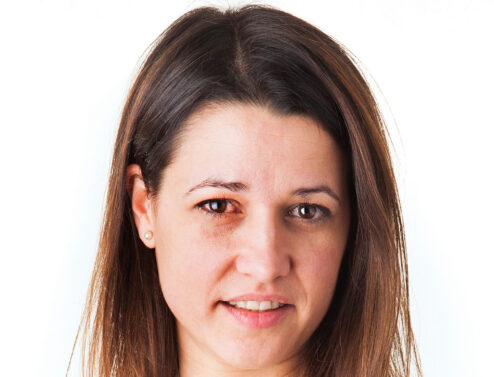
Ana Vesperinas is an associate and European Patent Attorney at Barker Brettell, specialising in chemistry and materials innovation. With a career spanning academia, industry, and private practice, she brings a broad scientific perspective to IP, combining technical expertise with a strong focus on client understanding and tailored advice. Name: Ana VesperinasRole: European Patent AttorneyOrganisation: Barker […]
6th May 2026
Ana Vesperinas is an associate and European Patent Attorney at Barker Brettell, specialising in chemistry and materials innovation. With a career spanning academia, industry, and private practice, she brings a broad scientific perspective to IP, combining technical expertise with a strong focus on client understanding and tailored advice.
Name:Ana Vesperinas Role: European Patent Attorney Organisation:Barker Brettell Location: Birmingham, UK Areas of expertise: Chemistry, functional formulations, materials, cosmetics, patent prosecution
A career shaped by exploration
Ana’s path into intellectual property was far from conventional. After completing a PhD and gaining experience across academia and industry, she only discovered IP later in her career. While working in industry, exposure to patent processes sparked her curiosity. Conversations with in house attorneys led her to explore the field further, ultimately prompting her to undertake a postgraduate course in intellectual property. That decision marked a turning point. Ana moved into an in house IP role before transitioning to private practice, where she felt she could broaden her experience and deepen her legal expertise. Today, she reflects positively on her varied journey, seeing it as a strength that shapes how she works.
A role grounded in chemistry and strategy
Now part of the chemistry team at Barker Brettell, Ana’s work focuses heavily on patent prosecution, alongside drafting and strategic advisory work. She particularly enjoys the challenge of prosecution developing arguments, understanding inventions in depth, and working towards broad and meaningful protection for her clients. Her technical expertise spans functional formulations, cosmetics, and increasingly, innovative materials. Recent work has included developments in construction materials and environmentally focused technologies, reflecting a wider industry shift towards sustainability and efficiency. Staying close to innovation is important to her. She actively keeps up with scientific developments to ensure she remains connected to the technologies behind the patents she works on.
Putting clients at the centre
A defining feature of Ana’s approach is her emphasis on understanding her clients’ needs. Her experience across different sectors allows her to relate to clients from a variety of backgrounds and tailor her advice accordingly. She believes strong relationships are built on clear communication from the outset setting expectations, explaining processes, and being transparent about challenges. Responsiveness is also key. Ana makes a conscious effort to respond quickly to client queries, recognising the urgency that often underpins IP decisions. Ultimately, she aims to make the patent process feel less daunting, ensuring clients feel informed, supported, and confident throughout.
Navigating international perspectives
A significant part of Ana’s career has involved working closely with US based clients. Many of her clients are located in the United States, requiring her to adapt strategies to fit European patent practice. This often involves managing expectations where approaches differ between jurisdictions. A strategy that succeeds in the US may not translate directly to Europe, requiring careful adjustment and clear communication. Through this experience, Ana has developed a strong understanding of both systems, enabling her to bridge the gap and deliver practical, effective advice.
Alongside her work with US clients, Ana’s UK‑based client base has grown steadily, ranging from individual inventors and universities to middle and large corporations. Ana takes a tailored approach, adapting her advice to each client’s level of intellectual property knowledge and experience. She places particular emphasis on transparency, ensuring clients have a clear understanding of anticipated next steps, expected timescales, and associated costs.
Keeping pace with innovation
Ana is particularly interested in the rise of functional materials and environmentally conscious innovation. Developments in areas such as construction materials, CO₂ reduction, and battery technologies are shaping her current work. She sees a clear trend towards sustainability, with many new inventions designed to reduce environmental impact while maintaining or improving performance. For Ana, staying informed about these changes is essential not just for technical understanding, but to provide relevant and forward thinking advice to clients.
Lessons in balance and perspective
Working in IP has also influenced how Ana approaches challenges. Early in her career, she felt pressure to address everything immediately. Over time, she has learned the importance of prioritisation and organisation. Managing a dynamic workload requires flexibility. Unexpected tasks can quickly reshape a carefully planned day, making adaptability a key skill. This shift in mindset has helped her approach her work more calmly and effectively, balancing urgency with structure.
Outside the office
Away from work, Ana enjoys staying active. Tennis and padel are regular pursuits, offering a way to unwind and reset after busy days. She also has a passion for skiing, often travelling to France or Switzerland with her family. When she cannot get to the mountains, she makes use of Birmingham’s indoor ski facilities. For Ana, these activities provide an important balance, helping her recharge and maintain focus in her professional life.
Encouraging different paths into IP
Reflecting on her own journey, Ana is keen to highlight that there is no single route into the profession. Entering IP later in a career can bring valuable experience and perspective. She encourages those considering a move into IP not to feel discouraged if they did not follow a traditional path. Experience gained in other roles particularly in science or industry can be a significant asset. Her own career stands as an example of how diverse experiences can lead to a fulfilling role in IP, combining technical knowledge with a strong understanding of client needs.
Meet the IP Professional is a PatWorld interview series exploring the people and perspectives shaping the intellectual property profession. Discover more interviews in the Meet the IP Professional hub, and find out more about PatWorld, a global IP search provider working with IP professionals worldwide to support informed patent, design and trade mark decisions, on our About Us page.
Katie Howe is a Senior Associate and UK and European Patent Attorney at Barker Brettell in Birmingham. Specialising in physics and engineering, she works across sectors including clean energy, aerospace and advanced transport, combining technical depth with commercially grounded IP strategy. Name: Katie HoweRole: Senior Associate, UK and European Patent AttorneyFirm: Barker BrettellLocation: Birmingham, UKAreas […]
18th March 2026
Katie Howe is a Senior Associate and UK and European Patent Attorney at Barker Brettell in Birmingham. Specialising in physics and engineering, she works across sectors including clean energy, aerospace and advanced transport, combining technical depth with commercially grounded IP strategy.
Name:Katie Howe Role: Senior Associate, UK and European Patent Attorney Firm:Barker Brettell Location: Birmingham, UK Areas of expertise: Physics and engineering patents, clean energy technologies, aerospace, transport innovation, IP strategy and consultancy
From research to patent strategy
Katie did not set out to become a patent attorney. During her PhD at the University of Birmingham, she was developing hydrogen fuel cell technology when she first encountered the profession.
“I’d always thought patent attorneys were lawyers,” she explains. “I didn’t realise you start with scientists and then teach them the relevant law.”
That realisation shifted her direction. While she enjoyed scientific research, she could see that a long-term academic career was not quite right for her. Patent law offered a way to stay close to innovation, while applying her scientific training in a different way.
Today, as a Senior Associate at Barker Brettell, she works as a consultant to a wide range of clients. These range from individual inventors to multinational corporations and overseas attorneys seeking UK or European protection.
The skills behind the role
Katie describes the day-to-day work as detailed and analytical. Much of it involves getting to the heart of what is truly new about an invention.
“It’s about identifying what’s special and then generalising that as much as possible to secure broad protection,” she says.
She likens discussions with examiners to “scientific spot the difference”. An examiner may cite similar prior art, and her role is to analyse the distinctions carefully and explain why they matter.
Two skills underpin this work: communication and attention to detail. Communication is essential not only with examiners, but also with clients who may have very different levels of IP knowledge. Attention to detail ensures that the technical and legal arguments are robust.
Working across fast-moving engineering sectors also requires humility. “You have to accept you’re never going to be the expert in your client’s technology,” she explains. “You need a solid scientific foundation, but also a willingness to ask questions and trust the inventors as the technical experts.”
Sustainability, regulation and real-world pressures
A significant part of Katie’s practice sits within clean energy, transport and aerospace technologies. She has a particular interest in environmentally focused innovation.
“I like feeling that I’m helping move technology forward in the right direction,” she says.
Regulation plays a major role in many of these sectors. In aerospace, even small technical changes may require extensive testing and regulatory approval. To an examiner, a modification might appear minor. In practice, it may represent years of regulatory effort.
“Sometimes you have to explain that what looks like a tiny tweak actually overturns decades of established practice,” she notes.
Public policy can also shape innovation trends. During the COVID-19 pandemic, she saw a surge in filings around sanitation technologies. Regulation and global events can rapidly shift where companies focus their research and IP investment.
Balancing technical precision with commercial reality
One of the more nuanced aspects of Katie’s role is balancing technical correctness with commercial priorities.
She recalls a recent case where she believed an examiner’s objection was wrong. From a legal perspective, she could have pushed back strongly. However, the product in question was not commercially critical to the client.
“In the end, an ‘okay’ solution that was quicker and cheaper made more sense,” she explains.
Understanding a client’s goals is therefore central. Some inventions are flagship products, deserving significant investment in prosecution. Others may warrant a lighter approach. Relationship building enables those open conversations about cost, value and strategy.
This commercial focus also informs Barker Brettell’s broader IP consultancy work. Katie has been involved in helping businesses identify what IP they own, what remains unprotected and how their portfolio aligns with their commercial objectives.
“It always comes back to why you’re spending money,” she says. “If it’s not supporting the business goals, then something needs to change.”
Confidence, clarity and client trust
Katie believes that what differentiates a strong patent attorney from a merely competent one is not just technical skill.
“It’s about understanding what the client actually needs,” she says. “Not just doing the job well, but helping them move forward.”
Since she first started as a trainee, she has consciously worked on developing greater confidence in her communication. Rather than presenting the legal options tentatively, she focuses on presenting clear, reasoned recommendations that take into account the business context.
“Clients are paying you to be a consultant,” she reflects. “They want to know what the best option is.”
She also values positivity in communication. A small shift in language, such as saying “thank you for bearing with me” rather than “sorry for the delay”, can change the tone of a relationship and build trust.
AI, innovation and emerging risks
Looking ahead, Katie is closely watching developments in battery recycling and regeneration technologies. For her, this less visible side of sustainability is vital, given the materials involved and the environmental stakes.
Artificial intelligence is another area drawing attention, though with caution.
She sees AI as a powerful tool which has potential for saving time, but also a bad habit of “hallucinating” to fill gaps and sometimes generating outputs that are actively misleading. However, she encounters clients who treat it as an authoritative consultant.
“There’s a risk people don’t understand its limitations,” she says.
She has seen invention disclosures drafted by clients with the help of generative AI that included technical-sounding but meaningless or inappropriate content, adding unnecessary complexity to the review process and increasing costs for the client. There are also confidentiality concerns where inventors input sensitive details into open systems. Because many AI models use submitted information as training data, confidential inventions could potentially enter the public domain before a patent application is filed.
For Katie, the key is informed and careful use. Technology can support the profession, but it does not replace critical thinking.
Outside the office
Away from patent drafting and examiner correspondence, Katie is an avid reader, particularly of fantasy and science fiction.
She has also taken up the harp. Not a full-sized orchestral instrument, but a smaller lap harp that offers a different kind of focus.
“It requires a completely different mindset,” she says. “And it’s quite kind as an adult learner – it is hard to make a bad sound with a harp!”
Music and reading provide a creative counterbalance to the precision of technical legal work.
Looking forward
Reflecting on her career so far, Katie highlights the importance of confidence, curiosity and collaboration. A strong scientific grounding matters, but so does the ability to adapt to different clients and commercial contexts.
As innovation accelerates in areas such as clean energy, advanced transport and AI, she sees the patent attorney’s role as both protector and translator. Someone who can bridge technical detail, regulatory complexity and business reality.
For Katie, the value lies not just in securing rights, but in helping innovators navigate the path from idea to impact.
Meet the IP Professional is a PatWorld interview series exploring the people and perspectives shaping the intellectual property profession. Discover more interviews in the Meet the IP Professional hub, and find out more about PatWorld — a global IP search provider working with IP professionals worldwide to support informed patent, design and trade mark decisions — on our About Us page.
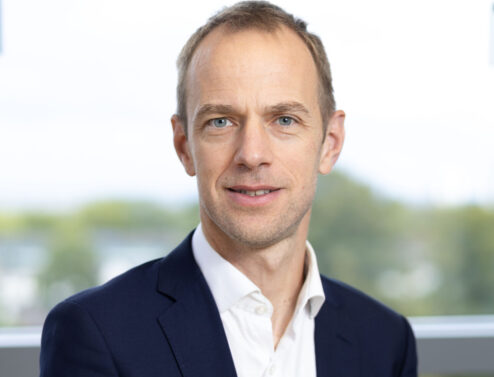
Nicholas Braddon didn’t set out to become a patent attorney. It was during university, studying Natural Sciences and specialising in materials science and metallurgy, that he first heard of the profession. The mix of science and language appealed — and it still does. “Words matter,” he says. “In patents, they define your client’s monopoly. That […]
18th September 2025
Nicholas Braddon didn’t set out to become a patent attorney. It was during university, studying Natural Sciences and specialising in materials science and metallurgy, that he first heard of the profession. The mix of science and language appealed — and it still does.
“Words matter,” he says. “In patents, they define your client’s monopoly. That blend of precision and communication drew me in.”
After a short stint analysing steel markets, Nick joined the IP profession and hasn’t looked back. “I’ve been lucky — I genuinely enjoy what I do.”
Now, with over 20 years of experience, he’s a partner at Barker Brettell— a leading UK intellectual property firm known for its client-focused approach.
Specialising in engineering and emerging technologies
Nick is Head of the Energy Sector Group at Barker Brettell. He works closely with clients across engineering and the physical sciences — from startups to international giants.
“I enjoy direct client work,” he explains. “Listening to inventors and translating their ideas into words that protect their business — that’s the challenge.”
His broad technical grounding in materials science and metallurgy gives him an edge when handling complex innovations. But it’s the ability to pick up new concepts quickly that really counts.
Trends in advanced engineering and IP
So, what’s exciting right now?
“Innovation is increasingly driven by user experience and sustainability,” Nick says. “Clients are asking: how can we do this better, cleaner, or smarter?”
He sees the energy transition and tightening regulations as major drivers of change. “We’re seeing huge developments in energy efficiency and digital integration across sectors.”
Technologies like sustainable design and AI-led engineering are clear areas of growth. And Nick believes the IP system is more than capable of supporting that evolution.
“People often say the law can’t keep up. But in my experience, the fundamental frameworks are versatile and generally fit for purpose. It’s about how we apply them.”
Tailoring IP strategy to fit
Nick supports a wide range of clients — from agile startups to global corporations — and their needs differ.
“Larger companies often know their key markets. That can make the patent strategy more straightforward,” he says. “With startups, there’s more uncertainty. So, we focus on flexibility and cost control.”
His advice for R&D teams is simple: you probably have something worth protecting — even if it doesn’t feel groundbreaking.
“If you’ve solved a problem, there’s often something patentable. Many inventors underestimate what’s protectable.”
And his advice doesn’t stop there. “Talk to a patent attorney early. Many firms offer free initial consultations — it’s better than missing your chance.”
The value of good advice
One of Nick’s strengths is in helping clients navigate uncertain or fast-evolving areas. He points to recent high-level cases as ones to watch.
“There’s a case at the Supreme Court that is looking at whether neural networks should be excluded as computer programs. It could shape how AI inventions are treated.”
A recent case in the European Patent Office examined to what extent the description should influence claim interpretation. “It’s technical, but it could affect outcomes in patent prosecution and patent scope across Europe,” he notes.
Opportunities for UK innovators
Nick is optimistic about the opportunities for UK-based engineering firms — if they act decisively.
“The biggest risk is failing to recognise and protect your IP,” he warns. “It’s part of building competitive advantage and attracting investment.”
He believes the UK’s reputation for innovation is strong, but businesses must make IP part of their strategy early on.
Outside the office
When he’s not drafting claims or advising clients, Nick volunteers with his local cricket club — usually behind the scenes organising junior matches, umpiring or scoring. “My playing days are more limited now,” he laughs. “But I still enjoy being involved.”
He’s also a keen walker, with soft spots for North Wales and the Peak District. “I’ve gone up Yr Wyddfa (Snowdon) from nearly every route over the years,” he says. “And Shutlingsloe, near Macclesfield Forest, was a favourite growing up.”
Connect with Nicholas Braddon
You can connect with Nick on LinkedIn to learn more about his work and insights in advanced engineering and IP.
Nick is a Partner at Barker Brettell, a UK-based firm of patent and trade mark attorneys. Barker Brettell specialises in helping businesses protect and grow their intellectual property through expert legal advice, innovation strategy, and global IP support.
PatWorld Supporting the IP profession
PatWorld is proud to support patent attorneys like Nicholas by offering expert-led patent searches. Our experienced patent search analysts deliver tailored, high-quality results to help IP professionals make informed decisions and add value for their clients. Check out our search services Patent Search | Patent Analysis | Professional |
PatWorld Global IP Research Services
Patent, Design, and Trademark Research Experts with a combined experience of over 200 years in Intellectual Property searching. Highly trained, dynamic in-house research teams specialising in a wide range of subject matter. All our analysts follow a training program developed by former IPO Examiners. Our teams are available to discuss any specific technical points regarding your search enquiries.






 Order a Search Now