


Meet the IP Professional: Michael McLaughlin – International IP and the Trusted Adviser
Michael McLaughlin is a Singapore Registered Patent Attorney, British Chartered Patent Attorney and qualified European Patent Attorney, and founder of McLaughlin IP. Originally from the UK, he has more than 25 years’ experience in intellectual property, combining international patent expertise with a highly tailored approach to helping businesses protect innovation across Singapore, Asia and wider global markets.
Quick profile
Name: Michael McLaughlin
Role: Singapore Registered Patent Attorney
Firm / organisation: McLaughlin IP
Location: Singapore
Areas of expertise: Patents, international patent strategy, software and ICT, electrical and electronic engineering, mechanical engineering and devices
From engineering to intellectual property
Like many patent attorneys, Michael did not begin his career with a long-held ambition to work in IP. However, his route into the profession was not entirely accidental.
The seed was planted towards the end of his university course. A close friend was considering a career in the profession and suggested Michael might also be suited to it. At that point, the prospect of more professional examinations held little appeal. Michael already had an engineering job lined up and was ready to begin his career.
Around eight years later, they had the conversation again. By then, Michael was working as an engineer in London and looking for a new challenge. His friend had been working as a patent attorney for most of that time and still enjoying the variety of the profession. This time, Michael listened.
The combination of technology, analytical thinking and the opportunity to keep learning appealed to him. He made the move into patent law, trained in London and subsequently qualified as a British Chartered Patent Attorney and European Patent Attorney.
Building an international perspective
International work became part of Michael’s career from an early stage. While training and working in London, he helped manage clients’ patent portfolios across multiple jurisdictions. That meant exposure to prosecution in countries including the US, China and Korea well before his eventual move to Singapore.
When he did relocate, the transition was therefore less of a dramatic change in practice and more of a refinement. Singapore’s patent legislation also provided a relatively familiar starting point because of its roots in UK patent law. Over time, however, Michael developed a deeper understanding of the distinctions in Singapore law and between jurisdictions across Asia.
Today, that experience helps him anticipate the practical differences that can arise when clients pursue international protection.
“I immediately picked up this international exposure during my training in London,” he explains. “After moving to Singapore, it was really about picking up experience and becoming more familiar with the subtleties and distinctions.”
Those distinctions can appear small, but they matter. Understanding them early can help clients make better decisions about international filing programmes. The extra experience picked up over the years, and the ability to draw on that and apply and extend it in new and challenging situations is the key.
For Michael, working in Singapore has particularly strengthened his knowledge of patent practice across ASEAN and the wider Asian region.
Advice built around the client
One principle sits firmly at the centre of Michael’s practice: there is no universal template for good IP advice.
He recalls recently receiving an enquiry from someone who asked for the firm’s “standard framework” for handling his situation. Michael’s response was straightforward: there wasn’t one. “We don’t do that one-size-fits-all approach,” he says.
A framework may become established for an individual client once their requirements are understood. But Michael does not believe the same approach should automatically be applied to every organisation.
Instead, the starting point is a conversation. “What do you have? Where do you want to go? How do you want to get there? What do you want to do with the IP?” Those questions become particularly important when advising organisations of very different sizes. Michael’s clients range from individual inventors and SMEs to larger businesses and international organisations.
The aim is to understand what the client is trying to achieve and shape the IP strategy around that objective.
Singapore’s evolving IP landscape
Michael has witnessed significant change during his career, particularly across Asia. The rise of China as a major source of patent filings has transformed the global landscape. He has also watched major Korean corporations build enormous patent portfolios.
Closer to home, he has seen Singapore’s patent system develop considerably. One notable change has been the creation of Singapore’s own search and examination capabilities. Earlier approaches relied much more heavily on work undertaken by other patent offices. Singapore has since developed what Michael describes as a capable search and examination unit of its own. The development reflects the country’s wider commitment to intellectual property. “Singapore takes intellectual property very, very seriously,” he says.
For a patent attorney, that commitment is accompanied by access to some fascinating technology. Michael has encountered advanced research and written patent applications covering work that he believes he may have been less likely to encounter had he remained in the UK.
Singapore has also developed a substantial innovation ecosystem around universities, incubators, government support and access to investment. For many Singapore-based innovators, however, the opportunity extends well beyond the domestic market. Because Singapore itself is relatively small, Michael finds that many of his domestic clients are thinking internationally from an early stage. The question of where to seek patent protection therefore comes back to commercial objectives rather than a predetermined list of countries.
“Where are your markets? Where are your opportunities?” he asks.
The right filing strategy depends on the answers.
Knowing why you want IP
That same focus on purpose runs through Michael’s approach to patent strategy. He has worked with organisations developing portfolios during periods of significant growth. One of the most important lessons from those experiences is deceptively simple: understand why the business wants intellectual property in the first place.
It is not enough for an organisation to decide that it “needs IP” because intellectual property is viewed as important. “Has anyone asked the question, why do you need it?” Michael says. “What do you need it for? What are you going to use it for?” For Michael, those questions should inform the strategy from the beginning.
A patent portfolio should have a purpose. Understanding that purpose helps determine what should be protected, where protection is needed and how much resource should sensibly be invested. Most organisations should need more than, “Yes, we’ll give you X number of patent applications at Y thousands of dollars over the next Z years.”
Technology is changing the conversation
Software, electronics and engineering remain important areas of Michael’s practice. Increasingly, developments in artificial intelligence are affecting both the technology being protected and the way patent professionals work.
For clients seeking international protection, Michael sees increasing complexity in areas such as AI-related inventions.
Patent office decisions and evolving practice can raise expectations around the information required and how an application should be prepared. This can (or at least should) also affect the time and budget needed to produce a strong specification.
That sometimes means having difficult conversations with clients. A budget suitable for a relatively routine invention may not be appropriate for a complex AI patent application intended for multiple international markets. The process may also require changes in how information is gathered from inventors at the outset.
Michael sees AI tools themselves becoming part of patent practice too. He expects AI-assisted patent drafting to raise the baseline quality of some specifications. Yet he does not believe technology removes the value of an experienced adviser.
Instead, it may make that distinction more important. “The big opportunity is still going to be for the trusted adviser,” he says. Experience allows professionals to make connections, look more deeply at a situation and understand what may be required to achieve a client’s desired result.
AI may change the playing field, but Michael believes there will still be opportunities for strong thinkers to distinguish themselves.
The importance of being good with people
Ask Michael what skills matter in an international IP career and his answer goes beyond technical expertise. Analytical ability is important, but so are human skills.
It was something he came to appreciate after moving from large engineering organisations into a much smaller patent attorney firm. “So much of what we do is dependent on personal relationships,” he says. That applies internally, with colleagues, and externally with clients and overseas associates. It becomes particularly important when building an international practice.
Communication is part of the same skill set. When Michael writes complex advice, his priority is not producing an impressive piece of prose. He thinks about the person receiving it. “How is this going to be read? I have to frame this in a way which is accessible for the reader.”
For those entering the profession, his advice is therefore to recognise the importance of relating to people as well as developing technical expertise.
There is another quality he values too: common sense. “A little bit of common sense goes an awful long way.”
Switching off
Outside work, Michael devotes a significant amount of time to staying fit and healthy. Exercise is part of most days. His focus is increasingly on mobility and compound movement. He is also a wannabe surfer, but needs to make more time for it. The results have been significant. Michael says he is in better physical shape in his mid-50s than he was 20 years earlier.
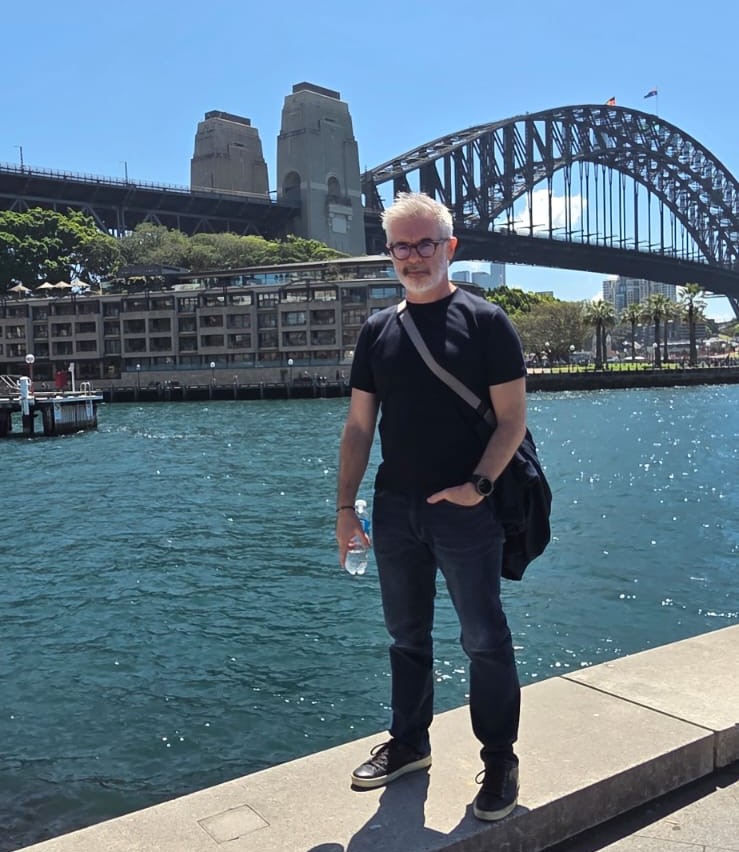
He has also rediscovered reading. Once an avid reader, he has recently returned to historical non-fiction and is enjoying making books part of his downtime again.
Perhaps most importantly, he tries to step away from screens. Sometimes switching off really does mean putting the device down.
Living in Singapore also gives Michael plenty of opportunities to get outside. He particularly enjoys walking around MacRitchie Reservoir and the trails surrounding Bukit Timah. During the pandemic, access to those outdoor spaces became especially valuable.
Looking ahead
Michael is pragmatic about the changes facing the profession. AI will alter how some aspects of patent work are carried out. It may improve the baseline quality of certain tasks and reshape client expectations. But he believes experience, judgement and the ability to understand people will continue to matter.
For the next generation of IP professionals, technical expertise alone may therefore not be enough. The ability to listen, understand what someone is really trying to achieve and communicate advice in a way they can use remains central to the role.
The tools may change. The value of being a trusted adviser remains.
Connect with Michael
LinkedIn: Michael McLaughlin
Firm website: https://mclaughlinip.com/
Meet the IP Professional is a PatWorld interview series exploring the people and perspectives shaping the intellectual property profession. Discover more interviews in the Meet the IP Professional hub, and find out more about PatWorld, a global IP search provider working with IP professionals worldwide to support informed patent, design and trade mark decisions, on our About Us page.
 Order a Search Now