


Meet the IP Professional: Claire Gregg – Bringing a Global Perspective to Australian IP
From pharmaceutical patents to international policy, Claire Gregg has built a career that combines scientific expertise, legal insight and professional leadership. As a Principal at Davies Collison Cave in Australia, she is passionate about complex patent disputes, mentoring the next generation of practitioners and strengthening Australia’s contribution to the global intellectual property community.
Quick Profile
Name: Claire Gregg
Role: Principal, Patent Attorney
Firm / Organisation: Davies Collison Cave, Melbourne, Australia
Location: Australia
Areas of Expertise: Chemistry and pharmaceuticals, patent strategy, litigation support, IP policy, mentoring and professional leadership
Finding the perfect balance between science and law
Growing up, Claire Gregg imagined a very different legal career.
Inspired by the criminal law dramas she watched with her mother, she initially set out to become a lawyer. After starting a law degree, however, she found herself increasingly drawn to science instead, eventually pursuing organic chemistry and completing a PhD.
Everything changed when another researcher in her laboratory mentioned they were leaving to become a patent attorney.
“They started telling me about it and I was like, ‘Wait, so I can do law and science without being a lawyer. That’s great.’ It really spoke to me that I could combine both in one profession.”
From that point onwards, Claire knew she had found the career she’d been looking for.
More than two decades later, she says that same combination of science and law continues to keep her engaged.
“The science is always changing. The law is always changing. You learn something new every day. I love that constant intellectual stimulation.”
Drawn to the most challenging work
Today, as a Principal at Davies Collison Cave, Claire specialises in chemistry and pharmaceutical patents, with a particular focus on patent strategy, disputes and litigation support.
While many patent attorneys enter the profession as an alternative to academia, Claire’s motivation was different. She had always wanted to return to law, and intellectual property gave her the opportunity to combine legal reasoning with scientific expertise.
Litigation, in particular, appealed because of the complexity involved.
“That’s where the deepest, most challenging intellectual arguments, reasoning and opportunities come from,” she explains. “I like the depth of knowledge that’s required.”
She also enjoys knowing that her work can make a genuine difference to clients who have invested years of research and significant resources into developing innovative technologies.
One recent highlight was being part of the team that secured Australia’s first preliminary injunction in a pharmaceutical patent case for eight years for Johnson & Johnson, an achievement she describes as particularly rewarding.
Giving back to the profession
Alongside her client work, Claire has become an active contributor to Australia’s intellectual property profession through her involvement with the Institute of Patent and Trade Mark Attorneys of Australia (IPTA) and the International Federation of Intellectual Property Attorneys (FICPI).
Her motivation stems from the enjoyment she has found throughout her own career.
“This profession has given me so much,” she says. “I wanted to give back.”
Professional organisations provide opportunities to help shape law and policy, but just as importantly, they create opportunities to learn from others.
“Everyone you connect with, you learn something new from them and you can teach them something new as well.”
For Claire, stepping outside the immediate environment of her own firm has broadened both her thinking and her understanding of the profession.
Why Australian patent attorneys stand out
Although Australia’s patent attorney profession is relatively small, Claire believes it consistently makes a significant contribution internationally.
She describes Australian practitioners as naturally outward-looking, something shaped by the country’s need to work closely with overseas jurisdictions.
“We’re relatively sophisticated for our size,” she says. “We really have to invest in learning about other systems and being across all of that for our clients.”
That international mindset has also given Australian practitioners an important voice in global discussions.
Claire believes Australia’s patent system strikes a thoughtful balance between protecting applicants’ rights while recognising the interests of third parties. Through her work with international organisations, she has seen elements of the Australian approach recognised as valuable examples during discussions on harmonisation.
More than anything, she believes Australian practitioners understand how their jurisdiction fits into the wider international IP landscape.
Looking beyond Australia’s borders
International collaboration has become one of the most rewarding aspects of Claire’s career.
Through organisations including IPTA and FICPI, she has worked alongside practitioners from many different jurisdictions, contributing to discussions on policy while learning how different countries approach similar legal and commercial challenges.
“It teaches you the value of having a perspective that’s bigger than your own jurisdiction,” she says. “There are so many different ways of practising, different commercial problems and different historical angles on the law.”
Those experiences have reinforced her belief that Australia has much to contribute internationally. Although relatively small, she believes Australia’s patent system has developed a strong balance between the rights of applicants and third parties, and she has been encouraged to see aspects of the Australian approach considered in wider discussions around international harmonisation.
For Claire, international collaboration is most valuable when every jurisdiction has the opportunity to contribute. Different perspectives strengthen policy, improve understanding and ultimately benefit the global IP profession.
Turning great research into global success
Australia has a long history of producing world-class scientific research, and Claire believes the country’s greatest opportunity now lies in turning more of that research into commercial success.
“We’ve got world-leading universities, world-leading research and world-leading science going on here,” she says.
The challenge, in her view, is supporting innovators to take those discoveries beyond the laboratory.
She believes government policy, investment and increasing awareness of intellectual property all have important roles to play in helping Australian innovation reach global markets.
Recent initiatives focusing on commercialisation give her confidence that progress is being made, while research institutions are becoming increasingly strategic in how they manage intellectual property and build partnerships.
If that momentum continues, Claire believes Australia is well placed to strengthen its role within the international innovation landscape.
Investing in future talent
Developing future professionals is something Claire regards as both a responsibility and one of the most rewarding parts of her career.
“The ongoing viability of our profession depends on it,” she says.
She credits many of her own achievements to mentors who invested time in her development and believes supporting the next generation is simply paying that investment forward.
Mentoring also provides opportunities to learn.
“They think about things really differently,” she says when discussing younger professionals entering the IP profession.
Claire has noticed that newer generations often place greater emphasis on work-life balance and wellbeing, while seeking meaningful work much earlier in their careers. Rather than viewing those differences negatively, she believes every generation has something valuable to contribute.
“I don’t think any of those things are good or bad. It’s just different.”
Understanding people as well as patents
Alongside her legal and scientific expertise, Claire has also studied psychology and trained as a Mental Health First Aid Officer.
Rather than fundamentally changing her leadership style, she believes it has helped her better understand how people respond differently to pressure, motivation and challenging situations.
“Everyone responds differently to pressure and challenges. Everyone’s motivated differently.”
The training has also helped her recognise when colleagues may not be okay and, importantly, how to help them access appropriate support while maintaining healthy personal boundaries.
It reflects a leadership approach built on empathy, understanding and recognising that no single management style works for everyone.
Outside the office
When work allows, Claire enjoys slowing the pace.
Her three cats are, she says with a smile, “the best part of my life”, and spending time with them provides the perfect way to switch off.
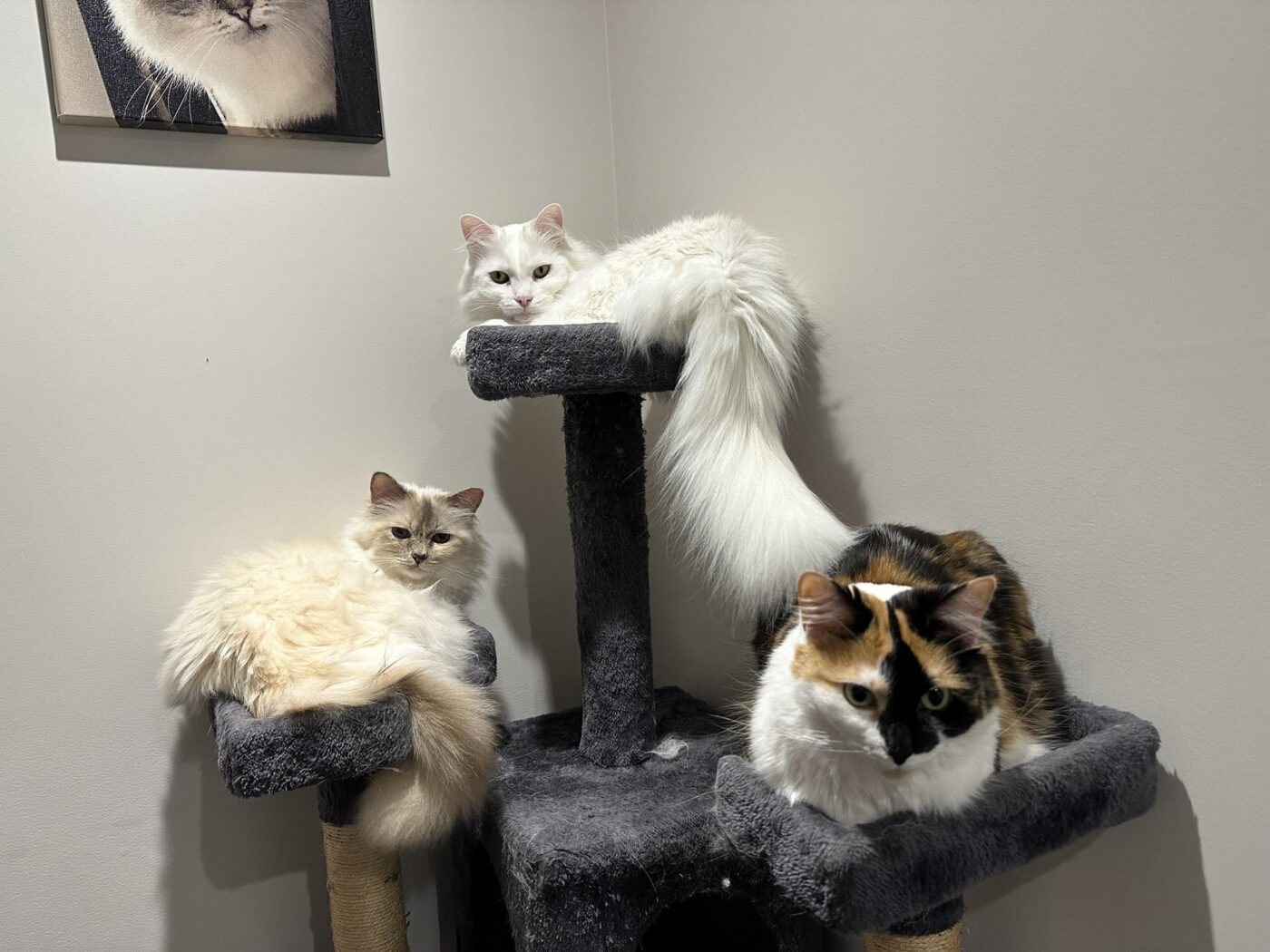
She also enjoys writing, although she admits that even when she sits down to write for pleasure, she often finds herself producing articles about patent law.
Home improvement projects provide another creative outlet, from decorating to tackling practical jobs around the house.
Travel remains another passion. Although conferences regularly take her around the world, Claire always tries to extend work trips so she can experience more of the places she visits.
Europe is a favourite destination because of its history, culture and food, while countries such as Egypt, India and Cuba have left equally lasting impressions.
Looking ahead
Reflecting on her career, Claire finds it impossible to identify a single achievement that stands above the rest.
Becoming a Principal at one of Australia’s leading IP firms, contributing to a landmark pharmaceutical patent case, serving on the IPTA Council, becoming Vice President and writing for respected IP publications have all brought different kinds of satisfaction.
Yet perhaps the strongest thread running through her career is something less tangible.
She has never viewed intellectual property as simply a profession or a personal career path. Instead, she sees it as a community that benefits from curiosity, collaboration and a willingness to invest in others.
“I don’t see it as just being about me and my career,” she explains. “I love this profession and it means a lot to me. It’s part of who I am, so I want to make sure it’s in really good shape when I eventually leave it.”
Whether advising clients, mentoring future patent attorneys, helping shape policy or representing Australia internationally, Claire continues to be driven by the same curiosity that first led her to intellectual property: the opportunity to keep learning while helping others do the same.
Contact
LinkedIn: https://www.linkedin.com/in/clairegregg1/
Firm website: https://dcc.com/
Meet the IP Professional is a PatWorld interview series exploring the people and perspectives shaping the intellectual property profession. Discover more interviews in the Meet the IP Professional hub, and find out more about PatWorld, a global IP search provider working with IP professionals worldwide to support informed patent, design and trade mark decisions, on our About Us page.

 Order a Search Now