


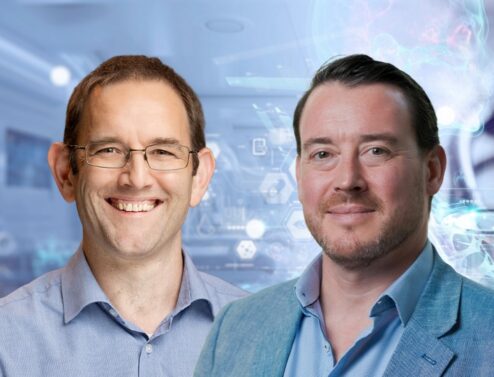
Meet the IP Professional: Alex Brown & Alex Bone – Supporting MedTech Innovation from Startup to Scale
Alex Brown and Alex Bone are Partners and Patent Attorneys at Venner Shipley, specialising in mechanical engineering inventions and MedTech innovation. Drawing on decades of combined experience, they help businesses ranging from early-stage startups to multinational organisations develop intellectual property strategies that support innovation, investment and commercial growth.
Quick Profile
Names: Alex Brown & Alex Bone
Roles: Partners, Patent Attorneys and UPC Representatives
Firm: Venner Shipley
Locations: London and Cambridge
Areas of Expertise: Mechanical engineering, MedTech innovation, patent strategy, patent prosecution, opposition and appeal proceedings, startup support, Unified Patent Court matters
Different routes into the same profession
Although they now work side-by-side within Venner Shipley’s Mechanical Engineering team, Alex Brown and Alex Bone arrived in the patent profession through very different routes.
For Alex Brown, intellectual property was familiar from an early age. His father was a patent attorney, giving him an unusual insight into a profession that many people only discover after university.
After studying Mechanical Engineering at the University of Manchester and spending a short period in IT, he realised he wanted a career that combined technology, law and commercial strategy.
“I knew with the intersection of the technology and the law, a career in the patent profession would tick all the boxes that I was interested in.”
Nearly 25 years later, he remains with the same firm, now leading Venner Shipley’s Mechanical Engineering team.
Alex Bone’s journey was more typical of many patent attorneys. While studying Chemical Engineering at the University of Cambridge, he attended a lecture delivered by a patent attorney who happened to be recruiting.
The profession immediately appealed to him.
After qualifying in private practice, he moved in-house to Novartis, where he worked with medical device technologies before returning to private practice through A.A. Thornton, which later combined with Venner Shipley.
Together, their different backgrounds provide clients with a blend of private practice, in-house and leadership experience.
Why MedTech continues to inspire
Both attorneys have spent much of their careers working with mechanical inventions and MedTech technologies.
For Alex Brown, mechanical engineering has always held a particular fascination because inventions can be seen, touched and understood through physical interactions.
He points out that despite predictions that software and electronics would dominate innovation, mechanical engineering remains highly active and competitive.
This is especially true in MedTech, where seemingly simple devices often contain highly sophisticated engineering.
Drug delivery systems, safety syringes and inhalers may appear straightforward, but tiny mechanical differences can determine whether a device performs reliably and gains acceptance from healthcare professionals and patients.
Alex Bone shares a similar enthusiasm.
He remains fascinated by the ingenuity required to create mechanical solutions to complex healthcare challenges.
Particularly rewarding are the stories behind many MedTech startups.
Often, innovation begins when an entrepreneur encounters a real-world healthcare problem affecting a family member or friend and decides to solve it.
“They go away and come up with a widget that makes their family member’s life better in some small way, and then they try to make that into a product.”
The changing face of MedTech innovation
Over the course of their careers, both attorneys have witnessed significant changes within the MedTech sector.
One of the most notable developments has been the growing integration of engineering, software, electronics and healthcare data.
Alex Bone highlights the rise of personalised medicine, where treatments and delivery systems are increasingly tailored to individual patients rather than broad populations.
Modern devices often combine mechanical delivery systems with sensors, monitoring technologies and connected applications that track patient compliance and treatment outcomes.
At the same time, the availability of health data generated through wearable technologies has opened new opportunities for innovation.
Alex Brown has seen a similar convergence of disciplines.
Where patent matters were once separated into distinct technical areas, many modern innovations now require collaboration between mechanical, software and life sciences specialists.
Artificial intelligence is also beginning to influence product development, intellectual property management and innovation processes across the healthcare sector.
Helping startups avoid costly mistakes
Supporting startups and spin-outs is a significant part of both attorneys’ work.
While innovation may begin with a strong technical idea, both emphasise that intellectual property should be considered from the earliest stages of business development.
According to Alex Bone, one of the most common mistakes is postponing IP discussions until significant time and money have already been invested.
By that stage, businesses may discover third-party patent barriers or realise they have inadvertently disclosed valuable innovations before obtaining protection.
Alex Brown sees similar challenges, particularly among university spin-outs and academic founders.
Researchers are often accustomed to publishing their findings as quickly as possible. However, public disclosure before filing a patent application can seriously undermine protection opportunities.
Ownership issues can also create difficulties.
Without clear agreements regarding who owns newly developed intellectual property, problems may emerge later when businesses seek investment or commercial partnerships.
Both attorneys stress the importance of establishing a clear IP strategy early, even if formal filings come later.
Building confidence for investors and partners
A well-developed IP strategy does more than protect innovation. It can also play a crucial role in attracting investment.
Investors want confidence that the technology they are supporting can be protected and commercialised successfully.
“If there isn’t IP protection around the technology, it’s difficult to persuade someone to invest in something that someone else could easily copy,” explains Alex Brown.
Alex Bone adds that a strong strategy can also reduce uncertainty.
Freedom-to-operate reviews, competitor monitoring and ongoing IP planning help demonstrate that risks have been assessed and managed appropriately.
For startups seeking funding, partnerships or acquisition opportunities, that reassurance can be invaluable.
Navigating a changing patent landscape
The introduction of the Unified Patent Court (UPC) has added another dimension to European patent strategy.
According to Alex Brown, the UPC offers significant opportunities through centralised enforcement across multiple jurisdictions. However, it also introduces strategic decisions regarding risk and protection.
Some businesses embrace unitary patents and central enforcement, while others prefer a more cautious approach using traditional national validations.
Alex Bone notes that many smaller companies are attracted by the cost-effectiveness of obtaining broad European coverage through a unitary patent.
For larger organisations, strategic considerations around enforcement and revocation often play a greater role.
As with many aspects of intellectual property, there is rarely a one-size-fits-all solution.
What makes the profession rewarding
Despite decades in the profession, both attorneys remain enthusiastic about their work.
For Alex Bone, much of the enjoyment comes from problem solving.
Patent prosecution, oppositions and hearings often involve finding creative solutions within strict legal and technical constraints.
Every case presents a new puzzle.
He also enjoys working closely with smaller businesses where intellectual property can have a direct and significant impact on commercial success.
Alex Brown values the trusted relationships he has built with clients over many years.
Being involved early in the innovation process and working alongside research, development and commercial teams provides a deeper understanding of the technologies and businesses he supports.
He also continues to enjoy opposition and appeal work, where high-stakes disputes bring additional challenge and excitement.
Beyond client work, he finds fulfilment in helping to grow teams, develop people and contribute to the strategic direction of the firm.
Outside the office
Away from intellectual property, both attorneys enjoy staying active and spending time outdoors. But perhaps their most obvious shared interest is a passion for cars and motorsport.
For Alex Brown, much of his free time revolves around his three children and their activities. He also plays squash and enjoys track days, combining his engineering background with a love of driving. Over the years he has owned and driven a variety of performance and track-focused cars. Although these days he particularly enjoys extracting the maximum performance from smaller, lighter vehicles.


Alex Bone shares a similar enthusiasm for cars and track driving. While he jokes that some of his automotive adventures have not always gone entirely to plan, including the loss of a TVR during a particularly wet track day, he remains on the lookout for his next classic car project.
Beyond motorsport, Alex Bone enjoys running, walking and spending time outdoors. Regular walks along the South Downs and the Seven Sisters coastline provide a welcome opportunity to switch off. While running offers a chance to clear his mind away from the demands of client work.
Their shared enthusiasm for engineering extends well beyond the office. Reflecting the curiosity and problem-solving mindset that first drew both of them into the patent profession.
Looking ahead
When asked for one piece of advice for MedTech startups, both attorneys returned to a common theme: think about intellectual property early.
Understanding what makes an innovation valuable, identifying the true “crown jewels” of a business and creating a clear IP strategy from the outset can prevent costly mistakes later.
As MedTech continues to evolve through advances in engineering, data, software and artificial intelligence, those foundations are likely to become even more important.
Contact Information
LinkedIn: Alex Brown, and Alex Bone
Website: www.vennershipley.com
Meet the IP Professional is a PatWorld interview series exploring the people and perspectives shaping the intellectual property profession. Discover more interviews in the Meet the IP Professional hub, and find out more about PatWorld, a global IP search provider working with IP professionals worldwide to support informed patent, design and trade mark decisions, on our About Us page.
 Order a Search Now