


Meet the IP Professional:Maille Lyons – Seeing Patents from the Other Side
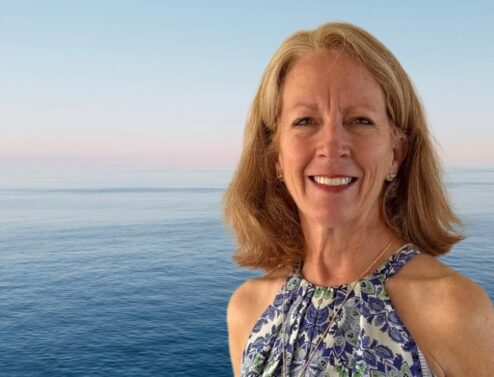
Maille (pronounced “molly”) Lyons never planned a career in intellectual property. A scientist, researcher and educator, she knew little about patents when a move to Washington DC led a friend to suggest applying for a role at the United States Patent and Trademark Office (USPTO). Fourteen years later, she left a career she loved with a wealth of experience from inside the US patent system. Today, through her own consultancy, she is using that examiner’s perspective to help others better understand and navigate the patent process.
Quick profile
Name: Mary Maille (Molly) Lyons.
Background: Scientist, researcher and educator; former USPTO Patent Examiner.
Current focus: Independent IP consultancy, SeaLyons LLC.
Specialist area: Biotechnology and the US patent examination process.
Something you might not know: Maille combines her consultancy with a life of travel and plans to return to living and working aboard a 44-foot sailboat when her new vessel is ready.
An unexpected route into IP
For Maille, a career in intellectual property was never part of a carefully mapped-out plan.
Her background was in science. She had worked in both research and education, developing a deep knowledge of biotechnology and, just as importantly, an appetite for learning.
A change in circumstances provided the unexpected route into patents. As a military wife, Maille had moved regularly, and when her husband’s career took them to Washington DC, finding a suitable scientific research position proved difficult.
A friend suggested that she apply to the USPTO.
At the time, Maille knew very little about intellectual property or what being a patent examiner involved. Nevertheless, the combination of science, research and the opportunity to explore new ideas quickly proved a natural fit.
She was hooked.
Over the next 14 years, Maille built a successful career at the USPTO. Receiving accolades for her work and discovering a profession that brought together many of the things she enjoyed most.
“I loved reading about new innovations every day and speaking to innovators who were passionate about their inventions.”
Her previous experience proved particularly valuable. A background in biotechnology gave her the technical understanding required to examine complex inventions.While years spent researching meant that reading, investigating and continually acquiring new knowledge already came naturally.
There was, however, one aspect of the job that surprised her.
“You need to know a lot of law.”
For someone entering the profession from a scientific background, understanding the legal framework surrounding patents represented a significant learning curve. Over time, that combination of scientific and legal knowledge became an important part of her expertise.
Life on the other side of a patent application
For patent applicants and their representatives, interaction with an examiner may be just one stage of a much longer journey. For Maille, spending 14 years on the other side of that interaction has given her a very different perspective on the process.
One point she is particularly keen to emphasise is that many examiners want applicants to succeed.
Having spoken with innovators throughout her USPTO career, she understands how much time, knowledge and enthusiasm can sit behind an invention. The examiner’s job is not simply to find reasons to reject an application, but to assess it within the framework they are required to follow.
Maille describes the examiner’s role using the analogy of putting a fence around an invention. An inventor will naturally want that fence to extend as far as possible, maximising the scope of their protection. The examiner’s role is to determine where that fence can fairly be placed, balancing appropriate protection for the inventor with the interests of the wider public and the need to leave room for further innovation.
That makes presenting information clearly particularly important. For Maille, that clarity starts with the claims. Examiners will often read these first because they establish the legal boundaries of the protection being sought, meaning every word matters. Clear, well-written claims can make the examiner’s task easier and often give a good indication of how clearly the rest of the application has been prepared.
Maille points to the guidance provided by the USPTO for patent applications. While not every element of that guidance is mandatory, following the recommended structure can make it considerably easier for an examiner to understand an application and locate the information they need.
From her experience, departing from that guidance unnecessarily can create problems.
If information is difficult to identify or understand, there is greater potential for something important to be missed. That can make the examination process more difficult and potentially contribute to an application being rejected.
It is a simple insight, but one that reflects Maille’s broader philosophy: understanding the process from the examiner’s perspective can make navigating it much easier.
Turning examiner experience into a consultancy
Leaving the USPTO was not driven by a desire to leave patent examination behind. Maille thoroughly enjoyed her work.
Instead, a very different life decision prompted the next stage of her career.
Maille and her husband had decided to live aboard a sailboat and travel. Establishing her own consultancy offered a way to retain her connection with intellectual property. While creating the freedom to work wherever their travels took them.
It also gave her an opportunity to put 14 years of examiner experience to work in a new way.
Today, that experience is central to what she offers.
Having sat on the examiner’s side of the process, Maille understands what an examiner is looking for in an application and the issues that can arise during examination and subsequent responses or appeals. She can look at a situation through a lens that applicants themselves may never have experienced.
That perspective is particularly useful because she also understands the human side of the process.
Years of conversations with applicants have given her an appreciation of the passion people have for their ideas. Combining that understanding with practical knowledge of how examiners work allows her to help clients approach the process more effectively.
It is a role that brings together the different strands of her career: scientist, researcher, educator and former patent examiner.
There are no bad patent examiners
Maille has also taken what she learned at the USPTO and turned it into a book, There are NO Bad Patent Examiners: The unofficial guide to working with the “good” ones.
The deliberately provocative title reflects one of the messages she wants applicants to understand: the relationship between applicant and examiner does not need to be adversarial.
Maille believes it is important not to let patent examination become an “us versus them” contest between examiners and IP practitioners. Instead, she encourages both sides to keep the inventor at the centre of the process. Behind an application is usually someone who genuinely believes they have created something important.The shared aim should be to help establish a strong, defensible patent with an appropriate scope of protection.
The book is intended to help inventors and those supporting them better understand how to work with patent examiners and make their way through the USPTO process more smoothly.
Although firmly rooted in the US patent system, Maille believes the lessons are relevant beyond the United States, particularly for overseas applicants seeking US patent protection.
That international relevance has become even more significant following a USPTO rule change effective from 20 July 2026. The rule change concerning representation for applicants located outside the United States. For overseas innovators navigating the US system, understanding how the USPTO and its examiners operate remains an important part of the process.
Maille’s experience also gives her an appreciation of just how complex patent examination can become. Patentability is not simply a matter of understanding the science behind an invention. Examiners must apply detailed legal and procedural guidance, including rules around issues such as subject matter eligibility.
For innovators encountering the system for the first time, that complexity can be daunting. Maille’s aim is to make what happens on the examiner’s side less mysterious.
A career built on curiosity
There is another thread connecting the different stages of Maille’s career: curiosity.
Research, teaching and patent examination all require a willingness to keep learning. For Maille, that is one of the great attractions of working with intellectual property.
Every application can introduce a new technology, discovery or idea.
It is also why she believes someone does not necessarily need to discover intellectual property at the beginning of their career to find their place within it. Maille herself came to IP relatively late, bringing experience and qualifications from elsewhere that ultimately helped her succeed.
Her advice to others considering a similar move is reassuringly straightforward: you can start at any time.
A research background can be particularly useful because researchers are already accustomed to reading extensively, investigating unfamiliar subjects and continually developing their knowledge.
There is, however, one caveat.
If spending large amounts of time reading scientific and technical literature sounds tedious, patent examination may not be the career for you.
For Maille, it was precisely the opposite. The opportunity to encounter something new every day was part of what kept the role interesting throughout her 14 years at the USPTO.
Wherever the winds take her
Maille’s working life today looks rather different from her years in Washington DC.
She previously lived and travelled aboard a catamaran, which has since been sold while she waits for a new boat to be built. In the meantime, her travels continue on dry land, with plans to be back on the water later this year.

The ambition is to combine both sides of her life. Developing her consultancy and sharing the knowledge accumulated during her USPTO career while continuing to travel the world.
It is perhaps an appropriate next chapter for a career that was never planned in the first place.
What began with a friend’s suggestion to apply for an unfamiliar job became a 14-year career at the heart of the US patent system. Now, Maille is taking everything she learned on the examiner’s side and using it to help others see the patent process from a different perspective. Wherever in the world she happens to be.
Connect with Maille
To learn more about Maille’s consultancy, her experience at the USPTO and her adventures as she takes her work around the world, connect with her on LinkedIn, visit IP at Sea or email. [email protected]
For more of Maille’s insights from the examiner’s side of the patent process, her book, There are NO Bad Patent Examiners: The unofficial guide to working with the “good” ones, offers a practical look at working with USPTO patent examiners and navigating the examination process. Find out more about Maille’s book.
Meet the IP Professional is a PatWorld interview series exploring the people and perspectives shaping the intellectual property profession. Discover more interviews in the Meet the IP Professional hub, and find out more about PatWorld, a global IP search provider working with IP professionals worldwide to support informed patent, design and trade mark decisions, on our About Us page.
 Order a Search Now