From diagnostics to cannabis-based therapeutics, Sophie Topham’s career in biotech patent law has been anything but predictable. A Senior Associate in the biotechnology team at Marks & Clerk, Sophie’s calm, analytical approach is matched by a refreshing curiosity—qualities that have made her an invaluable asset to clients and colleagues alike. We caught up with her to hear about her work, career path, and the rare case that led to one of her most widely read articles.
From Immunology to Innovation
Sophie’s current docket spans a broad range of biotechnology innovations. While she regularly works with immunology-based diagnostics and oncology-related inventions (including peptide vaccines and tools for identifying oncogenic mutations), her work is as diverse as the biotech field itself.
“Over the last few years, I’ve also worked in the cannabis field, particularly with extracts and synthetic cannabinoids for medical uses,” she explains. “And more recently, I’ve seen an increase in devices—some that resemble ELISAs on a chip, others that use antibodies in more novel ways.”
Despite the increasing overlap between biotech and AI, Sophie admits she still has a soft spot for what she calls “pure biology.” “As a biologist by training, those are the ones I find the most intuitive to work with.”
A Curious Case of Prior Art
In 2024, Sophie penned an article about an unusual and educational experience: having a client’s own clinical trial proposal cited as prior art against their European patent. It was the first time she’d encountered such a scenario—and it proved just as useful for the IP community as it did for her personally.
“Opponents in an EPO opposition cited the client’s trial proposal, which we hadn’t seen before due to a team change on the client’s side,” she recalls. “I had to dig into the case law to understand how such documents are interpreted, especially regarding whether the invention was truly disclosed.”
The case raised interesting questions around whether and how other documents—such as scientific publications—can be used to interpret clinical trial proposals, and how that squares with the EPO’s guidelines.
Understanding the Unusual
Sophie is quick to point out that having clinical trial proposals cited as prior art is still uncommon. “Patent applications in biotech typically don’t require clinical data to be granted. In vitro data is often sufficient for meeting plausibility requirements, so most companies file before trials begin,” she says.
Still, her experience highlighted how easy it is for assumptions to trip up even the most diligent teams. “We’ve seen clients express genuine surprise that their own publications can be cited against them—especially in Europe where there’s no grace period.”
The Route Not Taken
Like many in the IP profession, Sophie’s path wasn’t a straight line. “I originally wanted to be an airline pilot,” she laughs. “But when airlines stopped sponsoring training, the cost became unrealistic. Then I remembered a careers talk we had at university about being a patent attorney. I looked into it, and here I am.”
With a background in biological natural sciences from Cambridge, Sophie’s analytical mindset found a perfect home in IP law. She’s since seen applications through from drafting to grant, oppositions, and even appeals.
“Seeing something I’ve written be granted—and knowing I helped a startup gain recognition through their patent—those are the highlights,” she says.
Life Outside the Office
When she’s not deep in a patent claim, Sophie is rarely still. “I always try to move—walk, cycle, yoga, strength training. Even when working from home, I’ll build exercise into my day.” She’s part of a cycling club and makes time for a proper lunch break most days—usually with some kind of movement.
Evenings are more relaxed: cooking from scratch, reading anything from spy novels to translated Japanese fiction, and planning her next getaway. This summer, she’ll finally fulfil a childhood dream—horse riding along the beaches of Morocco with her twin sister.
If Only There Were More Hours…
When asked which fictional invention she’d most like to patent, Sophie doesn’t hesitate: “Hermione Granger’s Time-Turner. I’d love more hours in the day. If I knew how it worked, I’d make one!”
With her blend of sharp legal insight and grounded, genuine enthusiasm for the science behind the patents, Sophie brings a distinct human touch to biotech IP. Whether she’s tackling tricky prior art or galloping down a Moroccan beach, she’s doing it with purpose and passion.
Marks & Clerk is a leading international firm of intellectual property experts, providing comprehensive patent, trade mark, design, and litigation services. With a global presence and deep sector knowledge, Marks & Clerk supports innovative companies from startups to multinationals in protecting and leveraging their IP assets.
How PatWorld Supports Biotech Innovators
At PatWorld, we help biotech companies, attorneys, and researchers access fast, reliable, and intuitive global patent search tools. Our advanced search and analytics features enable professionals like Sophie to:
When it comes to securing exclusivity in the life sciences sector, few bring the depth of insight and strategic clarity that Francis Tierney offers. A qualified UK and European patent attorney since the 1990s, Francis blends decades of in-house experience with a boutique advisory approach that gives life sciences companies a genuine edge—particularly in pharmaceuticals and small molecule therapeutics. In this article PatWorld discusses with Francis Exclusivity in Pharma, and Navigating the Life Sciences Patent Landscape.
From In-House to Boutique: A Unique Perspective
Francis began his IP career in-house, spending nearly three decades advising on agrochemical and pharmaceutical innovations before moving into private practice. This “poacher turned gamekeeper” transition, as he jokingly puts it, equips him with an intuitive understanding of how clients operate and what they truly need from their IP counsel.
Now at Patent Boutique, he works closely with clients on prosecution, opposition, appeal work, due diligence, and strategic portfolio development. His tailored, hands-on approach is a hallmark of the firm.
The Five Pillars of Patent Strategy in Pharma
Francis sees five key IP considerations for life sciences companies today:
Confidentiality: With increased pressure to publish and attract investors, ensuring non-disclosure before filing is vital.
Timing of Filings: Filing too early can lead to protection ending earlier during peak sales; too late, and companies risk being scooped.
Collaboration with R&D: Patent attorneys need to work closely with research teams to react quickly to emerging data and shape strategy in real time.
Market Awareness: Limited budgets mean companies must prioritise filings in jurisdictions most critical to commercial success.
AI: Keeping abreast of developments in, and the increasing capabilities of, AI.
Getting Patent Drafting Right
Drafting for small molecules brings its own hazards. “If you draft too broadly, not only might your claims be rejected, but you risk creating your own most damaging prior art,” Francis warns. He emphasises the importance of including strong biological data—especially for markets like China—and ensuring that patents will remain enforceable 20+ years down the line, particularly when linked to SPCs.
US vs. Europe: Avoiding a Common Pitfall
One of the most frequent issues Francis sees is US-based companies underestimating global disclosure rules. “There’s a grace period in the US, but not in Europe. Smaller companies often publish during the priority year, which can be problematic for later filings,” he explains.
He also notes how different legal frameworks—such as the EPO’s problem-solution approach versus the US’s obviousness standard—can yield very different outcomes from the same prior art.
Early-Stage Advice: Flexible, Focused, and Fast
Emerging biotech companies often need more tailored support, especially when balancing speed, disclosure, and credibility for investors. Francis helps them navigate this by streamlining prosecution strategies and ensuring they have grantable, meaningful patents to support licensing or M&A activities.
“Established pharma companies have structured IP processes. Start-ups don’t—so we help them build systems and strategies that are credible and cost-effective,” he says.
Patent Portfolios as Deal Enablers
Whether supporting collaborations or preparing for acquisition, Francis views robust IP portfolios as central. “You need to show what you’ve got, but also what you might be developing. Priority filings before a deal are key to demonstrating value,” he advises.
AI in Drug Discovery: A New Frontier, with Caveats
Francis acknowledges AI as a potential game-changer in small molecule R&D, but with caution. “If AI knows everything, where’s the inventive step?” he asks. He sees a possible future where narrower, more focused patent claims become the norm due to more precise AI targeting—but also where validity could well be questioned if algorithms become standardised tools.
A Call for Change: Grace Period Reform
If he could change one thing in the UK or EU IP landscape, Francis would introduce a broader grace period. “It would protect researchers from the kind of accidental disclosures that can destroy patentability. A safety net—not to rely on, but to support honest mistakes.”
The Boutique Advantage
At Patent Boutique, Francis and his colleagues offer flexibility, cost transparency, and a collaborative approach. “We were cloud-based from the start, so our clients benefit from seamless document transfer, real-time communication, and scalable support,” he notes. Clients also gain access to a wider network of trusted attorneys—competency, not size or shine, is what counts.
Outside the Office: Gardening and Grandkids
Beyond the world of SPCs and claim drafting, Francis is a proud grandfather and a keen (and increasingly enthusiastic) gardener. “It’s such a contrast to patent law—where you wait years for a result. In the garden, you plant something and within weeks, there’s colour, texture, and reward,” he says. His latest pride? A set of stunning Alstroemeria —particularly a variety called Indian Summer.
Connect with Francis Tierney 🔗 Francis Tierney on LinkedIn 🔗 Patent Boutique – A specialist firm offering high-level, strategic patent services tailored to life sciences and beyond.
P.S. How PatWorld Supports Patent Attorneys Like Francis PatWorld supports IP professionals with expert-led Patent, Trademark, and Design Search services. Whether you’re advising clients on exclusivity strategies, preparing for prosecution or opposition, or managing complex portfolios, our tailored search solutions deliver the clarity and confidence you need to move forward.
From ballroom dancing and ten-pin bowling to guiding cutting-edge startups through the complexities of intellectual property, Andrew Flaxman has certainly had a diverse journey. Today, as a partner at Bristol-based IP firm Stevens Hewlett & Perkins (SH&P), Andrew is a passionate advocate for startups and a specialist in software, computing, and AI-related patents.
The Path to Patents
Andrew didn’t set out to become a patent attorney. In fact, it wasn’t until the final week of university that he picked up a leaflet that introduced him to the profession. With a love of physics, a knack for language, and a curiosity about the law, the role seemed like the perfect fit. He began his career in London before making the move to Bristol, eventually rising to partner level, and joining SH&P earlier this year.
A Day in the Life (Is Never the Same)
“There’s no typical day,” Andrew says. “I might be dealing with emails, drafting patents, speaking to clients, attending partner meetings, or at a conference. Every day brings something new.”
That dynamic workday is part of what makes the job so compelling—especially for someone who thrives on innovation and the unknown.
Championing Startups
Andrew’s enthusiasm shines when it comes to supporting early-stage ventures. He works closely with the SetSquared Bristol community and is especially proud of SH&P’s initiative Pitch and Protect, which awarded £10,000 in IP support to a start-up to help them get their first patent on file.
“Startups are looking for advisors who genuinely want to help,” he says. “We’re flexible and hands-on—being part of a firm that can adapt quickly is a real advantage.”
Debunking IP Myths
One of the most common misconceptions Andrew encounters? “Startups often think there’s no point in filing patents because they can’t afford to enforce them,” he explains. “But having IP can deter infringement and is a valuable business asset. It’s normally better to have rights than to have none at all.”
He also frequently hears from clients in computing and software who wrongly believe their ideas can’t be patented. “It’s a grey area, but certainly not impossible. I spend about 80% of my time working in this space. If in doubt, just have a conversation with a patent attorney.”
IP Trends and Tech Frontiers
Andrew is especially excited about the potential in robotics and automated systems—particularly when combined with AI.
“AI is already being used to help diagnose medical conditions, but we’re not far from seeing robotic surgery controlled by AI, even without a human surgeon. It’s incredible—and IP plays a crucial role in protecting that innovation.”
He’s also watching how generative AI is shaking up the IP profession itself. While some tools can assist with tasks like drafting, Andrew believes the nuance of legal language and strategic thinking still firmly requires a human touch.
Advice to Aspiring IP Professionals
“You need a strong technical foundation, but also great communication skills and an eye for detail,” he says. “So much of our work comes down to how we use words and what they mean.”
Keeping Skills Sharp
Andrew stays current the same way many of us do: reading articles, attending seminars, and yes—occasionally checking Wikipedia. “We learn a lot from our clients too,” he adds. “Conversations with inventors are often the best education.”
The Reward? Seeing Clients Succeed
“The most fulfilling part of my job is helping startups on their journey—from first filing to commercial success. You feel like part of the team, and their wins feel like your own.”
Fun Fact: From the Dance Floor to the Finish Line
Not many patent attorneys can say they were once a ballroom dancing champion, but Andrew can. Taught by his mother, he won several competitions as a child before trading dance shoes for rugby boots. He later became a ten-pin bowling champ, and today, he’s an Ironman triathlete who completed Ironman Wales and is training for his next race in Leeds.
If He Could Invent Anything…
“A time machine,” Andrew says without hesitation. “Not to go to the future, but to visit key moments in history—just to see what life was really like.”
PatWorld works with patent attorneys like Andrew to provide expert patent searching across all technology sectors. Whether you’re exploring an idea or protecting a breakthrough, our patent search reports helps professionals make informed IP decisions.
To find out how PatWorld can support your firm or in-house team, check out the links below or contact us directly on [email protected].
Embracing the Future: Anti-Aging Technology – The Senescence Revolution
The realm of anti-aging has been revolutionized by ground-breaking research and technology, a testament to human ingenuity and the relentless pursuit of longevity. A recent feature in the Women’s IP World Annual 2024, titled “Anti-Aging Technology – The Senescence Revolution,” penned by the innovative minds at PatWorld, casts a spotlight on the strides being made in this field.
Unveiling the Secrets of Senescence
Cellular senescence, a state where cells cease to divide yet remain metabolically active, plays a pivotal role in aging. The article delves into how understanding and manipulating this process can lead to significant anti-aging breakthroughs, promising a future where the effects of aging can be drastically mitigated.
Innovations at the Forefront
PatWorld’s experts provide an overview of the latest technologies and therapies that target cellular aging. These include genetic modifications, pharmaceutical interventions, and lifestyle changes that together form a comprehensive approach to extending the human health-span.
A Testament to Collaborative Genius
Highlighting the collaborative spirit within the scientific community, the article emphasizes the importance of shared knowledge and cross-disciplinary efforts in pushing the boundaries of what’s possible in anti-aging research.
Looking Ahead
The journey toward conquering aging is filled with challenges and opportunities. As we stand on the brink of a new era, the insights from “Anti-Aging Technology – The Senescence Revolution” not only inform but inspire continued exploration and innovation in the quest for longevity.
Chelsey Edwards – Patent Analyst at PatWorld on the Biotech team, specialising in Biotechnology, Medicine and Pharmaceuticals.
Chulin Dai – Senior Patent Analyst at PatWorld on the Chemistry team, specialising in Bio-Chemistry, Medicine and Pharmaceuticals.
Are you or your clients developing technologies in this critical area? Are you seeking support with IP Search Services or Patent Databases? If so, please click on the relevant links below.
If you enjoy our content here, you’ll love the stuff we share on LinkedIn, follow us now. However, if you’re not on LinkedIn, check out our other social media sites:
With 1 in 10 people living with Diabetes globally (537 million), and this is expected to rise to 643 million by 2030 and 783 million by 2045[i], finding new ways of preventing, diagnosing, and treating the disease is crucial. To celebrate World Diabetes Day 2023 we take a look at what innovations are being developed in the Health Technology sector relating to diabetes. To do this we initially ran a simple search on diabetes and isolated the search to the last five years publications only.
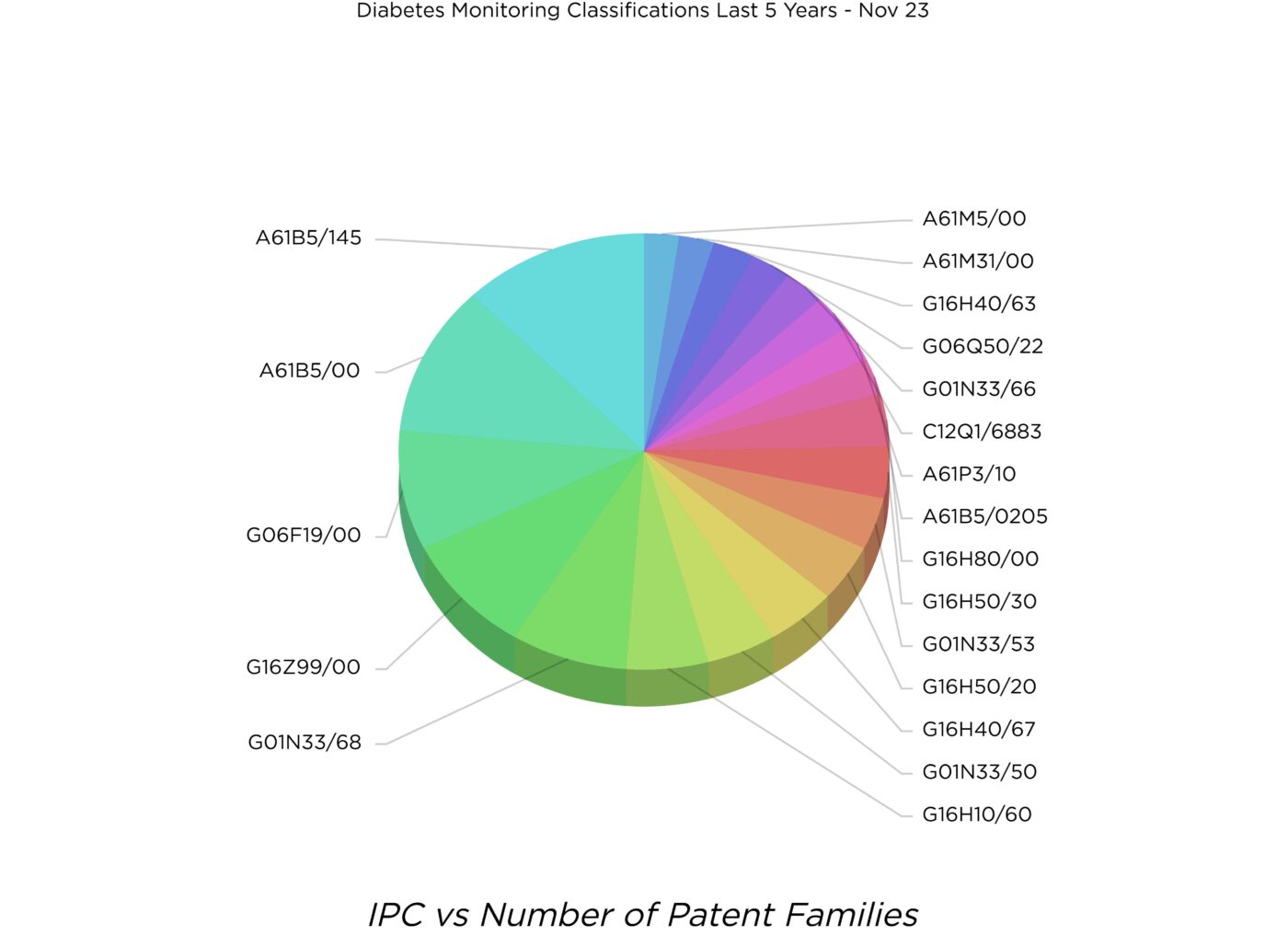
During this time, there have been almost 300k patent publications relating to Diabetes. As Figure 1 shows the patents are in a variety of classifications. However, almost a quarter of the publications relate to classification codes A61B5/145[ii] (Measuring Characteristics of Blood in Vito) and A61B5/00[iii] (Measuring for Diagnostic Purposes) and we will look at the innovators in this space and highlight a few of their patents.
Figure 1
Who are the main players in Diabetes Monitoring?
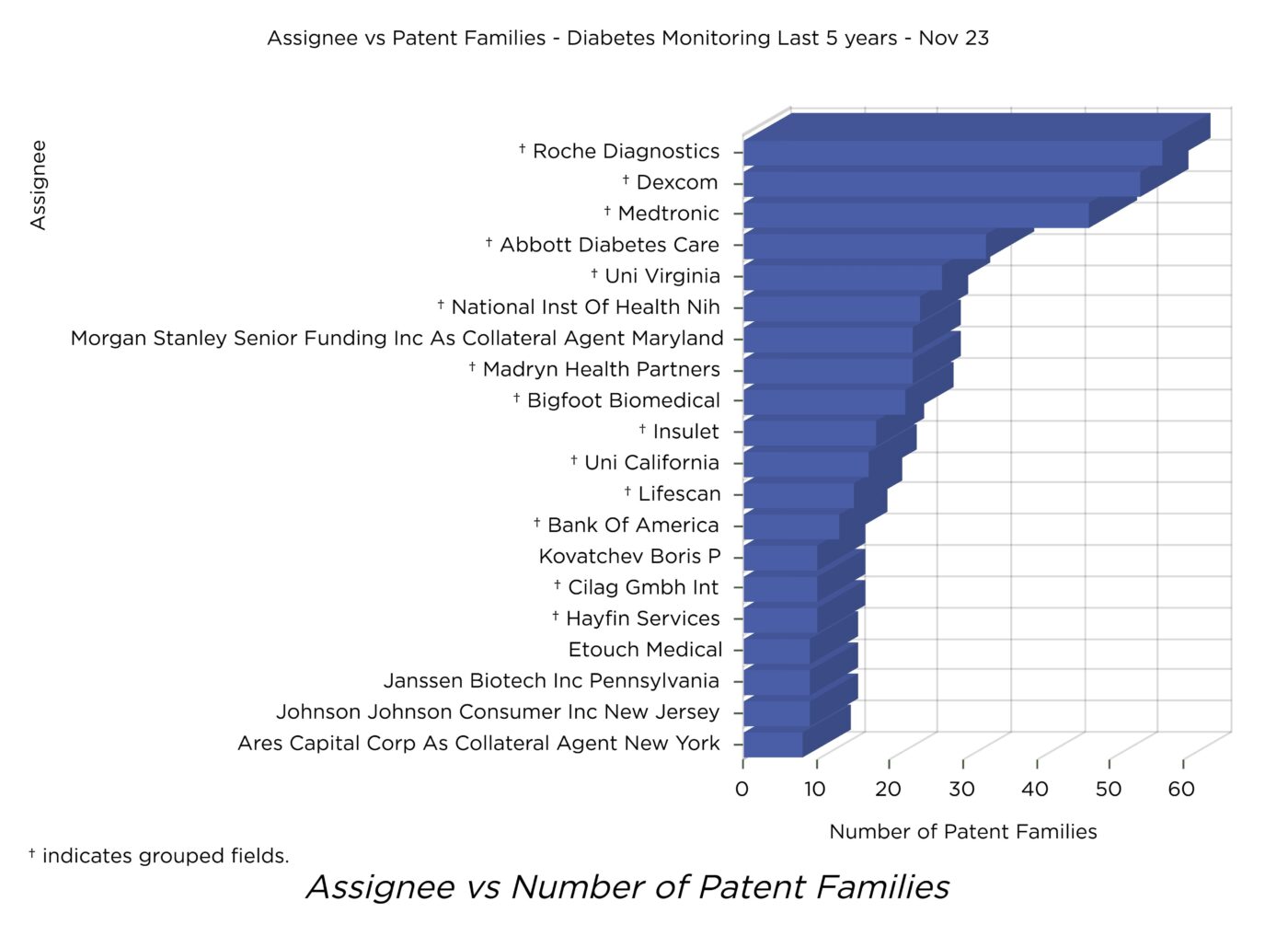
Figure 2 shows Roche, Dexcom, and Medtronic dominate, and we will showcase some of their recent patents.
Figure 2
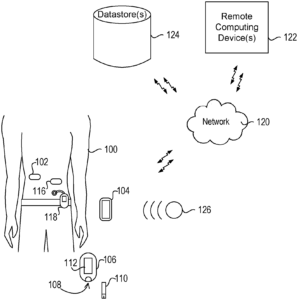
Roche Diagnostics – Patent number US2020250939A1 MEDICAL DEVICE ALERT, OPTIMIZATION, PERSONALIZATION, AND ESCALATION
Figure 3 – Patent number US2020250939A1
This patent alerts the user via a message sent to their watch, smartphone, smart speaker, etc that their glucose levels have changed. The alerts will get progressively louder/stronger until the user acknowledges the message.
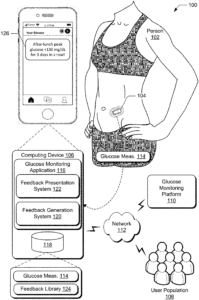
Dexcom – Patent number US2023138673A1 – RANKING FEEDBACK FOR IMPROVING DIABETES MANAGEMENT
Figure 4 Patent number US2023138673A1
This patent is a method for providing feedback based on glucose measurements. Readings are taken and analysed against historical data with alerts sent to the wearer advising if readings are higher/lower than normal at periodic times. Ways to make improvements are suggested if particular actions are taken, ie exercise activity.
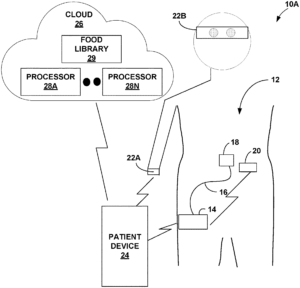
Medtronic – Patent US2022143314A1 – DIABETES THERAPY BASED ON DETERMINATION OF FOOD ITEM
Figure 5 Patent number US2022143314A1
This patent by Medtronic discloses a method for adapting diabetes therapy based on what a person eats. Using a mixture of wearable devices and cameras, information is generated allowing therapy to be tailored to the individual based on their diet.
Measuring characteristics of blood in vivo, e.g. gas concentration, pH value; {Measuring characteristics of body fluids or tissues, e.g. interstitial fluid, cerebral tissue}(measuring of blood pressure or blood flow A61B5/02; non-radiation detecting or locating of foreign bodies in blood A61B5/06)
Measuring for diagnostic purposes (radiation diagnosis A61B6/00; diagnosis by ultrasonic, sonic or infrasonic waves A61B8/00); Identification of persons
Are you developing new inventions around Diabetes?
At PatWorld, we understand the importance of protecting your #HealthTech inventions, and we can provide our clients with accurate, reliable, and cost-effective information and services tailored to meet individual needs.
Patent, Design, and Trademark Research Experts with a combined experience of over 200 years in Intellectual Property searching. Highly trained, dynamic in-house research teams specialising in a wide range of subject matter. All our analysts follow a training program developed by former IPO Examiners. Our teams are available to discuss any specific technical points regarding your search enquiries.





 Order a Search Now