


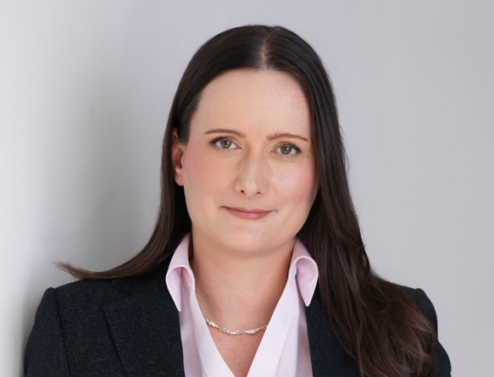
Veronika Brázdová is a physicist by training and now works as a UK and European patent attorney and commercial mediator. Through Brázdová IP, she combines scientific curiosity with commercial thinking, with a particular interest in sustainable and marine technologies, including shipping, decarbonisation and emerging blue-water innovation.
Quick Profile
Name: Veronika Brázdová
Role: UK and European Patent Attorney and Commercial Mediator
Firm / organisation: Brázdová IP
Location: UK
Areas of expertise: Physics and engineering, sustainable technologies, marine technologies, shipping and decarbonisation, IP strategy and commercial mediation
Curiosity as a starting point
For Veronika, the connection between physics and patents is more natural than it might first appear.
“I went into physics to find out how things work,” she says. Curiosity was what initially attracted her to science. When the realities of pursuing a long-term academic career prompted her to consider alternatives, she realised patents offered something surprisingly similar. “Patents are also about how things work.”
That moment of understanding remains one of the things she most enjoys about her profession. Whether looking at scientific research, an invention or even a mediation, Veronika wants to understand what sits beneath the surface.
There is a particular satisfaction when the underlying function or structure suddenly becomes clear. Once you understand why something is happening, she explains, you can work with it very differently.
That same curiosity eventually led Veronika to establish Brázdová IP. “I wanted to create my own business in the way I want it,” she says. Running her own practice gives her freedom over everything from her technical niche to the firm’s branding. More importantly, it allows her to concentrate on areas that matter to her, particularly working with founders and sustainable technologies.
Bringing a physicist’s perspective to new inventions
Veronika’s scientific experience spans different disciplines and approaches, from large-scale simulations and supercomputing to experimental work. That breadth is valuable in patent practice.
Within physics and engineering, patent attorneys may encounter technologies across many different sectors. They need to be able to understand what arrives on their desk, even when it sits outside their previous specialist experience. “Having experience in different fields helps you understand any new field as well, because you’ve seen so many things before,” she explains.
It also helps you know which questions to ask.
Veronika found that her legal training strengthened this further. Patent attorneys are trained to question an invention carefully and work out exactly how it functions. For someone whose career began with a desire to understand how things work, it is an aspect of the profession she particularly enjoys.
An affinity with ships and sustainable technology
Marine and sustainable technology bring together several of Veronika’s interests. She has always loved ships and the ocean. Growing up in a landlocked country made the sea represent holidays, adventure and “far horizons”.
A recent trip to the Arctic reinforced that fascination. Arriving in Kirkenes, she saw her ship moored against the icy landscape. “I felt the same way as some people probably feel about cathedrals,” she recalls. For Veronika, the sheer scale of a ship engineered to withstand such harsh conditions is impressive in itself. Professionally, the sector is equally compelling.
Shipping is undergoing a strong drive towards decarbonisation. New requirements are encouraging shipowners to reduce emissions, while technological developments are making ideas feasible that could not previously be implemented.
Hydrofoils are one example. The underlying principle has been understood for many years. Advances in materials, software and computing have now made increasingly sophisticated applications possible.
The marine environment also creates unusual technical demands. Equipment must cope with salt water, wind, waves, vibration and temperature extremes. In Arctic environments, conditions become more demanding still.
For a patent attorney, this combination of difficult operating conditions and rapid innovation makes the field particularly interesting.
When old ideas become new technology
Ask Veronika which marine technology excites her most and the answer comes quickly: wind-assisted ships. “This is my absolute favourite and the coolest technology as far as I’m concerned.”
Humans relied on sails for thousands of years before steam and other forms of propulsion took over. Now wind power is returning, supported by modern materials, engineering and control systems.
As wind-assist proponents like to point out, “the cheapest fuel is the fuel that they don’t burn.” Even a relatively modest reduction in fuel consumption can become significant when multiplied across a fleet.
Modern wind-assist systems can take several forms. Rigid sails can be precisely adjusted to changing wind conditions. Flettner rotors use rotating cylinders to generate propulsion assistance, applying a principle that has been known for more than a century.
What interests Veronika is how quickly the discussion has moved. At industry events only a few years ago, much of the conversation centred on pilot projects. More recently, the focus has shifted towards commercial installations.
Existing cargo ships can also be retrofitted, allowing operators to introduce wind assistance without replacing conventional engines.
For Veronika, it is a good example of how an established idea can become commercially viable once the supporting technology catches up.
Making IP strategy part of the business strategy
When working with founders, Veronika believes IP cannot be treated as something to consider later.
Early-stage companies already have long lists of urgent priorities. Intellectual property can easily become part of the “legal stuff” that founders know they should address at some point. But delaying those conversations can create unnecessary risk. “The sooner you start, the better the payoff,” she says.
Crucially, that does not automatically mean seeking patents. Veronika believes an IP strategy must support the business plan. Before recommending a particular approach, she therefore wants to understand where a company is heading.
“If I think a client doesn’t need a patent, I will tell them they don’t need a patent.” Trade secrets may sometimes be more appropriate, or a combination of different forms of protection.
Funding plans, expansion, target markets, technology and competitors can all affect the right strategy. This is why Veronika particularly values carrying out IP audits with clients. By discussing the business and the technology together, she can help establish an IP strategy that the company can then implement.
That strategy should never be static. Veronika recommends revisiting it as the business develops. A funding milestone, a new invention or a change in commercial direction may all mean the IP approach needs to change too. “It’s an ongoing thing.”
What mediation brings to patent practice
Alongside her patent work, Veronika is also a commercial mediator. The training has influenced the way she works with clients, particularly when difficult questions need to be asked. “The way you ask is critical,” she says.
Just as important is listening. Active listening forms a major part of mediation training. Veronika describes it as a life skill that can help almost anywhere.
It also reinforces the importance of understanding what a client actually wants to achieve. The underlying objective may be different from the position first presented.
There is a clear connection with the curiosity that first drew Veronika to physics. Whether the subject is an invention, a business strategy or a commercial disagreement, she is interested in understanding what is really happening beneath the surface.
Lessons from academia, innovation and business
Moving from academia into IP also changed Veronika’s perspective on innovation.
One lesson was simple: don’t try to do everything yourself. Academics can become conditioned to believe they both can and should handle everything. Commercial life requires a different approach.
She also learned the importance of knowing when something is good enough. “You can still have a high bar of what good enough is, but it is not the same as perfect.” In academia, it can be tempting to continue perfecting details that ultimately have little bearing on the bigger picture.
Working with businesses has made Veronika more conscious of funding, commercial priorities and communication.
The most important question is often not the intricate technical detail, but what the technology actually does.
Looking 20 years ahead
There are several marine technologies Veronika would like to fast-forward two decades to see.
Marine carbon dioxide removal is high on the list. The ocean is already a natural carbon sink, but the process is slow. Technologies are being developed to accelerate carbon removal and deploy it at scale. The challenge now is not simply whether approaches can work technically, but whether they can be scaled and commercialised.
Autonomous vessels are another area she expects to develop significantly, while wind-assisted shipping remains a personal favourite.
She is also watching tidal energy. It has been “emerging” for decades, but commercial and site-specific challenges have made standardisation difficult.
How these technologies develop will also depend on progress elsewhere, including floating offshore wind and other energy sources. For Veronika, that uncertainty is part of what makes the sector fascinating.
Outside the office
Switching off means getting “away from the screen and into the real world”.
Singing is particularly important to Veronika. She is currently working her way through Cleopatra’s arias from Handel’s Giulio Cesare, something she describes as great fun. She also plays the harp.
Her interests do not stop there.
She would like to return to Japanese woodblock printing after enjoying a course several years ago. More recently, she has been learning perfumery. It is proving challenging, but that is part of the attraction. “It’s one of those slogs that will be really satisfying and worth it in the future.”
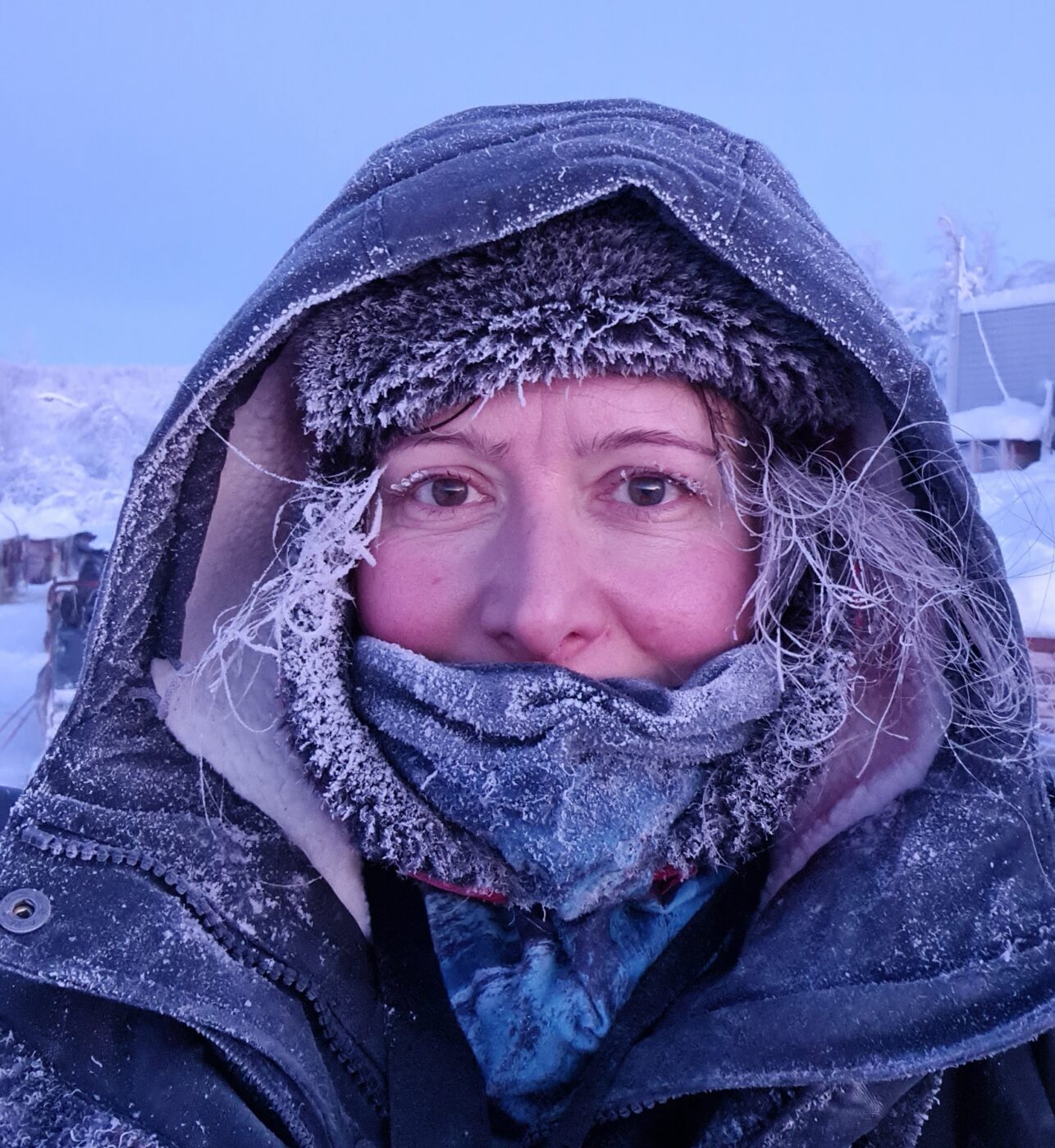
Her enthusiasm for the sea extends beyond work too. During a recent Arctic holiday, she spent time aboard a working Hurtigruten ship before travelling onwards and experiencing husky sledding across the Finnmark Plateau in a whiteout.
Advice for scientists and engineers considering IP
For scientists and engineers wondering whether their background is suitable for a career in intellectual property, Veronika’s advice is straightforward: “Do it.”
The important thing is not already knowing every technology you might encounter. By definition, patent attorneys regularly work with inventions that have not existed before. What matters is having the scientific training needed to follow what an inventor is explaining, ask the right questions and understand the technology. Legal training builds on that foundation.
Veronika remembers finishing a two-hour discussion with a group of inventors alongside another patent attorney. At the end, the attorneys remarked that they finally understood how the invention worked. The inventors replied: “Now we understand how it works.”
Perhaps that captures Veronika’s career particularly well. From physics to patents, mediation and sustainable marine technology, the common thread is the satisfaction of asking questions until something complex becomes clear.
Contact Veronika
LinkedIn https://www.linkedin.com/in/veronikabrazdova/
Company website Brázdová IP
Meet Veronika at upcoming events
Veronika will be attending Team Norway’s Energetic Future 2026 – The North Sea: From Vision to Value in Hull on 17–18 November 2026. The event brings together British and Norwegian organisations around areas including offshore wind, hydrogen, carbon capture and maritime infrastructure.
She will also be attending UK Offshore Wind 2026, organised by the Danish-UK Association, on 3 December 2026.
If you are attending either event and would like to connect with Veronika, reach out to her on LinkedIn.
Meet the IP Professional is a PatWorld interview series exploring the people and perspectives shaping the intellectual property profession. Discover more interviews in the Meet the IP Professional hub, and find out more about PatWorld, a global IP search provider working with IP professionals worldwide to support informed patent, design and trade mark decisions, on our About Us page.

 Order a Search Now