Rhianna Faye is an IP Paralegal at Strachan IP, based near Oxford. With around 13 years’ experience, she supports patent and trade mark work across multiple jurisdictions. Her role focuses on managing deadlines, coordinating stakeholders, and ensuring the smooth running of IP processes within a small, agile firm.
Name:Rhianna Faye Role: IP Paralegal Organisation:Strachan IP Location: Hereford, UK Areas of expertise: Patent and trade mark support, deadline management, international filing coordination, renewals, IP administration
A career discovered by chance
Rhianna did not set out to work in intellectual property. After leaving education, she began her career in criminal defence law. While she initially enjoyed the work, the nature of the cases became difficult to manage emotionally. She found it hard to switch off outside work and began looking for a different path.
Her next move into bid management introduced her to deadline-driven work and structured processes. She found similarities with legal case preparation, but the role required extensive travel. Wanting something more stable, she explored new opportunities and was introduced to IP through a recruitment agency.
It was during her first interview that she realised how well her skills aligned with the role. She joined as a patent secretary, later qualifying as a paralegal and progressing into a more senior position.
A central role in IP practice
Rhianna describes the paralegal role as the operational counterpart to the patent attorney. While attorneys focus on technical and legal aspects, such as drafting specifications and advising clients, her role ensures that everything around those activities runs smoothly.
This includes preparing filing documents, instructing foreign attorneys, managing deadlines, and handling formalities. In a small firm like Strachan IP, her responsibilities extend further. She is involved in renewals, invoicing, records management, and even marketing activities.
“I see it as trying to lighten the attorney’s workload as much as possible,” she explains.
Managing complexity and deadlines
A key part of Rhianna’s work is tracking and managing deadlines. Every case involves multiple time-sensitive actions, often across different jurisdictions. She logs deadlines in multiple systems and reviews them weekly to prioritise tasks.
This structured approach helps ensure nothing is missed. It also allows her to anticipate pressure points and prepare work in advance where possible.
International work adds another layer of complexity. Different countries have different requirements, from notarised documents to certified copies and translations. These variations must be understood early so that timelines can be planned effectively.
“It’s important that you understand those requirements at the start so that you can work backwards,” she says.
Working at the heart of a wider network
Working in a small firm means Rhianna’s role extends beyond an internal team. She regularly coordinates with multiple external attorneys, foreign associates, translators and service providers, each working to their own processes and timescales.
This makes communication and organisation critical. While each external partner manages their own work, Rhianna maintains oversight of deadlines and ensures everything stays aligned. She often has visibility across all moving parts, even when others are only focused on their individual tasks.
Because of this, her role becomes one of coordination as much as administration. She balances competing priorities, keeps work progressing across jurisdictions, and ensures that no deadlines are missed despite the complexity.
Developing towards trade mark qualification
Alongside her role, Rhianna is training to become a trade mark attorney. Career progression has always been important to her, and she has consistently combined work with study.
Encouraged by a colleague, she began the qualification process while working full time and raising her young son. She completed a degree through the Open University in four years, followed by a postgraduate certificate in intellectual property law.
She is now preparing for the next stage of qualification. While her current firm does not have an in-house trade mark attorney, she continues to build her knowledge independently and remains committed to seeing the process through.
“It’s been a long journey, but one I’m determined to finish,” she says.
Seeing the bigger IP picture
Studying trade mark law has broadened Rhianna’s perspective on intellectual property. Earlier in her career, her focus was mainly on patents and designs. Now, she has a clearer understanding of how different IP rights work together.
This includes how trade marks protect brand identity and reputation, complementing the protection offered by patents and designs. The result is a more complete view of how businesses safeguard their innovations and market position.
The evolving role of the IP paralegal
Over the course of her career, Rhianna has seen the paralegal role change significantly. Earlier roles involved more traditional administrative tasks, such as audio typing.
Today, paralegals are more involved in case management and play a more active role in supporting legal work. This shift reflects both technological changes and the need to use attorney time more efficiently.
In smaller firms, the role can be even broader. Rhianna’s position combines multiple functions that would typically be spread across several departments in a larger organisation.
Skills for success
Organisation and time management are essential in Rhianna’s role. She regularly handles multiple cases at different stages, with deadlines that often overlap.
Clear communication is equally important. She must manage expectations across attorneys and clients, often explaining complex processes in simple terms.
Attention to detail is another key skill. Even small errors can have significant consequences in IP work, particularly when dealing with legal rights and formal documentation.
Outside the office
Outside work, Rhianna’s time is largely shaped by her eight-year-old son. Weekends are often spent at football matches or swimming lessons, and she regularly travels to Manchester to watch games.
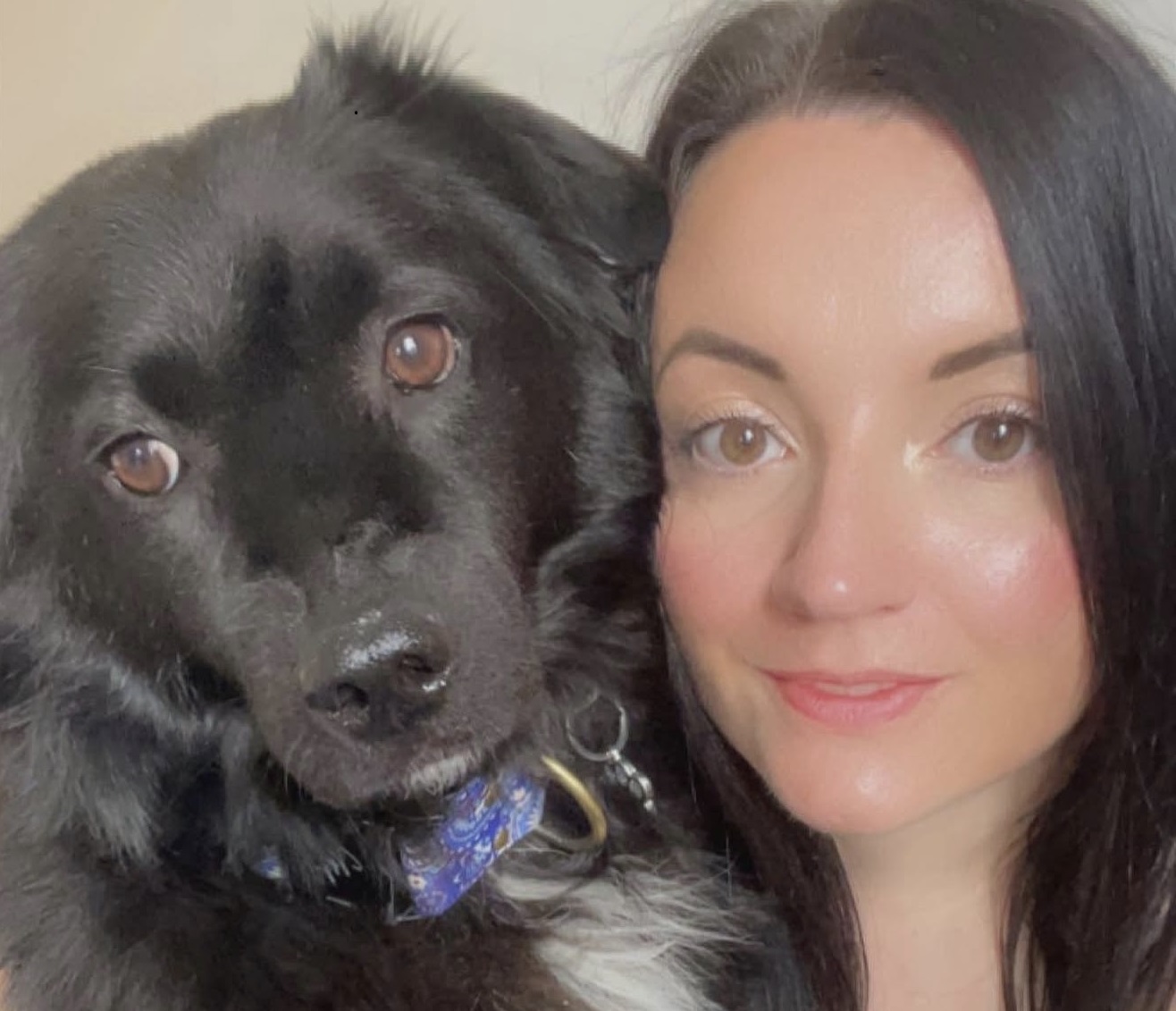
She also enjoys long walks with her Romanian rescue dog, who she describes as her “shadow”. Cooking and trying new restaurants are another passion, balanced with weight training and playing netball in a social league.
Keeping everything on track
If someone were to shadow Rhianna for a day, she believes the best way to understand the role would be to see how deadlines are managed.
She describes the paralegal as the “central cog” that connects all parties involved in an IP case. From attorneys to clients and international partners, her role is to ensure everyone completes their part on time.
It is a position of responsibility that often goes unnoticed, but is critical to the success of any IP practice.
Looking ahead
Rhianna’s career reflects both adaptability and determination. From an unplanned entry into IP to pursuing professional qualification, she has built a role that combines structure, responsibility, and flexibility.
Her experience highlights the importance of support roles within the profession. As IP work becomes more complex and global, the contribution of skilled paralegals remains essential to keeping everything running smoothly.
Meet the IP Professional is a PatWorld interview series exploring the people and perspectives shaping the intellectual property profession. Discover more interviews in the Meet the IP Professional hub, and find out more about PatWorld — a global IP search provider working with IP professionals worldwide to support informed patent, design and trade mark decisions — on our About Us page.
Louise Windsor is a patent and trade mark attorney and co-founder of Sweetinburgh & Windsor. With a background in physics and medical physics, she works closely with owner-led businesses and international companies to protect innovation. Her work focuses on practical IP strategies that support real commercial growth.
Quick Profile Name:Louise Windsor Role: Patent and Trade Mark Attorney Firm / Organisation:Sweetinburgh & Windsor Location: Sussex, United Kingdom Areas of expertise: Patent drafting, SME innovation support, mechanical and physics-based technologies, international patent strategy, trade mark protection
A curiosity for how things work
Louise Windsor’s path into intellectual property began with a natural curiosity about technology. With an academic background in physics and medical physics, she was drawn to a career that combined scientific thinking with communication.
“I always enjoyed working out how things worked,” she explains. “And I enjoyed writing, so I particularly like drafting patent applications.”
The profession also offered something she valued in a scientific career: variety and human interaction. Working as a patent attorney means no two days are quite the same, and the role involves meeting inventors, discussing new technologies and translating ideas into clear legal protection.
Seeing innovation develop first-hand
One of the aspects that captured Louise’s interest early in her career was the opportunity to see ideas develop into real products.
During her training, she regularly met clients throughout the development process. That exposure gave her a full view of how innovation moves from concept to commercial success.
“You get to see the full process of someone having an idea,” she says. “Then you carry on meeting with them and see the product out there and the success that they have. You see the impact on the business.”
That direct connection between IP protection and business growth remains one of the most motivating parts of the profession for her.
A role built around collaboration
Today, Louise’s work centres largely on patent drafting and strategy, with trade marks also being part of her practice.
Her typical week involves a mix of activities. There may be meetings with inventors to understand new technologies, discussions with overseas associates to coordinate international patent families, and the detailed work of drafting and responding to examination reports.
For Louise, collaboration is central to achieving the best results.
“We enjoy speaking to people, meeting in person or picking up the ‘phone,” she says. “Often the most important information comes from those conversations.”
Working closely with owner-led businesses
Much of Louise’s work focuses on owner-led businesses and SMEs. These companies often rely heavily on their innovations, and IP strategy can play a critical role in their growth.
This collaborative relationship allows her to align IP protection with broader commercial goals. It also means adapting strategies as businesses evolve, particularly as product development cycles become faster.
Clients increasingly want advice that is clear, practical and efficient.
Adapting to a faster innovation landscape
The pace of technological development continues to change the way IP professionals work. Louise has seen businesses move products from development to market more quickly, which often requires faster and more flexible IP strategies.
“Clients might be developing multiple products more quickly,” she explains. “So we have to adapt the strategy depending on what they’re trying to achieve commercially.”
Technology trends also influence the work itself. While her background includes medical physics and mechanical technologies, newer areas such as green technologies and AI-related inventions are becoming increasingly prominent.
One of the things she values most about the profession is that learning never stops. “Technology changes, the law changes, so you’re always learning,” she says.
Building confidence through experience
For Louise, confidence as a practitioner has grown through experience and through seeing the success of the businesses she supports.
“Seeing your clients succeed shows that things are moving in the right direction,” she explains.
Starting a business herself also gave her a deeper understanding of the pressures faced by many of her clients. That experience has shaped the way she approaches advice.
“Setting up a business helps you understand that IP is just one small part of what owner-led businesses are trying to achieve,” she says.
Outside the office
Away from work, Louise enjoys running and regularly takes part in longer-distance events.
“I do a lot of running,” she says. “About half marathon is as far as I get these days.”
For her, running offers both relaxation and a sense of focus. She also enjoys exploring new locations through running events, combining travel with time outdoors.
Looking ahead
Despite years in the profession, Louise remains motivated by the constant evolution of technology.
“What still excites me is that technology is always changing,” she says. “You meet inventors who are leaders in their field and they explain an ingenious way they’ve solved a problem.”
Having the opportunity to understand those innovations and help protect them continues to make the work both challenging and rewarding.
Meet the IP Professional is a PatWorld interview series exploring the people and perspectives shaping the intellectual property profession. Discover more interviews in the Meet the IP Professional hub, and find out more about PatWorld — a global IP search provider working with IP professionals worldwide to support informed patent, design and trade mark decisions — on our About Us page.
Mark Sweetinburgh is a dual-qualified patent and trade mark attorney and co-founder of Sweetinburgh & Windsor. Based in Crawley, he works closely with UK businesses to provide commercially focused IP advice. His perspective reflects both long-standing technical expertise and the realities of running an independent IP firm.
Quick profile
Name:Mark Sweetinburgh Role: Partner, Patent and Trade Mark Attorney Firm:Sweetinburgh & Windsor Location: Crawley, West Sussex, UK Areas of expertise: Patents, trade marks, registered designs, freedom to operate, commercially focused IP strategy
From biochemistry to intellectual property
Mark’s route into the IP profession was shaped by curiosity rather than a fixed career plan. After studying biochemistry at the University of Bath, he knew research was not for him long term. What appealed instead was understanding how things work and applying that knowledge in a practical way.
An advert in New Scientist introduced him to the patent profession, without the language requirements he had assumed were mandatory. The role offered variety, exposure to cutting-edge technology, and a legal dimension that appealed. He entered the profession in 2001 and trained in London before deciding that commuting and city life were not where he wanted to stay.
Shaping a commercially focused approach
Mark’s early years were spent in medium-sized firms with strong client contact. Working closely with universities and SMEs helped shape a practical, commercially minded outlook that still defines his work today.
Although trained as a biochemist, his practice quickly broadened. Mechanical inventions, trade marks and infringement matters became part of his everyday work. That breadth, he feels, benefits many of the businesses he works with, particularly those looking for joined-up advice across patents, trade marks and designs alongside their wider commercial strategy.
A consistent question has guided his career: what is the point of filing a patent? Keeping that commercial focus has influenced both the advice he gives and the type of firm he wanted to build.
Founding an independent firm
The idea of running his own firm appealed early on and Mark founded
Sweetinburgh & Windsor in 2011 with Louise Windsor. With a growing team they have expanded their technical expertise whilst keeping a focus on what is important to clients and work closely with clients who value a hands-on, almost in-house style of support.
Wearing multiple hats
Day to day, Mark balances technical work with the realities of running a small business. Client work remains central, but his role also involves marketing, training, managing the team and thinking strategically about growth.
He enjoys the variety. Working with clients on grant funding, freedom to operate and IP strategy keeps the role interesting and connected to how businesses actually operate.
Training is another important strand. Mark regularly works with inventors to help them recognise patentable ideas and understand how IP fits into their wider commercial plans. He also delivers talks to students and schools, helping demystify the profession and highlight it as a career option.
How the profession has changed
One of the biggest shifts Mark has seen is the changing structure of the profession itself. When he started, most firms were London-based and relatively large. Regional and small independent firms were far less common.
That has changed significantly, particularly over the past decade. Remote working and consultancy models have opened up more choice, both for clients and for IP professionals. Mark sees this as a positive development. Businesses can now choose advisers that better match their size, sector and way of working.
The role of the patent attorney has also evolved. It is no longer about reading and writing letters in isolation. Client contact, commercial awareness and strategic thinking are now central to the job.
Leading and supporting others
Mark describes his leadership style as leading by example. Experience has shaped his approach, but the core aim has stayed the same: creating an environment where people are supported and able to shape their roles around their interests.
Flexibility is key. In a smaller firm, roles can evolve, and that adaptability benefits both staff and clients. Mark sees this as one of the strengths of independent practice.
Outside the office
Away from work, Mark values time that helps him switch off. He enjoys spending time with family, walking, reading and DIY. Fixing and building things has been a long-standing interest, one that mirrors his professional curiosity.
Sport also plays a role. He plays football weekly when he can, enjoys golf, and likes watching a wide range of sports. Switching off work phones and creating clear boundaries is important, particularly in a world of hybrid working.
Reflections and lessons learned
Looking back, one lesson stands out. Peaks and troughs are part of professional life, especially when running a firm. Learning not to panic during quiet periods, and not to struggle in silence during busy ones, has been important.
Asking for help, outsourcing when needed, and being open about workload are lessons Mark wishes he had embraced earlier. They remain relevant at every stage of a career.
Upcoming events
Mark is planning to attend CITMA in London in March and INTA in London in May. If you’re attending either event and would like to connect, he’s always happy to hear from fellow IP professionals.
Meet the IP Professional is a PatWorld interview series exploring the people and perspectives shaping the intellectual property profession. Discover more interviews in the Meet the IP Professional hub, and find out more about PatWorld — a global IP search provider working with IP professionals worldwide to support informed patent, design and trade mark decisions — on our About Us page.
With almost four decades in the world of intellectual property, Peter Cornford, Partner and Trade Mark Attorney at Stevens Hewlett & Perkins (SH&P), has carved out a career rich with landmark cases, global brand stewardship, and a passion for nurturing the next generation of IP professionals. Warm, reflective, and naturally engaging, Peter brings both depth of expertise and a refreshingly human touch to a profession often seen as procedural and technical. From unexpected beginnings to high-profile victories, here is Peter’s story.
An Accidental Path to IP
Peter’s route into intellectual property was anything but planned. While working towards a PhD in history and preparing for a life in academia, he was steered unexpectedly into trade mark work by a university careers adviser who, in Peter’s words, “had no idea what a trade mark agent was either.” What began as a six-month role “to pay the bills before returning to academia” quickly became a permanent calling. The overlap between academic research and trade mark practice—investigation, analysis, persuasion, and drafting skills —proved irresistible. “I was enthralled by what I was seeing. It was the perfect fit.” Fast-forward 36 years, and Peter’s enthusiasm hasn’t waned.
A Career Built at SH&P
Peter joined SH&P nearly 30 years ago and has spent two decades as a partner. Today, he is the firm’s longest-serving partner and plays a crucial role in both management and mentoring. His responsibilities range from supporting the firm’s largest global clients to preparing trainees for qualification, in which SH&P has exceptional success, with many achieving distinctions. SH&P’s commercial pragmatism is central to Peter’s approach. “We stay focused on real commercial outcomes,” he explains. “Our clients include very large household names with thousands of trade marks, so everything we do has to be practical, strategic and tightly aligned with their business needs.”
The Appeal of Trade marks: Variety, Strategy and Solving Problems
For Peter, the joy of trade mark work lies in its varied nature. Unlike many specialist patent colleagues, trade mark attorneys work across every sector imaginable, and often all in one day. “I can be advising a pharmaceutical company one minute and a restaurant owner half an hour later. You never know what’s coming.” He likens the job to a game of chess—strategic, forward-thinking, and requiring both creativity and discipline. Helping start-ups grow, protecting heritage brands, and solving complex infringement challenges are all part of his daily life.
The Diego Maradona Case: A Landmark Moment
One of Peter’s most publicised successes involved the late Argentine football legend Diego Maradona. The dispute centred on entitlement: who truly owned the rights to the Maradona name after his death? The complexity was demanding. Argentine inheritance law, conflicting claims among heirs, and cross-jurisdictional issues all collided. Peter and the SH&P team needed to interpret international probate rulings, translate and analyse extensive documentation, and present a compelling argument to the UK IPO. The result? A decisive win. “These entitlement cases are rare—and rarer still when a famous name is involved. To succeed was a real highlight.”
Celebrity Brands, The Killers & Untested Waters
Peter is also responsible for securing rights for well-known entertainment and personality brands, including The Killers. Such cases bring unique challenges: famous names often face official objections to registration because of being regarded as being merely descriptive of the goods rather than indicating their source. Even gestures, like Usain Bolt’s iconic pose, can be protected, though enforcement remains “untested waters.” His overarching advice is clear: Register early—before fame makes it more difficult.
The Carry On Legacy: A Case That Made Headlines
Perhaps the case that most shaped Peter’s public profile was the long-running battle over the rights to Carry On, the beloved British comedy franchise. When film industry professional Brian Baker inherited rights from the legendary film producer Peter Rogers, ITV still held several long-standing Carry On trade marks. Peter argued successfully that ITV’s broadcasting of film back catalogue was not trade mark use, causing the marks to be removed and returned to the rightful owner. The story hit national newspapers, morning TV, legal journals and rekindled nostalgia across the UK. “It was a case that brought a lot of attention to my work and it was genuinely fascinating to be part of the story.”
Supporting Start-Ups and the Next Generation
Peter is highly active in the Bristol innovation community, including the SETsquared ecosystem, helping early-stage companies understand why timely trade mark protection is fundamental to commercial success. Start-ups often face financial constraints, but Peter emphasises that delaying protection risks losing rights or being targeted by trade mark squatters, a problem which is increasing globally. He also acts as a mentor within SH&P, guiding trainees through qualification and instilling a practical, commercially grounded approach to IP.
Career Highlights: From ‘Insignia’ to PureGym to Buckingham Palace
Peter’s portfolio reads like a tour through modern consumer culture. He has been and remains responsible together with fellow partner Robin Webster for the global trade mark management of major brands such as Speedo, Ellesse and Berghaus, and for household names Trafalgar Tours group, Lyons coffee, Kickers, Russell & Bromley and G4S. His working on trade mark protection for The Prince’s Trust led to an invitation to a garden party at Buckingham Palace. He is responsible also for Honda’s branding requirements in the UK. His strategic advice was pivotal in the naming clearance and protection of well-known automotive models including the Vauxhall Insignia, and he has provided IP support to PureGym from its earliest beginnings to its current position as a global fitness powerhouse. He laughs that supermarket trips take twice as long, nowadays since he often finds himself muttering, “I did that one.”
Advice for Future Trade mark Attorneys: qualities required and knowledge bank
Peter is clear-eyed about what being a professional requires: an organised, analytical mind; a commercial mindset. not just legal thinking. The ability to manage stress and responsibility is paramount, as is attention to detail and strategic awareness. “Your job is to help clients run and grow a business. Never lose sight of that.” “I had thought when I was at university that I would be writing books on history but instead it has been on trade mark law”. Peter’s Trade Mark Law & Practice (5th edn 2020) (Alison Firth, Peter Cornford, Andrew Griffiths) is used by UK universities as a set text for teaching students trade mark law.
Life Beyond IP: Brass Bands, Musical Boxes & Stone Walls
Outside the office, Peter’s life is filled with creativity and curiosity. Music – Peter is a lifelong brass musician and conductor, currently leading the Dodington Parish Band, a community ensemble of all ages and abilities. Music is his escape: “It’s the one thing where work completely disappears. I get lost in it.” The band performs at a wide variety of venues. Peter also composes and arranges music.
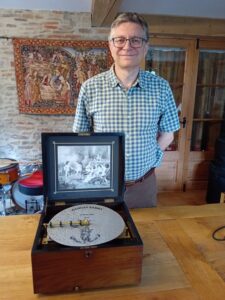
Victorian Musical Boxes – One of Peter’s most charming hobbies is collecting Victorian musical boxes. His firm’s 2024 Christmas LinkedIn series of videos of Peter demonstrating his boxes drew thousands of views.
Dry Stone Walling & Building Renovation –Peter has always been a hands-on person. He spends much time restoring outbuildings and perfecting dry stone walls around his property. “I don’t sit still for long,” he admits with a smile.
What’s Next for Peter and SH&P?
The firm is focused on expanding its support for start-ups, continuing its awards programme for innovative young businesses, and watching its patents practice continue to grow alongside its already leading trade mark team. As for Peter? “I’m 61 now and people ask if I’m going to retire. I can’t imagine retiring—this is what I do.” He plans to continue mentoring, supporting clients and embracing change in a fast-evolving trade mark landscape.
Peter’s Favourite Walk
For coastal inspiration, Peter recommends a recent favourite: a gentle walk from Porthleven, near Land’s End, along the coast toward The Lizard. “It is quiet, scenic, and “simply heavenly.”
Contact Peter Cornford If you’d like to connect with Peter or find out more about his work:
In the latest instalment of our Meet the IP Professional series, we spoke to Oliver Tidman, an Intellectual Property lawyer with a deep passion for brand protection and founder of Edinburgh-based law firm Tidman Legal. With a client-focused approach and a reputation for making IP law accessible, Oliver shared his journey into the world of trade marks, the challenges facing modern businesses, and why prevention truly is better than cure when it comes to protecting your brand.
A Natural Fit for Innovation and Identity
From early on in his legal career, Oliver was drawn to the intersection of law, innovation, and branding.
“I’ve always had an interest in the creative and commercial aspects of business and entrepreneurship — how ideas become valuable assets,” he explains. “Trade marks stood out because they’re so closely tied to a business’s identity and reputation. Helping people protect what makes their business unique felt like a natural fit.”
This focus on identity and growth led Oliver to establish Tidman Legal in 2017. Before founding his firm, he built experience both in private practice and in-house roles in Edinburgh and London, gaining valuable insights into how different organisations approach IP strategy.
Building a Client-Centred IP Practice
Tidman Legal has carved out a strong niche by offering clear, commercially-minded advice without unnecessary complexity. Whether supporting a startup registering its first trade mark or guiding a business expanding overseas, Oliver and his team focus on aligning IP protection with long-term growth goals.
“We don’t just file trade marks—we help clients build IP strategies across trade marks, patents, designs and copyright. Everything is tailored to help move the business forward.”
Common Pitfalls and the Power of Early Action
When asked about the most frequent mistakes he sees among startups and SMEs, Oliver doesn’t hesitate:
“The biggest one? Launching a brand without properly checking if the name is available. Too often, businesses invest in branding, websites, and marketing—only to face opposition or be forced into a costly rebrand.”
To help businesses avoid this, Tidman Legal offers a free downloadable guide: “5 Pitfalls of Failing to Register a Trade Mark”5 Branding Pitfalls Guide.
He also stresses the importance of thinking globally from day one, especially for online businesses.
Navigating Disputes and Strategic Enforcement
Trade mark disputes, Oliver says, require the foresight of a chess game.
“It’s not just about reacting to a move — it’s about anticipating the other side’s strategy and knowing when to push forward or negotiate.”
He recalls one case where a startup faced opposition from a multinational company. Through smart strategy and evidence gathering, they not only protected the application but secured a coexistence agreement. The win was not just in registration, it was in protecting future international growth.
IP in a Digital World
With brands increasingly operating across borders and platforms, enforcement is becoming more complex.
“Some countries allow swift enforcement, others are more drawn out. I’d like to see more action around bad faith filings — something similar to the process for the Uniform Domain Name Dispute Resolution Policy (UDRP), which is fast and cost-effective.”
AI and digital tools are also playing an increasing role in monitoring and clearance.
“We use AI-powered tools to monitor trade mark applications and alert clients to potential issues. But there’s still a vital role for human insight and strategic advice.”
Educating and Empowering Clients
Oliver is a strong advocate for IP education—especially for startups and small businesses.
“Often, clients don’t come to us until there’s already a dispute. In my experience, many of these clients don’t fully understand the value of their IP until there is already a dispute or infringement. By that point, they’re on the back foot having to deal with brand damage or even having to rebrand entirely. That’s why I strongly believe that prevention is always better than cure.”
Tidman Legal supports this through blog posts, webinars, and events to raise awareness and simplify complex IP topics.
Looking Ahead: Opportunities and Challenges
What’s next for trade marks?
“AI is accelerating brand creation. But with that speed comes risk — deepfakes, voice cloning, and auto-generated infringing content. It’s a challenging area that may need new legislation to keep pace.”
Oliver also highlights the need for better funding access for early-stage innovators.
“There is support out there, but the hurdles are often high. I’d like to see more funding aimed at startups, which often have limited resources, so they can access professional IP advice early on.”
Personal Reflections
What part of your work do you find most rewarding?
“Helping someone go from an idea sketched on a napkin to a protected brand on shelves or screens is incredibly satisfying. IP is intangible but its impact is very real – when a client sees their brand protected and they can grow with confidence, that’s the real payoff.”
What advice would you give to aspiring IP professionals who are particularly interested in working with trade marks?
“Start by developing commercial awareness as much as legal expertise. Brands live in the real world – they evolve, pivot and rebrand. Also, keep an eye on tech, it’s changing the IP landscape faster than legislation can.”
Beyond the Office
When he’s not helping clients protect their brands, you’ll often find Oliver on the squash court competing in the East of Scotland leagues. A recent highlight? A match against a former world No. 1.
“I only managed to get one point off him but it was a surreal experience!”
Oliver enjoys playing saxophone in his spare time and is also a keen hiker and recommends the Pentland Hills just outside Edinburgh:
“You get an incredible view across the city over to Fife.”
“Playing sax has a lot in common with IP law. In both worlds, timing is everything – whether you’re playing the right rhythm or filing a trademark before someone else does!”
P.S. PatWorld works with companies like Tidman Legal to deliver professional trade mark, patent, and registered design searches. You can order a professional search directly through our website—trusted by IP professionals across the UK and beyond. https://patworld.com/gb/order-a-search/
In the complex and ever-evolving world of intellectual property (IP), safeguarding innovations is a challenge many businesses face. While patents, trade marks, and copyrights provide legal protection, enforcing these rights can be costly—especially for small and medium-sized enterprises (SMEs). This is where David Bloom, founder of Safeguard iP, comes in. As the UK’s only dedicated intellectual property insurance broker, David is on a mission to make IP protection accessible and affordable for businesses of all sizes.
In this ‘Meet the IP Professional’ feature, we explore David’s journey from IP litigator to insurance broker, the importance of IP insurance, and how Safeguard iP is helping businesses defend their most valuable assets.
From IP Litigation to IP Protection
David Bloom began his career as a solicitor specialising in IP law, working at the highly respected firm Olswang LLP, followed by Pinsent Masons. During his time as a litigator, he handled numerous patent disputes and trade mark cases, working with both large corporations and small businesses.
“I saw first-hand how devastating IP litigation could be for SMEs,” David recalls. “Many businesses assumed that having a patent or trademark was enough to protect them. But in reality, these rights only give you the ability to take legal action if someone infringes them—and litigation is incredibly expensive.”
Time and again, David encountered clients who, despite having strong IP rights, were unable to afford the high costs of enforcement. For larger corporations, litigation costs could be absorbed within their legal budgets, but for smaller businesses, the financial burden was often insurmountable.
“The system felt unfair,” he explains. “I knew there had to be a better way for SMEs to defend their IP without risking bankruptcy.”
The Birth of Safeguard iP
Determined to create a solution, David transitioned from law to insurance, founding Safeguard iP, the UK’s only dedicated IP insurance brokerage. Unlike general insurance brokers, Safeguard iP exclusively focuses on intellectual property protection.
“There were existing IP insurance products in the market, but they were often too expensive or too limited in coverage,” David notes. “My goal was to help insurers develop policies that truly met the needs of SMEs—affordable, comprehensive, and easy to access.”
Safeguard iP works with businesses to assess their risks and find the right insurance solutions, ensuring they can enforce their IP rights and defend against infringement claims without financial strain.
Why IP Insurance Matters
Many businesses underestimate the risk of IP disputes. However, with over 500,000 new businesses incorporated in the UK each year, the number of potential IP conflicts is rising.
“There’s more IP being created than ever before,” David explains. “As a result, unintentional infringement is becoming more common. Whether it’s a start-up unknowingly infringing on an existing patent or a company facing a trade mark challenge, the risks are significant.”
Without insurance, businesses facing IP litigation often face a tough choice: abandon their claim or risk financial ruin. IP insurance changes the equation by providing financial backing for legal action.
“When a company is insured, they can act decisively,” David says. “In many cases, just informing an opponent that you have IP insurance leads to a faster settlement—because they know you have the funds to fight.”
How Safeguard iP Supports Patent Attorneys
Safeguard iP has built strong relationships with patent and trade mark attorneys, who frequently refer clients to David’s services.
“Many patent attorneys find that clients hesitate to file patents because they worry about the cost of enforcement,” he explains. “By introducing them to IP insurance, attorneys can reassure their clients that their rights can be protected affordably.”
While UK Financial Conduct Authority (FCA) regulations prevent patent attorneys from advising on specific insurance policies, they can educate clients about the existence and benefits of IP insurance, referring them to specialists like David.
“Most attorneys want their clients to feel confident in their IP strategy,” he adds. “By discussing insurance, they’re helping clients make informed decisions about protecting their assets.”
Making IP Insurance Accessible
In the past, getting IP insurance was a complicated and expensive process. Companies had to complete lengthy application forms, and quotes often came back far higher than the expected cost.
David has worked hard to streamline the process.
“Now, all I need is a company’s website address and revenue details,” he says. “I can provide a quote within 24 to 48 hours. For SMEs under £10 million turnover, policies are now significantly more affordable and predictable than they were a decade ago.”
Premiums for £1m of worldwide enforcement and defence cover are circa £3,500 and £2,500 for £500k of cover.
Thanks to these improvements, the number of businesses purchasing IP insurance has grown significantly in the last five years.
The Future of IP Insurance
As the demand for IP insurance increases, David predicts lower prices and broader coverage in the future.
“More policies mean more data for insurers, which helps them refine their risk models and reduce premiums,” he explains. “It’s a virtuous cycle—more businesses buying insurance leads to lower costs for everyone.”
Additionally, coverage is expanding. While policies traditionally covered only defence costs, new offerings now include:
Enforcement coverage (to fund legal action against infringers)
Title disputes (to resolve ownership conflicts)
Patent opposition and invalidity claims (to defend against challenges)
Looking ahead, David hopes insurers will develop policies that cover the loss of IP value—for instance, if a patent’s worth drops significantly due to legal issues.
Final Thoughts
David’s mission is clear: make IP insurance accessible, affordable, and effective. His legal expertise and deep understanding of the challenges SMEs face set Safeguard iP apart in the market.
For businesses with valuable IP assets, David’s advice is simple: “Don’t wait until there’s a problem to think about insurance.” The right coverage can mean the difference between defending your innovations and losing them to legal disputes.
With growing awareness and improved accessibility, IP insurance is no longer a niche product—it’s becoming a critical tool for businesses looking to protect their competitive edge.
Get in Touch with David Bloom
If you’d like to learn more about how Safeguard iP can help protect your business, visit safeguardip.com or connect with David Bloom on LinkedIn: David Bloom | LinkedIn.
How PatWorld Supports IP Protection
At PatWorld, we understand the importance of comprehensive IP protection. We work with companies to provide Freedom to Operate (FTO) searches, Invalidity searches, and a range of other IP-related searches. Our services help businesses mitigate risks, strengthen their IP strategies, and make informed decisions before entering new markets.
To learn more about how PatWorld can support your business, check out the links below.
Patent, Design, and Trademark Research Experts with a combined experience of over 200 years in Intellectual Property searching. Highly trained, dynamic in-house research teams specialising in a wide range of subject matter. All our analysts follow a training program developed by former IPO Examiners. Our teams are available to discuss any specific technical points regarding your search enquiries.






 Order a Search Now