


Meet the IP Professional: Matt Maitland – Drafting for a Global Stage
Matt Maitland is a UK and European patent attorney and US patent agent based just outside Boston. With experience in private practice and as in-house IP counsel at a US start-up, he brings a cross-border perspective to patent drafting, prosecution and international filing strategy.
Quick Profile
Name: Matt Maitland
Role: UK & European Patent Attorney; US Patent Agent
Organisation: Independent / formerly in private practice and in-house counsel
Location: Greater Boston, USA
Areas of expertise: Cross-border patent strategy, US and European prosecution, drafting, international filing strategy
From London to Boston
Matt began his career in private practice in London, later moving to the United States for family reasons. That move proved professionally transformative. Alongside qualifying as a US patent agent, he worked closely with both US and European practitioners, often acting as a bridge between the two systems.
Early in his career, he was fortunate to work with a UK-based technology client that filed widely across the world. Seeing the same inventions prosecuted in Europe, the US, China, Japan, India and Korea provided a powerful education.
“You learn a huge amount by watching how different offices treat the same application,” he explains. “Something that is not an issue in Europe might become a major hurdle in Japan or the US.”
That comparative experience shaped his understanding of how examiners operate, how prior art travels between jurisdictions, and how strategy in one country can affect another.
Understanding the Differences That Matter
For Matt, one of the most striking contrasts between systems lies in the treatment of added matter.
“The difference in approach between Europe and the US is enormous,” he says. In Europe, the ability to amend is tightly constrained. Understanding what support exists in the original filing is critical, and missteps can be fatal.
By contrast, US practice allows greater latitude in making amendments. That flexibility can help address unforeseen issues, but it does not remove the need for strong drafting from the outset.
He also highlights the US approach to obviousness. US examiners frequently combine multiple documents, sometimes from different technical fields, to support an obviousness rejection. To European practitioners, this can seem excessive, even perverse. Yet within the US legal framework, it is often entirely permissible.
Being dual-qualified allows Matt to explain these differences in practical terms. “Sometimes it’s just translating concepts,” he says. “A US colleague might be talking about enablement, while a European colleague might be talking about sufficiency, without them realizing that they are both talking about essentially the same issue”. The terminology differs, but the broad principles are the same.”
Getting It Right the First Time
When asked what absolutely needs to be right at filing, Matt is clear: the claims.
“In Europe, you can’t really fix poorly-drafted claims later,” he says. Moreover, because the claims typically act as a “blueprint” for the description, errors in the logic, terminology, and breadth of the claims tend to be replicated within the description. Consequently, finding support for curative amendments can be difficult — even under the more lenient approach applied in the US.
Where the independent claims have been drafted too broadly, the description and dependent claims will often lack sufficient technical detail to support amendments that would distinguish over the prior art.A good pre-filing search is therefore invaluable. If prior art can be found in an hour, an examiner will find it too. That knowledge helps calibrate the initial scope of the independent claim, and ensures that the dependent claims provide meaningful fallback positions.
Matt also advocates including multiple independent claims of differing scope, even in European filings. While not always common practice, he believes this approach introduces useful linguistic diversity. It forces the drafter to consider the invention from different angles and increases the chance of having suitable language available if clarity objections arise later.
Drafting as a Sales Pitch
One of Matt’s most distinctive analogies is that a patent application should function as a sales pitch.
“You’re persuading someone that this invention solves a real technical problem,” he explains. That approach is effective within the European problem-solution framework and, in the US, can resonate in litigation before a jury.
However, the scope of the “sales pitch” must match the scope of the claims. For example, if the claims cover vehicles in general, the description should not focus exclusively on motorcycles. Mismatches can cause claim interpretation issues in the US and essential element objections in Europe.
He also likens drafting to telling a joke. Timing matters. “You don’t want to give away the punchline too early,” he says. Revealing too much too soon can undermine both inventive step arguments in Europe and obviousness arguments in the US.
Choosing the Right Territories
In his recent in-house role at a start-up, Matt had to design an international filing strategy from scratch. That meant making hard choices about where to invest.
The starting point, he believes, is data. Market size statistics are often freely available and can quickly reveal which territories deliver meaningful commercial opportunity. In many cases, four or five jurisdictions may cover the majority of the global market.
Industry characteristics also matter. In highly regulated sectors, such as medical devices or autonomous vehicles, regulatory barriers can limit where competitors are likely to launch. In some cases, protection in a small number of key markets may provide sufficient leverage.
Filing in the wrong territory rarely causes immediate disaster. Failing to protect the right subject matter, however, can. If a core concept is not properly claimed at the outset, it may be impossible to recover later. For a start-up built around a small number of key technologies, that risk can be existential.
Budgets, Quality and the Role of AI
With increasing pressure on IP budgets, Matt warns against cutting corners on drafting.
“It’s a false economy,” he says. He would rather reduce the number of territories than compromise the quality of the application itself. Poor drafting can create problems that cannot be fixed.
He sees artificial intelligence as part of the solution. Law firms may be cautious, but economic pressure is driving adoption. Used responsibly, AI tools can help practitioners draft more efficiently, rephrase concepts, and identify potential clarity issues.
Ultimately, though, expertise remains central. “If you think an expert is expensive, try employing a layman,” he notes. The cost of fixing mistakes later (where that is even possible) can far exceed the upfront investment in getting it right.
Outside the Office
Away from patent practice, Matt prioritises fitness. Having played rugby for many years, he now focuses on weight training and running, weather permitting. Winters near Boston can be severe, with heavy snowfall disrupting school runs and outdoor plans.
He is also a keen cook and baker. He makes all the meals at home and has developed a particular enthusiasm for homemade pizza and bread. British-style wholemeal and granary loaves remain firm favourites, even if sourcing the right flour in the US requires some creativity.
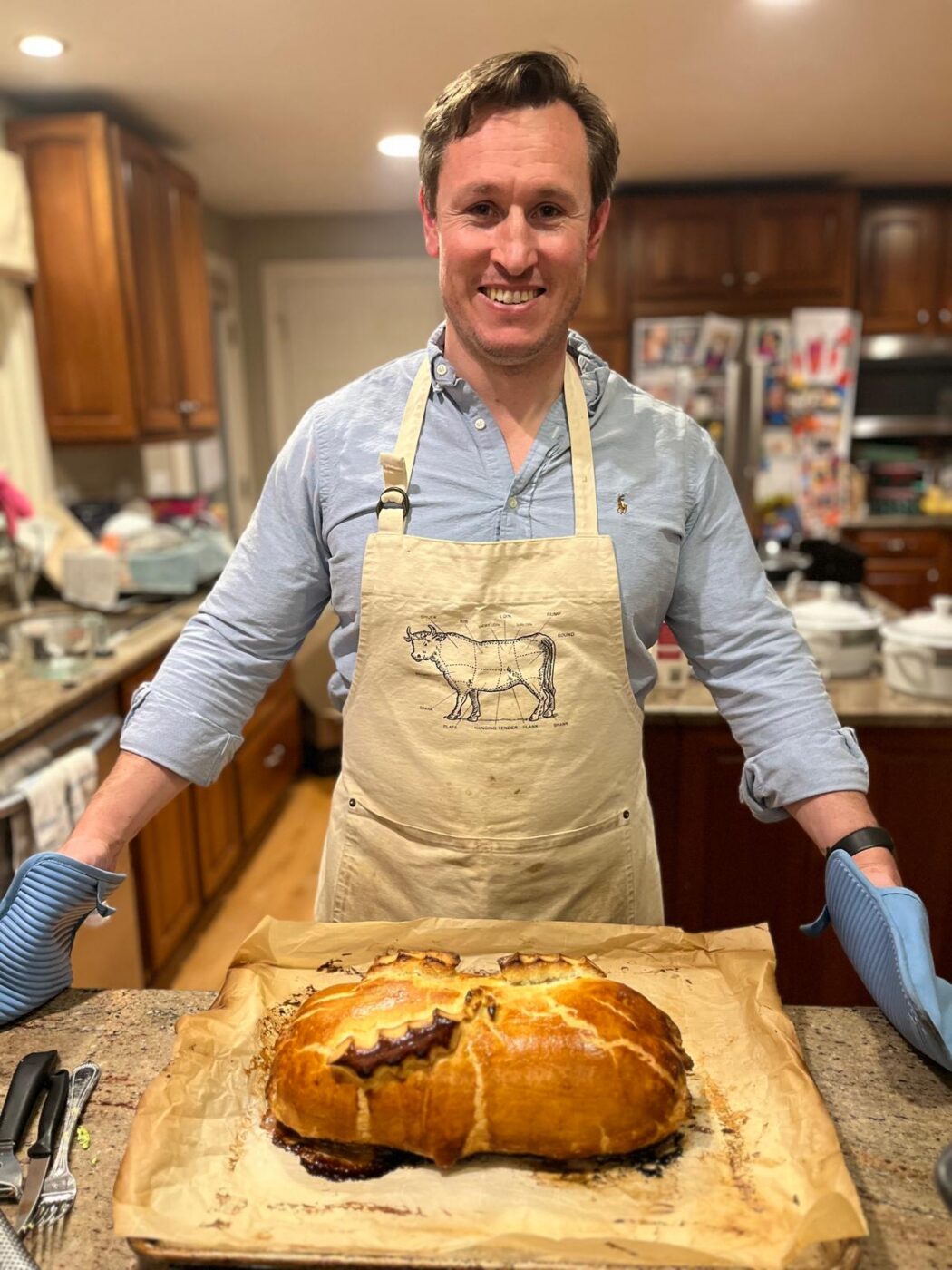
Cooking, he says, provides a welcome contrast to the analytical demands of patent work. It is practical, creative and immediately rewarding.
Looking Ahead
For innovators filing their first international patent application, Matt offers two pieces of advice: choose the right adviser and invest in quality.
Interview potential counsel. Make sure they understand your technology and that you work well together. For early-stage companies, a single well-drafted application can shape the future of the business.
“Getting this right could be the difference between success and failure,” he says. “And it’s very hard to fix later.”
LinkedIn: https://www.linkedin.com/in/mattmaitland/
Meet the IP Professional is a PatWorld interview series exploring the people and perspectives shaping the intellectual property profession. Discover more interviews in the Meet the IP Professional hub, and find out more about PatWorld — a global IP search provider working with IP professionals worldwide to support informed patent, design and trade mark decisions — on our About Us page.
 Order a Search Now