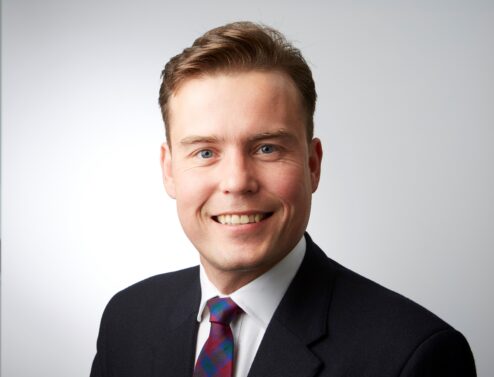
John-Paul Rooney is a partner at Withers & Rogers LLP, based in Sheffield. With a background that began with an engineering apprenticeship, he has built a career in patent law focused on client relationships, firm leadership, and the growth of one of the firm’s most successful regional offices. Quick Profile Name: John-Paul RooneyRole: PartnerFirm / […]
13th May 2026
John-Paul Rooney is a partner at Withers & Rogers LLP, based in Sheffield. With a background that began with an engineering apprenticeship, he has built a career in patent law focused on client relationships, firm leadership, and the growth of one of the firm’s most successful regional offices.
Quick Profile
Name:John-Paul Rooney Role: Partner Firm / Organisation:Withers & Rogers LLP Location: Sheffield, UK Areas of expertise: European and UK patents, client relationship management, electronics, video coding, IP strategy, Unified Patent Court matters, AI in IP practice
From apprentice technician to patent attorney
John-Paul Rooney’s route into the IP profession was far from conventional. He began his career as an apprentice technician at ICI Pharmaceuticals, now part of AstraZeneca, with no expectation that patent law would eventually become his career.
“I had absolutely zero idea that I would get into the IP profession,” he says.
During his apprenticeship, he studied part-time while working, eventually progressing from college to university. His early experience in industry exposed him to the commercial importance of patents, particularly within the pharmaceutical sector.
“We could see that when one of the blockbuster drugs that we made went off patent, the profit margin went down massively,” he explains. “That gave me a signpost to the existence of the IP profession and how important it was.”
After deciding to pursue university full-time, John-Paul studied electronics before completing a PhD involving a large-scale research project. It was towards the end of that doctorate that patent law first became a serious option.
Following his PhD viva, his supervisor suggested he would make a strong patent attorney because he could understand complex technology while communicating clearly with both engineers and business leaders.
“That was a great piece of career advice from him,” says John-Paul.
Finding the right culture
John-Paul joined Withers & Rogers LLP after applying to firms across the UK. He believes the firm’s openness to different backgrounds played a major role in that decision.
Today, as a partner, his responsibilities extend beyond client work. He serves on internal committees covering finance, quality, and risk management, while also leading several major client teams, including large US and UK accounts. He additionally runs the firm’s China desk, helping to build relationships with Chinese clients and associates, with particular success in new energy and biotech/pharmaceuticals sectors.
For John-Paul, culture has remained central throughout his career.
“Finding your people and a culture that fits you is really important,” he says. “Every patent attorney firm has a different culture, and I’m lucky to have found a great fit with Withers & Rogers.”
Building the Sheffield office
One of the defining parts of John-Paul’s career has been helping grow the Sheffield office of Withers & Rogers LLP over the last 15 years.
When he moved to Yorkshire to start a family, the firm did not yet have a regional office there. After spending time with another firm, he returned when the opportunity arose to help establish the Sheffield presence from the ground up.
“It was an opportunity I couldn’t resist,” he says.
What began as a small office with only a handful of people has since grown into a substantial regional operation employing over 40 people.
John-Paul believes two things made that growth possible: culture and energy.
“We developed a culture that could breed success,” he explains. “Being open, sharing information, supporting one another — that was really important. Then having the energy and desire to go out and communicate that to the world.”
He also highlights the importance of support from the wider firm.
“The rest of the firm really wanted the office to succeed,” he says. “That support was hugely important.”
Although hybrid working has changed office life, he believes in-person collaboration still plays a vital role in building strong teams and maintaining culture.
Technical understanding and client relationships
John-Paul’s engineering background continues to shape the way he works with clients today.
He recalls visiting a Sheffield-based client and immediately recognising elements of their equipment from his apprenticeship days.
“I knew exactly what I was looking at,” he says. “Their confidence in me went through the roof.”
That ability to understand technology quickly and communicate naturally with technical teams has become a key strength throughout his career.
He places particular importance on long-term client relationships.
“We really like building those long-term trusted relationships with our clients,” he says. “I enjoy seeing clients able to pick up the phone to discuss something difficult and for us to find a solution together.”
The changing IP landscape
Like many in the profession, John-Paul sees artificial intelligence as one of the biggest current shifts affecting IP practice.
“We are beginning to deploy AI more widely,” he explains, “but only as an assistant, not to do the work.”
He believes careful and responsible use of AI will become increasingly important across the profession.
Alongside AI, he also points to the growing influence of the Unified Patent Court in Europe.
“We’re involved in four litigations in that court at the moment,” he says. “It has definitely changed how IP is used.”
Later this year, John-Paul will also be speaking at the CIPA Congress in Manchester on the sustainability challenges facing the patent profession and its future direction.
Outside the office
Away from work, John-Paul enjoys spending time with his partner and three children. Living in the Peak District gives him plenty of opportunity for walking, particularly around Kinder Scout and Bamford Edge.
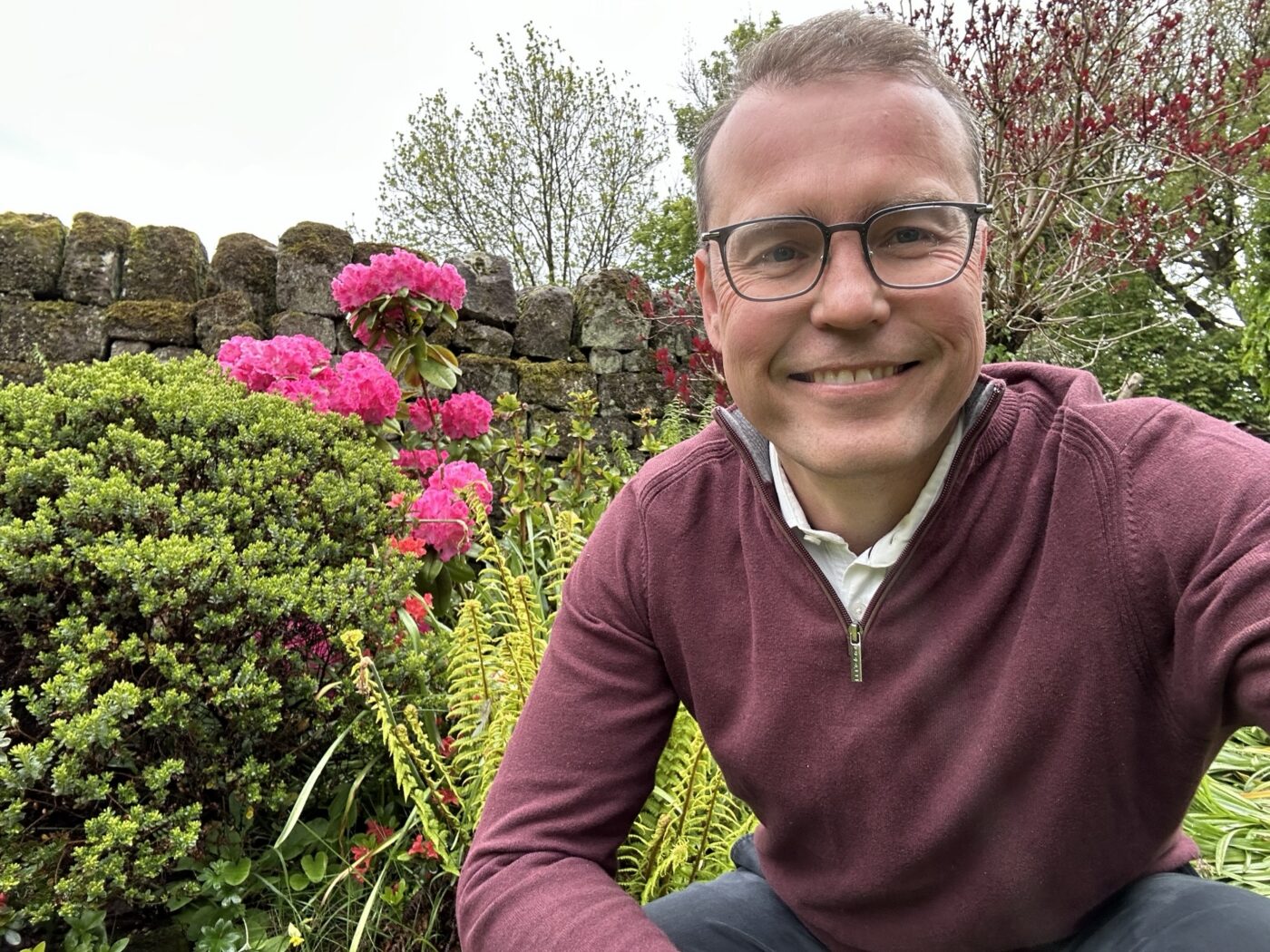
He is also a keen gardener with a growing interest in climbing roses.
“I think when I retire, I’ll be pottering around the garden most days,” he says.
Golf is another long-standing hobby. He plays competitively at his local course, which he jokes is close enough to see from his window.
Looking ahead
Reflecting on his career so far, John-Paul returns to the importance of finding the right environment and the right people.
“You’ve got to find a place with a culture that fits you, and vice-versa” he says.
His own path into the profession may not have been traditional, but he believes the industry is becoming more open to different backgrounds and experiences. Through internships and outreach initiatives, he hopes more people will discover opportunities in IP that they may never previously have considered.
Meet the IP Professional is a PatWorld interview series exploring the people and perspectives shaping the intellectual property profession. Discover more interviews in the Meet the IP Professional hub, and find out more about PatWorld, a global IP search provider working with IP professionals worldwide to support informed patent, design and trade mark decisions, on our About Us page.
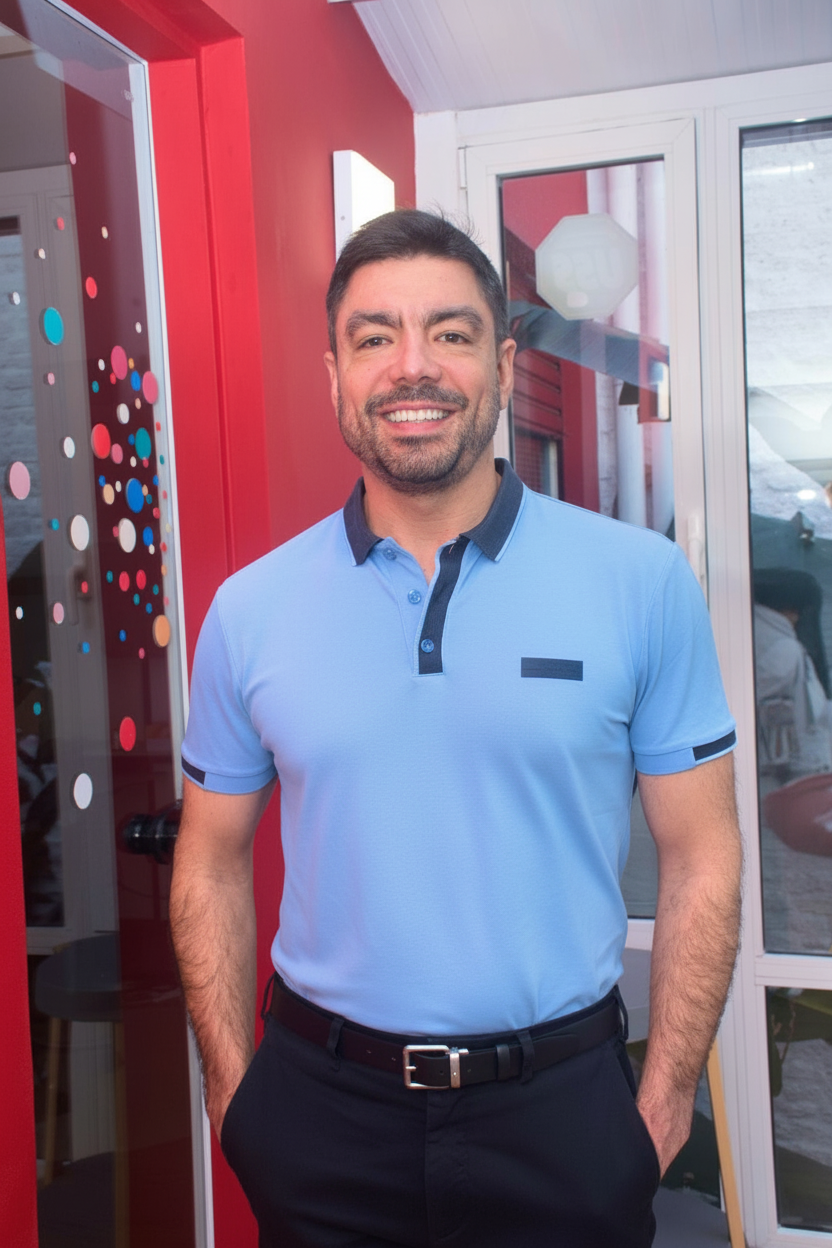
Emilio Berkenwald is Partner and Head of the Patent Department at BERKEN IP in Argentina, where he leads a technically trained team handling substantive patent drafting and prosecution work. With a background in engineering, research and teaching, Emilio brings a European-style approach to patent practice, focused on technical depth, strategy and international collaboration. Quick profile […]
14th January 2026
Emilio Berkenwald is Partner and Head of the Patent Department at BERKEN IP in Argentina, where he leads a technically trained team handling substantive patent drafting and prosecution work. With a background in engineering, research and teaching, Emilio brings a European-style approach to patent practice, focused on technical depth, strategy and international collaboration.
Quick profile
Name: Emilio Berkenwald Role: Partner, Head of the Patent Department Firm:BERKEN IP Location: Buenos Aires, Argentina Areas of expertise: Patent drafting and prosecution, cross-border patent strategy, technically complex inventions, patent infringement and validity opinions, freedom-to-operate analyses, patent litigation counselling, IP training and education
A technical foundation shaped early on
Emilio’s route into patent law was shaped by both family influence and technical curiosity. Trained initially as a chemical engineer, he went on to complete a PhD in engineering before studying intellectual property law in Europe, including formal training in France.
Growing up in a household where patents were a regular topic of conversation — with a chemical engineer mother and a lawyer father — gave Emilio early exposure to the intersection between technology and law. While it didn’t immediately appeal, that combination later proved compelling. Particularly as he recognised the opportunity patents offered to work internationally, learn continuously, and engage deeply with innovation and new technologies.
Leading the patent function at BERKEN IP
As Head of the Patent Department at BERKEN IP, Emilio oversees all patent-related work at the firm. His role spans team leadership, technical supervision, strategic decision-making, and client communication, including the preparation of patent infringement and freedom-to-operate opinions, as well as strategic counselling in patent litigation matters, acting as the main interface between inventors, foreign associates and the firm’s legal and paralegal internal team.
Day to day, his focus is firmly technical. He works closely with the firm’s patent attorneys on drafting applications, responding to office actions, and shaping prosecution strategies and cooperates with the firm’s legal team specialized in technology contracts, litigation and enforcement. Administrative and formalities work is handled by a specialized team, allowing the technical team to concentrate on substantive patent matters.
Emilio also remains hands-on with his own cases, often reserving quieter periods of the day to work directly on complex files that require deeper technical attention.
A European-style approach in a Latin American context
One of the defining features of Emilio’s practice is his deliberate adoption of a European-style patent model within the Argentine system. While Argentina’s patent law itself draws heavily from European traditions, much of the local market is dominated by incoming foreign filings, with limited emphasis on drafting or strategic development.
Many firms, Emilio explains, are lawyer-led and focus primarily on procedural prosecution. By contrast, BERKEN IP has built a team of engineers and scientists who are trained to engage directly with inventors, draft applications from scratch, and think strategically about claim scope and future amendments.
This approach allows the firm to work closely with Argentine innovators from the earliest stages of development, rather than only entering the process once an application already exists.
Why technical training matters more than ever
For Emilio, strong technical training is fundamental to good patent work. It builds trust with clients, particularly inventors, who want reassurance that their ideas are fully understood and accurately represented.
As technologies become more complex and prior art landscapes more crowded, that technical grounding becomes even more critical. Patentability increasingly turns on small but meaningful distinctions, especially for incremental innovations. Understanding those distinctions — and how to defend them — requires more than legal knowledge alone.
Emilio also believes it is generally easier to teach patent law to engineers than to teach advanced engineering concepts to lawyers, particularly in a system where obtaining a technical degree can be lengthy and demanding.
Training the next generation of patent attorneys
Emilio personally oversees much of the in-house training at BERKEN IP. New technical team members begin with a broad grounding in intellectual property law, covering patents, trade marks and designs, to ensure they understand the wider IP context and client needs.
From there, training becomes increasingly patent-specific. Topics such as novelty, inventive step and priority are explored through real examples and practical exercises, encouraging critical thinking rather than rote learning.
This mirrors Emilio’s approach to teaching at university, where he focuses on helping students learn to develop critical thinking and to how to ask the right questions — a skill he sees as essential for both researchers and patent attorneys.
Adding value across borders
BERKEN IP’s technical approach also strengthens its relationships with foreign clients and associates. Having experience drafting applications themselves allows Emilio and his team to engage more meaningfully with prosecution strategies, suggest technically sound amendments, and adapt arguments across jurisdictions. This technical depth also supports the preparation of infringement, validity and freedom-to-operate opinions, and provides a solid foundation for advising on patent disputes and litigation strategies.
Their familiarity with practices in Europe, the US and elsewhere enables them to explain where Argentine requirements differ — and where flexibility exists — helping clients navigate cross-border portfolios more efficiently, both in prosecution and in litigation contexts.
By carrying out much of the technical work locally, the firm is also able to manage costs more effectively for Argentine clients while maintaining international standards.
Academia, communication and clarity
Alongside his legal practice, Emilio has maintained a long-standing academic role, teaching engineering subjects at university. His research background helps him understand the pressures researchers face, particularly around publishing and timing patent filings.
This dual perspective allows him to act as a bridge between inventors and business stakeholders, balancing scientific urgency with legal protection. It has also shaped his communication style — something clients frequently remark on — enabling him to explain complex patent systems in clear, accessible terms.
An international outlook
Active involvement in the global IP community is central to Emilio’s work. He regularly attends international conferences and participates in professional committees. Seeing this as essential both for staying current and for building trusted working relationships.
For a firm based in Argentina, this global engagement also signals reliability to overseas clients. Many of whom rely on BERKEN IP to coordinate filings across Latin America and beyond.
Life beyond IP
Outside the office, Emilio enjoys travelling, often extending work trips to explore new cities. Languages are another passion, and he is currently learning Mandarin, both for the challenge and the cultural insight it offers.
Music plays a significant role in his life. A trained violinist, Emilio continues to play for pleasure. Finding it a welcome contrast to the technical demands of patent work. His partner is a professional classical pianist, and performing or listening to music together provides a creative outlet beyond the legal world.
Looking ahead
Emilio believes the Argentine patent profession is likely to evolve towards a more technically focused model. Particularly as startups and inventor-led companies become more prominent and seek international protection.
For engineers and scientists considering a move into patent law, his advice is clear: technical skills are essential, but legal training, communication, client-oriented service, teamwork and curiosity matter just as much.
Meet the IP Professional is a PatWorld interview series exploring the people and perspectives shaping the intellectual property profession. Discover more interviews in the Meet the IP Professional hub, and find out more about PatWorld — a global IP search provider working with IP professionals worldwide to support informed patent, design and trade mark decisions — on our About Us page.
Within the Bartle household, “being a patent attorney” has long been understood as a playful insult.“It means you’re being pedantic, analytical, contrarian and generally insufferable,” laughs Robin Bartle. “My family seem to think I was just cut out for the job – and they’re probably right.” It’s an introduction that captures Bartle perfectly: sharp, humorous, […]
15th October 2025
Within the Bartle household, “being a patent attorney” has long been understood as a playful insult. “It means you’re being pedantic, analytical, contrarian and generally insufferable,” laughs Robin Bartle. “My family seem to think I was just cut out for the job – and they’re probably right.”
It’s an introduction that captures Bartle perfectly: sharp, humorous, and thoughtful in equal measure. As co-founder and director of Bartle Read, a boutique intellectual property firm with offices in Liverpool and London, Robin brings more than twenty years of experience helping clients acquire, maintain, commercialise and enforce patents across mechanical, electrical, electronic and computer-based inventions.
The road to Bartle Read
Robin in his home-built replica of a 1960s sports car.
After two decades in practice, including a long stint as an equity partner, Robin decided it was time to build something of his own. “It was the best decision of my working life, bar none,” he says. “It’s never easy to walk away from a secure position and from colleagues one likes and respects. But there’s something hugely liberating about being able to arrange things just as one wants — especially in terms of how we work with clients. I think at some point in life, a lot of us just want to be our own boss.”
That independence has shaped Bartle Read’s culture ever since. “We’re a small firm with low overheads. That allows us to focus on what matters most: giving honest, practical advice and maintaining close, long-term relationships with clients.”
From LEDs to AI: the evolution of innovation
Across his career, Robin has seen successive waves of technological change transform the work of a patent attorney. “When a new enabling technology comes along, we’re suddenly inundated with projects based on interesting new ways to use it,” he explains. “That happened when LEDs became bright enough for general illumination, or with satellite-based geolocation, Bluetooth®, phone apps — there are many examples.”
Today, he says, the same is happening with artificial intelligence. “At the moment a great proportion of the start-up projects I’m seeing involve new ways of employing AI. It’s exciting because there’s no doubt the world is going to change enormously. There’s real commercial opportunity for organisations creative and determined enough to carve a niche. But it’s also a difficult area in terms of patentability. I worry the UK’s current approach could prove unhelpful to our domestic AI industry.”
The art of argument
Known for his love of intellectual wrangling, Robin has handled a wide range of contentious work — from European oppositions to infringement litigation. His advice to younger attorneys? “Keep calm, prepare meticulously, and never be afraid to give the client a blunt assessment.”
He adds, “The truth is that outcomes in contentious matters are often uncertain. The law presents itself as a coherent system leading to right and wrong answers. However, so much of what we do in IP — like judging whether an invention is ‘obvious’ — is inherently subjective. Two equally skilled judges can look at the same facts and come to opposite conclusions. That’s not a flaw, it’s part of the system. As advisers, we just have to be honest about uncertainty.”
Designs and disputes
Robin also has a particular interest in designs, having co-authored the Community Designs Handbook. “Rights in designs are actually quite limited in scope,” he says. “We see fewer blatant product clones than we did thirty years ago. Although, disputes still arise — often between parties who’ve worked together before. In those cases, unregistered design right can be a very useful tool for bringing a wayward manufacturer to heel.”
Straight talk and sound judgement
Despite the technical nature of his work, Robin believes that most legal issues aren’t as complex as they might seem — provided you’ve done the thinking first. “An adviser’s job is to focus on the questions that matter to the client. Once you’re clear in your own mind what needs to be said, explaining it clearly tends to be easy enough. The tricky conversations are usually the ones where you haven’t quite decided what you think.”
Balancing budgets and business reality
Working with start-ups has given Robin a pragmatic view of IP strategy. “I tend to encourage them to put attracting capital right at the top of the to-do list from day one,” he says. “Usually, patenting costs in the early stages are small compared to what’s needed to get to market. Once investment is secured, decisions about IP spend are rarely difficult. I often tell clients that the happiest projects are the ones spending other people’s money.”
That frankness extends to his advice on priorities: “I’m not someone who thinks IP is always the answer. Many great innovations can’t be patented, and many patents never make money. The key is to understand what job IP is going to do for the business — whether that’s securing funding or deterring competitors — and to plan spending accordingly.”
A philosophy of patience and precision
Asked what he’d tell his younger self, Robin offers an admirably dry answer: “Follow your dreams, young man. Tear up that pinstripe suit and go on the stage!” Then, more seriously: “The life of a patent attorney is ruled by deadlines. Procrastination is the cardinal sin. A retired admiral once told my wife the secret to a happy life was always doing the difficult jobs first — and the older I get, the more I try to observe it.”
Outside the office
When he’s not drafting patent applications or debating inventive step, Robin is most at home in his workshop. “I like making things of all sorts — furniture, toys, prototypes, even a home-built replica of a 1960s sports car,” he says. “Just let me alone in the shed, surrounded by wood or metal shavings with Radio 4 in the background, and I’m a happy man.”
About Bartle Read
Founded by Robin Bartle and David Read, Bartle Read is an independent intellectual property firm with offices in Liverpool and London, offering patent, design and IP enforcement expertise across a wide range of technologies. The firm’s ethos is built on clarity, accessibility and deep technical understanding — values reflected in the way its attorneys work closely with clients to craft practical IP strategies.
At PatWorld, we’re proud to support boutique IP firms like Bartle Read with comprehensive patent search and intelligence services. From prior art and freedom-to-operate searches to competitor and landscape analysis, our tools help attorneys and their clients make informed, strategic decisions — saving time and improving the strength of every patent application. Get in touch with us today to learn how we can assist with your next project.
At the cutting edge of intellectual property for over 25 years, Robert Plotkin, Co-Founder of the boutique patent law firm Blueshift IP, is a luminary in the complex field of software patents. As a patent attorney, he has carved a niche in representing start-ups, tech giants, universities, and law firms globally, specialising in the challenges […]
6th January 2025
At the cutting edge of intellectual property for over 25 years, Robert Plotkin, Co-Founder of the boutique patent law firm Blueshift IP, is a luminary in the complex field of software patents. As a patent attorney, he has carved a niche in representing start-ups, tech giants, universities, and law firms globally, specialising in the challenges and opportunities presented by software and artificial intelligence (AI) patents. In this exclusive feature, Robert shares insights into his journey, expertise, and the evolving landscape of patent infringement and enforcement.
A Journey from Code to Courtroom
Robert’s story is one of blending technical brilliance with strategic legal acumen. Beginning as a self-taught programmer in the early 1980s, he became fascinated with computers while working on the TRS-80 and learning BASIC. This passion for technology led him to MIT, where he pursued computer science. However, his aspirations extended beyond coding.
“I realised I wanted to stay in the software field but at a higher strategic level,” Robert recalls. “Law became very attractive because it allowed me to combine my love for writing, strategising, and arguing, all while staying connected to the software world.”
After graduating from MIT, Robert attended law school and quickly entered the burgeoning field of software patents during a pivotal era in the mid-1990s. With landmark court decisions making software patentable, he joined a law firm in Boston, where he helped define how software patents were drafted and obtained.
Over time, Robert’s practice expanded to include litigation, licensing, and portfolio management. Today, Blueshift IP excels at building international patent portfolios for innovative tech companies, helping clients navigate the intricate legal terrain of monetising and defending their intellectual property.
Innovating in AI and Software Patents
One of Robert’s professional highlights is his work with artificial intelligence. As the AI boom took off, particularly in the last two years, Robert found himself at the forefront of patenting AI innovations. He explains, “AI presents unique challenges and opportunities. Deciding what can and can’t be patented, determining what to keep as a trade secret, and explaining these innovations to patent offices are fascinating and rapidly evolving tasks.”
To keep patents relevant amidst technological advancements, Robert emphasises the importance of forward-thinking strategies. “You need to brainstorm how an invention might evolve in the future and write the patent in a way that covers as many potential developments as possible,” he advises. This approach ensures that patents remain valuable and enforceable even as technology progresses.
Proactively Tackling Patent Infringement
Patent infringement is another area where Robert has been a pioneer. He advocates for proactive strategies to identify and address infringement.
“With today’s technology, it’s easier than ever to find infringers,” he explains. “Companies often announce new products online, providing a goldmine of information. Tools like PatWorld make it possible to efficiently search for potential infringers or competitors’ patent filings, offering significant strategic advantages.”
Robert is quick to dispel the myth that small businesses can’t enforce their patents. He highlights cost-effective alternatives to litigation, such as contingency fee arrangements and third-party funding, which empower smaller entities to protect their intellectual property without exorbitant legal expenses.
The Future of Patent Enforcement in a Rapidly Changing World
Looking ahead, Robert envisions a “cat-and-mouse game” between patent owners and potential infringers. He foresees AI-based tools becoming integral to both drafting robust patents and identifying ways to design around existing patents.
“The increasing power of technology will enhance the ability of patent owners to secure and enforce patents,” Robert says. “At the same time, it will enable infringers to find creative ways to work around them. It’s an exciting and dynamic time in the field.”
Advice for Aspiring Patent Professionals
For those considering a career in patent law, Robert offers sage advice: master the fundamentals before relying on AI and other advanced tools. “Learn to search, draft, and analyse patents the traditional way. These foundational skills are essential for effectively leveraging new technologies,” he emphasises.
As someone deeply engaged in both practice and thought leadership—including speaking engagements and panels on the use of AI in the patent profession—Robert exemplifies the blend of innovation and expertise that defines modern intellectual property law.
For more insights from Robert Plotkin and to explore the services offered by Blueshift IP, visit https://blueshiftip.com/ or connect with Robert on LinkedIn.
————————————————————————————————————–
Meet the IP Professional is a PatWorld interview series exploring the people and perspectives shaping the intellectual property profession. Discover more interviews in the Meet the IP Professional hub, and find out more about PatWorld, a global IP search provider working with IP professionals worldwide to support informed patent, design and trade mark decisions, on our About Us page.
PatWorld Global IP Research Services
Patent, Design, and Trademark Research Experts with a combined experience of over 200 years in Intellectual Property searching. Highly trained, dynamic in-house research teams specialising in a wide range of subject matter. All our analysts follow a training program developed by former IPO Examiners. Our teams are available to discuss any specific technical points regarding your search enquiries.








 Order a Search Now