


Meet the IP Professional: Robert Wulff – 37 Years of Change, Curiosity and Innovation
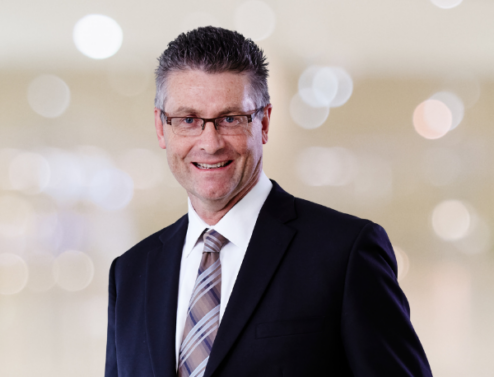
Robert Wulff is a Principal and patent attorney at Griffith Hack in Sydney, Australia. Over a 37-year career with the firm, he has worked across patents and designs in industries ranging from mining and agriculture to construction and clean technology, while developing a client-focused approach grounded in curiosity, listening and a genuine interest in innovation.
Quick Profile
Name: Robert Wulff
Role: Principal and Patent Attorney
Firm / organisation: Griffith Hack
Location: Sydney, Australia
Areas of expertise: Patents, designs, IP strategy, chemical engineering, mining, agriculture, construction and industrial technologies
Finding a profession that combined technology and words
Robert’s route into intellectual property began with chemical engineering. After training and working as a chemical engineer for three years, he realised that something was missing.
“I always loved words and writing,” he explains. “I didn’t really get that opportunity as a practising chemical engineer.”
A university friend had entered the patent profession and introduced Robert to a career that could bring those interests together. When two positions became available, Robert interviewed for both and was offered both. He chose Griffith Hack.
That was in 1989. He has been with the firm ever since, becoming a principal in 1997.
Looking back, Robert describes entering IP as something of a fortunate accident. “I kind of stumbled into this profession,” he says. “I don’t think I appreciated at the time that I had fallen into a lucky profession.”
What has kept him engaged is the combination that attracted him in the first place: technology, people and the opportunity to communicate complex ideas.
From fax machines to AI
Thirty-seven years in one profession has given Robert an unusually long view of how working practices have changed.
When he joined Griffith Hack, fax machines had yet to transform client communication. Their arrival brought an expectation of overnight replies. Email accelerated that further, while laptops, mobile phones and smartphones progressively changed where and how people could work.
COVID brought another major shift, making remote working a standard part of professional life. Robert now divides his working week between home and the office.
The latest change is artificial intelligence. For Robert, AI is already augmenting professional work and increasing productivity. At the same time, it is creating new areas of patent activity as clients develop AI-related technologies.
Staying close to clients and technology
Robert’s role has also evolved as Griffith Hack itself has changed. With professional management now handling much of the day-to-day running of the business, his focus is firmly on clients, people and business development.
He looks after key clients, supervises and mentors around nine attorneys, writes articles, attends conferences and maintains relationships with IP professionals around the world.
“What continues to inspire me most is the clients and the technologies that we get to work with,” he says. “It’s a real privilege, actually, because some of our clients are world’s best at what they do.”
The variety is considerable. One day might involve wastewater treatment, another a new building tool, a chemical process, metal extraction technology or even fence posts.
For someone naturally curious about how things work, that variety remains one of the profession’s great attractions.
“You get to enter into their world,” Robert says.
Asking questions – and listening to the answers
Robert’s approach to clients has been influenced by an interest that extends well beyond patent law. For more than four decades, he has studied practical philosophy.
In particular, he has drawn on the dialectic method associated with Socrates: using questions and discussion to develop understanding.
Robert sees it as a powerful technique in client meetings. Asking the right questions helps him understand not only an invention but also the client’s business and objectives.
That emphasis on questioning is accompanied by something simpler: listening.
“A lot of questions and a lot of listening,” is how he describes the starting point for developing an effective IP strategy.
IP strategy starts with the business
Robert firmly views intellectual property as a business tool rather than simply a collection of legal rights.
His involvement with an early-stage venture community has reinforced that perspective. Investors considering technology businesses often expect to see appropriate IP protection in place. But that does not mean recommending patents in every situation.
Robert believes an IP strategy must start with understanding what the organisation is trying to achieve.
“My experience is that every IP strategy is different,” he says. “It is unique in a way because every business is different.”
For some developments, trade secrets may make more commercial sense. A startup may need to maximise protection while controlling costs, while a large industrial organisation may have very different priorities.
Robert also sees a clear connection between an organisation’s attitude towards innovation and the value it derives from IP. Where innovation forms part of the culture, IP is more likely to be regarded as a business asset rather than simply a cost.
“You’ve got to really understand the client and their business and their offering and what it is they’re seeking to achieve,” he explains.
A profession transformed
The structure of the IP profession looks very different from when Robert entered it.
In 1989, he recalls a landscape dominated by smaller boutique IP practices. Since then, major law firms have moved further into IP, firms have merged, and listed groups and private equity have become increasingly involved in the sector.
Griffith Hack itself has been part of that evolution, growing from a traditional partnership structure to become part of a larger international IP group.
The result, in Robert’s view, is a considerably more competitive profession.
Career structures have changed too. Robert became an equity partner eight years after entering the profession, a progression he says would be unusually rapid today.
At the other end of the spectrum, building an independent practice brings different challenges, from balancing client work with running a business to deciding where and how to invest in technology and people.
Where AI fits into the future of patent practice
Despite the pace of technological change, Robert does not believe AI will remove the need for skilled patent attorneys.
“In my opinion, there’s always going to be a role for a skilled and experienced patent attorney,” he says.
AI can take on some routine work traditionally carried out at the beginning of a patent attorney’s career. Robert believes this will change how junior practitioners develop their skills, making training and exposure to higher-value work increasingly important.
But technology still needs to be understood in context. Patent attorneys must bridge the gap between an invention, the client’s objectives and appropriate legal protection.
At the same time, Robert is seeing patent activity across AI, critical minerals, renewable technologies, pollution reduction, waste and water treatment, quantum computing and data-related technologies.
“The fundamentals will always remain,” he says. “You’ll need attorneys that can roll their sleeves up and understand the technologies and then ensure that those technologies translate effectively into legal protection.”
Curiosity, humility and a sense of wonder
For Robert, longevity in the profession has not meant reaching a point where there is nothing left to learn.
“Remain open to be surprised and preserve a sense of wonder,” he says.
He believes practitioners should cultivate a genuine interest in what their clients are doing, ask questions and listen carefully. Just as importantly, they should avoid assuming they have mastered their craft.
Robert uses patent drafting as an example. Even after decades of experience, he believes his own drafting continues to evolve and is willing to learn from colleagues, including the attorneys he mentors.
“My view is that you’ve never mastered your craft,” he says.
That willingness to keep learning means being prepared to recognise a better approach and acknowledge when you may have got something wrong.
The inventor Robert would invite to lunch
Asked which inventor he would most like to spend an afternoon talking to, Robert chooses Japanese inventor Shunpei Yamazaki.
What interests Robert most is not simply what Yamazaki invented, but how he thought. He would want to understand his process of invention, what inspired him and which achievements gave him the greatest satisfaction.
It is a choice that reflects Robert’s own curiosity about not just what someone has created, but how they think.
Outside the office
Away from IP, family plays a central role in Robert’s life. He and his wife have two adult children who are both at university, and the family still enjoys spending time and holidaying together.
Before COVID, the family bought a farm in the Southern Highlands. Robert describes the landscape as “a little slice of England”, with parts of the area having been used in the filming of Babe.

Robert enjoys surfing, gardening, fixing things around the farm and walking the dog with his wife. He is also writing his first novel, while practical philosophy remains a longstanding passion that he shares with his wife.
Giving the work 100%
When Robert first joined the partnership at Griffith Hack, he asked a friend who had been a senior partner in another professional services firm for advice.
The answer came down to three principles: give the work 100%, treat everyone as you would like to be treated yourself, and never compromise your principles.
Robert has carried that advice throughout his career and now passes it on to the attorneys he mentors. He also encourages them to strive for excellence, both in their work and in how they treat clients and colleagues.
If he could return to his first day in the profession, he would offer his younger self much the same advice – along with a reminder to appreciate the opportunity sooner.
“You’re a lucky man to have fallen into this profession,” he says.
After 37 years, the technologies may have changed and the profession has become more competitive, but Robert’s enthusiasm for the work remains intact.
For him, the enduring appeal lies in being able to learn, ask questions and work alongside people developing new ideas – while recognising that, however experienced you become, there is always more to discover.
Contact Robert
LinkedIn: Robert Wulff
Firm website: Griffith Hack
Meet the IP Professional is a PatWorld interview series exploring the people and perspectives shaping the intellectual property profession. Discover more interviews in the Meet the IP Professional hub, and find out more about PatWorld, a global IP search provider working with IP professionals worldwide to support informed patent, design and trade mark decisions, on our About Us page.
 Order a Search Now