


Meet the IP Professional: Philip Cupitt – Keeping the Human in the Loop
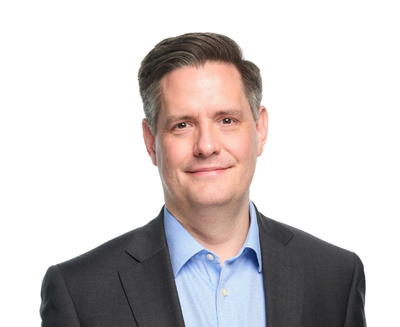
Philip Cupitt is a patent attorney at Marks & Clerk whose work spans engineering, software, telecommunications, medical devices and artificial intelligence. From the value of rigorous patent searching to the evolving role of AI, Philip believes technology can enhance the profession, but human understanding, judgement and communication remain fundamental.
Quick Profile
Name: Philip Cupitt
Role: Partner, Patent Attorney & UPC Representative
Firm / organisation: Marks & Clerk
Location: Birmingham, UK
Areas of expertise: Patents, software, telecommunications, artificial intelligence, medical devices, electronics, mechanical engineering, standard essential patents, freedom to operate and EPO oppositions
Finding a career at the intersection of technology and law
Philip’s route into intellectual property was more accidental than planned. After completing his PhD in 2002, he was considering a range of career options when he came across a somewhat mysterious advertisement for a “graduate trainee”. The recruiter behind it was working on behalf of several patent attorney firms, and once Philip learned what the profession involved, it immediately appealed to two longstanding interests. “I obviously liked technology. I studied engineering and I’ve always been interested in technology, but I had also thought earlier about doing a law degree.” Patent law offered an opportunity to bring the two together.
More than two decades later, it is the constant exposure to new ideas that continues to make the profession interesting. Philip is fascinated by how things work, whether that means understanding software, an electrical product or a mechanical device, and patent work provides an almost endless supply of technologies to investigate. “There’s a never-ending flow of new technologies to learn about and understand.”
That breadth is particularly evident in his work across fields such as telecommunications and medical technology. His interest in the latter began early: Philip’s mother was a radiographer and explained radiography to him when he was young, while his PhD also had links to medicine. Telecommunications offers a different example of technological complexity. A device as familiar as a mobile phone brings together huge numbers of innovations and patents, from communications technologies to hardware. For Philip, gaining an understanding of what is happening behind technology that most of us simply take for granted remains one of the most rewarding aspects of the job.
Making patent advice understandable
Technical knowledge is only part of being an effective patent attorney. One of the biggest lessons Philip has learned during his career is the importance of communicating outside what he calls the “patent bubble”. Advice written in the language best suited to a patent office may make perfect sense to another attorney, but it may be far less useful to an inventor or business leader trying to make a commercial decision. “The key to everything is trying to explain things in a way that someone outside the patent bubble can understand.”
For Philip, clients should understand not only what their attorney is doing, but why. That means clearly explaining the available options and, where appropriate, being prepared to recommend a course of action rather than simply presenting a list of possibilities. He returns to this point when considering what distinguishes genuinely useful legal advice from advice that is technically excellent but difficult to apply. The best advice, he believes, should be easy for the client to understand and digest, and attorneys should also be prepared to “get off the fence” and say what they would do if they were in the client’s shoes. Ultimately, the purpose is to give clients enough clear information and guidance to make better decisions.
Why searching matters before decisions are made
Patent searching is one area where Philip sees considerable value in getting the right information at the right stage. For patentability, he believes businesses and inventors should understand the prior art before committing to the cost of filing and pursuing a patent application. Preparing an application is only the beginning of that investment: prosecution and, eventually, maintaining granted rights all have associated costs. A good understanding of the prior art can therefore help a business assess both the likely scope of protection and whether proceeding makes commercial sense.
It can also improve the resulting application. Once the relevant prior art is understood, an attorney can take it into account when drafting, which Philip believes can lead to a more focused application that is better prepared for examination and potential future challenges. Freedom to operate searching is equally important. “Businesses shouldn’t just launch products without having undertaken their due diligence to know what the patent risks are.” That applies not only to launching a new product, but also when taking an existing product into a new market. Identifying potential risks earlier can help a business make informed decisions rather than encounter an unwelcome problem after significant investment has already been made.
For Philip, however, the quality of a patent search cannot be measured simply by the number of documents returned. The searcher needs to understand the brief, the technology and where to look, and just as importantly, they need to recognise which results are genuinely relevant. “You can tell quite easily when looking at a patent search whether or not you think the searcher has understood what they’re looking for and looked in the right places.”
It is an area where he specifically values experienced search professionals. Philip says that when he asks PatWorld to carry out searches, he trusts the analysts to understand the brief, apply an appropriate strategy and surface the most relevant documents. That makes the results more useful because an attorney is not left working through large volumes of material with little relevance to the question being asked.
As search technology continues to develop, Philip also sees opportunities for AI to support experienced searchers, particularly when dealing with very large volumes of patent information or language barriers. However, he believes the human element remains central: understanding the invention, developing the right strategy and recognising what is genuinely relevant all depend on technical knowledge and professional judgement.
AI and the changing IP profession
Philip has been considering AI’s impact on the IP profession for several years. In 2019, he wrote about how the technology might develop, and one of the biggest changes since then has been the emergence of highly capable general-purpose AI tools.
He had expected much of the development to come through specialist patent-specific systems but has been surprised by how useful general-purpose tools can be in supporting aspects of patent work. That does not diminish the role of specialist technology; instead, it has broadened the range of tools available to professionals. Philip also highlights security as an increasingly important consideration when deciding which systems can appropriately be used for confidential work.
Looking ahead, Philip sees the most effective model as one in which AI supports professionals rather than replaces them.
“What I think is effective is to have humans being assisted by AI rather than being replaced by AI.”
AI may help reduce the time spent on certain tasks, allowing attorneys to focus more attention on judgement, strategy and client communication. For Philip, however, the human relationship remains fundamental: businesses are run by people, and the most meaningful interactions still come from people communicating directly with one another.
Protecting innovation in the age of AI
AI presents another challenge for Philip in his work: protecting AI-related inventions themselves. One difficulty is the age of the legal framework. UK and European patent law was developed at a time when today’s computing capabilities would have been difficult to imagine, and as a result Philip believes AI innovations can face obstacles to patent protection that do not necessarily apply in the same way to inventions in other technical fields.
He would like to see the law evolve, but recognises the difficulty of legislating for technology that is moving so quickly. Changes made today could themselves become outdated as AI develops. It is a delicate balance: creating a framework capable of protecting modern innovation without introducing hastily drafted rules that create fresh problems in the future.
Life beyond patents: family, guitars and rediscovering the 1980s
Away from work, family life takes priority. Philip enjoys spending time with his two children, whether that means taking them out, watching films together or simply playing video games. He has also been introducing his seven-year-old son to television from his own childhood, with Knight Rider among their recent choices. Philip admits that some elements have dated better than others, although the programme still holds up surprisingly well.
Music is another longstanding interest. Philip has played guitar for most of his life and, as his children have grown a little older, he has found more time to return to it. Rock and indie feature heavily, but his tastes are broadening again as he rediscovers music from his childhood, including some songs that might once have been considered embarrassing by his teenage self. “Wham is one example that I’m willing to admit to.” Listening again decades later, he has found that much of the music has stood the test of time.

His favourite guitar at the moment is a PRS, an instrument he had wanted since seeing one in a guitar-history book as a teenager. Earlier this year, he finally bought one.
Interestingly, Philip does not think being a guitarist has particularly changed how he approaches intellectual property. Instead, the influence has worked in the opposite direction: being a patent attorney has changed the way he looks at guitars. Patent records can reveal the stories behind familiar instruments and technology, including the inventors involved, the innovations that succeeded and those that did not. “It’s really intriguing to look at guitar technology through the lens of a patent attorney.” Philip is now working on a website that he hopes will eventually bring some of those stories together.
If money were no object, however, his dream instrument would have less to do with patent history and more to do with musical history. A guitar once owned by a member of The Beatles would be difficult to beat. For Philip, their importance lies not in individual virtuosity but in the enormous influence the band had on the music that followed.
Keeping judgement at the centre
Philip’s career may have begun almost by chance, but a consistent thread now runs through his work: curiosity about how things work and a determination to help people make sense of complexity. Whether the subject is a new invention, a patent search or the role of AI, his perspective remains grounded in the value of human understanding, using technology where it helps, while keeping judgement, communication and commercial insight at the centre of the process.
Connect with Philip
LinkedIn: Philip Cupitt
Company Website: Marks & Clerk
Meet the IP Professional is a PatWorld interview series exploring the people and perspectives shaping the intellectual property profession. Discover more interviews in the Meet the IP Professional hub, and find out more about PatWorld, a global IP search provider working with IP professionals worldwide to support informed patent, design and trade mark decisions, on our About Us page.
 Order a Search Now