


Meet the IP Professional: Michelle Catto – Helping MedTech innovators align IP with business goals
Michelle Catto is a Senior Associate at FB Rice in Australia, specialising in medical technology and engineering. With a background in medical device development, she brings an engineer’s perspective to intellectual property, helping innovators consider patents alongside regulatory, investment and commercial objectives as they build businesses with ambitions extending beyond Australia.
Quick Profile
Name: Michelle Catto
Role: Senior Associate
Firm / organisation: FB Rice
Location: Australia – Sydney
Areas of expertise: Medical technology, medical devices, engineering, patent drafting and prosecution, IP strategy, portfolio management and freedom to operate
A happy accident: from engineering to IP
Michelle describes her move into intellectual property as a “happy accident”.
She began her career at Cochlear, joining its graduate programme before moving into production engineering. The programme gave her experience across manufacturing, quality, regulatory, design, new product industrialisation and returned device analysis.
One department she never experienced was IP. “I didn’t even really think about it as an option back then,” she says.
That changed through a colleague at Cochlear who was a patent attorney but had spent time working in the regulatory team. The two stayed in touch. Several years later, when Michelle mentioned she was looking for a change, her former colleague suggested something completely different: joining her team as a trainee attorney.
Michelle started asking questions about the profession and quickly saw its appeal.
“IP is at this really interesting intersection between technology and law and business strategy,” she explains. “I really love problem solving and strategic thinking, and I’m a skilled communicator, so it really felt like a natural fit for me.”
Her engineering experience remains fundamental to the way she works. It helps her understand complex technologies quickly and connect with inventors and technical teams. In fact, Michelle jokes that she probably uses her engineering skills more as a patent attorney than she did as an engineer.
Finding a home in MedTech
Today, Michelle works within FB Rice’s broader engineering team, focusing predominantly on medical technology. It is an area particularly close to her heart.
“There’s such a tangible link to making a positive impact in people’s lives,” she says.
Her clients range from small start-ups to multinational businesses, but the common thread is solving real problems in healthcare.
For Michelle, MedTech is also intellectually fascinating because so many disciplines intersect. Science, engineering and medicine meet regulatory requirements and commercial considerations.
“Every project is interesting and different,” she says. “It’s incredibly rewarding to be part of that journey and know that the work I’m doing is feeding into something that’s actually going to help people.”
Australian innovation with global ambitions
Michelle believes Australia produces world-class research and innovation, particularly in MedTech and healthcare. “We’re a relatively small country, but in this area we often say that we punch above our weight.”
Australia benefits from a strong academic research environment. Michelle also points to the country’s growing appeal as a destination for clinical trials. Together, these factors create opportunities to develop ideas, generate evidence and validate technologies.
The greater challenge can come in moving from an innovative idea to a successful global business.
Access to capital can be more limited than in larger markets. Australian companies also often need to consider international expansion much earlier in their development. That makes joined-up strategic thinking particularly important.
Michelle believes businesses that align their IP, regulatory and commercialisation strategies early are generally better positioned for long-term success.
The relatively small domestic market also means even early-stage Australian businesses may see themselves as global companies from the outset.
“Long-term growth often means looking beyond our shores,” she explains.
Manufacturing capability, international partnerships and global networks can all influence where a company goes next. In turn, those choices have implications for IP.
Michelle therefore encourages clients to think early about where they intend to develop, manufacture and sell their products. Those decisions influence both protection strategies and the third-party risks they may encounter.
“Having that global perspective from the beginning really helps to ensure that the decisions they’re making now will support that journey as they expand.”
Looking beyond the patent
As Michelle’s career has developed, so has the nature of the advice she provides.
Early in a patent attorney’s career, she explains, much of the focus is naturally on drafting and prosecution. Deep technical and legal expertise takes years to build, often with guidance from experienced practitioners and mentors.
Those skills remain fundamental. However, Michelle’s own work increasingly involves helping clients navigate a much broader innovation ecosystem.
“In MedTech particularly, IP is one important piece of a much larger puzzle.”
Regulatory strategy, reimbursement, investment, manufacturing, market entry and commercial partnerships can all influence whether a technology ultimately succeeds.
For Michelle, an important part of her role is helping clients understand where IP fits within that bigger picture. “It’s about how you can use IP, not just to tick a box and say, ‘we’ve got a patent’, but to support your broader business objectives.”
Those conversations often start with two deceptively simple questions: where is the client now, and where do they want to go?
The answer may depend on whether a business is raising capital, building value ahead of an acquisition, seeking strategic partnerships or pursuing another commercial objective. Some clients arrive with a clear strategy. Others are still working it out.
Michelle sees her role as working alongside her clients. She cannot determine their business strategy for them, but she can help them understand the IP component and how it connects with their wider plans.
When IP unlocks something bigger
For Michelle, some of the most satisfying moments are when IP contributes to a wider commercial milestone. “I love those moments where you see IP working to help unlock something bigger.”
That could mean supporting a funding round, progress towards an IPO or a commercial partnership. The value comes from knowing that protecting important aspects of a technology is helping the client move towards a larger goal.
With established organisations, the relationship can look very different. Michelle enjoys working with in-house counsel and business leaders to understand how individual technologies fit within much larger portfolios.
This might involve tailoring prosecution strategies to broader commercial objectives. It can also involve freedom to operate work to help businesses understand and navigate third-party risks.
In both cases, the patent attorney becomes part of executing a wider strategy rather than working on IP in isolation.
Asking why nobody has done it before
There is one question Michelle particularly likes asking engineers at an early stage of developing a new medical device:
“Why hasn’t anyone done this before?”
The answer can reveal far more than might initially be expected.
If nobody has thought of the idea before, that is interesting. But Michelle finds it even more revealing when others have tried and failed.
Understanding why previous approaches did not gain traction can expose critical points of innovation. It can identify commercial risks and unexplored opportunities. It may also reveal which elements of a new technology are most important to protect.
Sometimes the previous barrier was technical. At other times, the problem was a failure to understand what the eventual users actually needed.
For Michelle, understanding the end user is an important part of looking at an innovation more broadly. Considering who will use a technology, what they need and why previous approaches may have fallen short can reveal valuable insights into both the innovation and its commercial potential.
It can also help identify which aspects of a new technology may be particularly important to protect.
Supporting the next generation in STEM
Michelle is passionate about STEM education and diversity, partly because she remembers the support she received from others.
“I really see the benefit that I’ve gained from other people investing in me, particularly other women who are more senior in the profession.”
She now wants to offer that same encouragement to others.
Michelle also believes perceptions of STEM careers can be unnecessarily narrow. Engineering and science can lead in many different directions, as her own career demonstrates.
She is involved in supporting early-stage accelerators within the MedTech sector, including through IP education and early-stage due diligence. She enjoys helping young companies understand IP while they are still finding their feet.
There is also a personal motivation.
Michelle has three daughters and wants them to grow up seeing STEM as somewhere they can fully belong, should they choose that path. As they get older, she has become increasingly interested in engaging with girls at school level.
“I’ve got a lot of good stories to tell and I’d like to share those, I think, with the next generation.”
Building careers for the long term
Michelle’s perspective on careers has also been shaped by balancing professional development with family life.
Her biggest lesson is that people have different levels of capacity at different stages of their lives. “The best workplaces are ones that are flexible enough to see someone’s value, not just in the moment, but over the long term.”
She credits FB Rice with providing the flexibility that has helped her build a sustainable career alongside raising her family. Parental leave has been particularly important. Michelle believes equitable parental leave matters not only for mothers, but for their partners too.
The leave available to her partner gave Michelle greater capacity to concentrate on returning to work. It also allowed him time to focus on family.
She would like to see more organisations offer, and encourage people to take, equitable parental leave, allowing caring responsibilities to be shared more evenly.
Life beyond IP
Outside work, family naturally occupies much of Michelle’s time. But she also enjoys finding new ways to challenge herself.
Around five years ago, she took up the cello as an adult beginner. She had learned piano growing up but had always wanted to play cello. When her eldest daughter began learning, Michelle decided to join her.
Learning together has been rewarding, although Michelle suspects her daughter may soon overtake her. Her second daughter has now started too, meaning there are currently three cellos in the family home. Her eldest has ambitions to add a double bass, creating what Michelle laughingly describes as a potential logistical problem for the car.
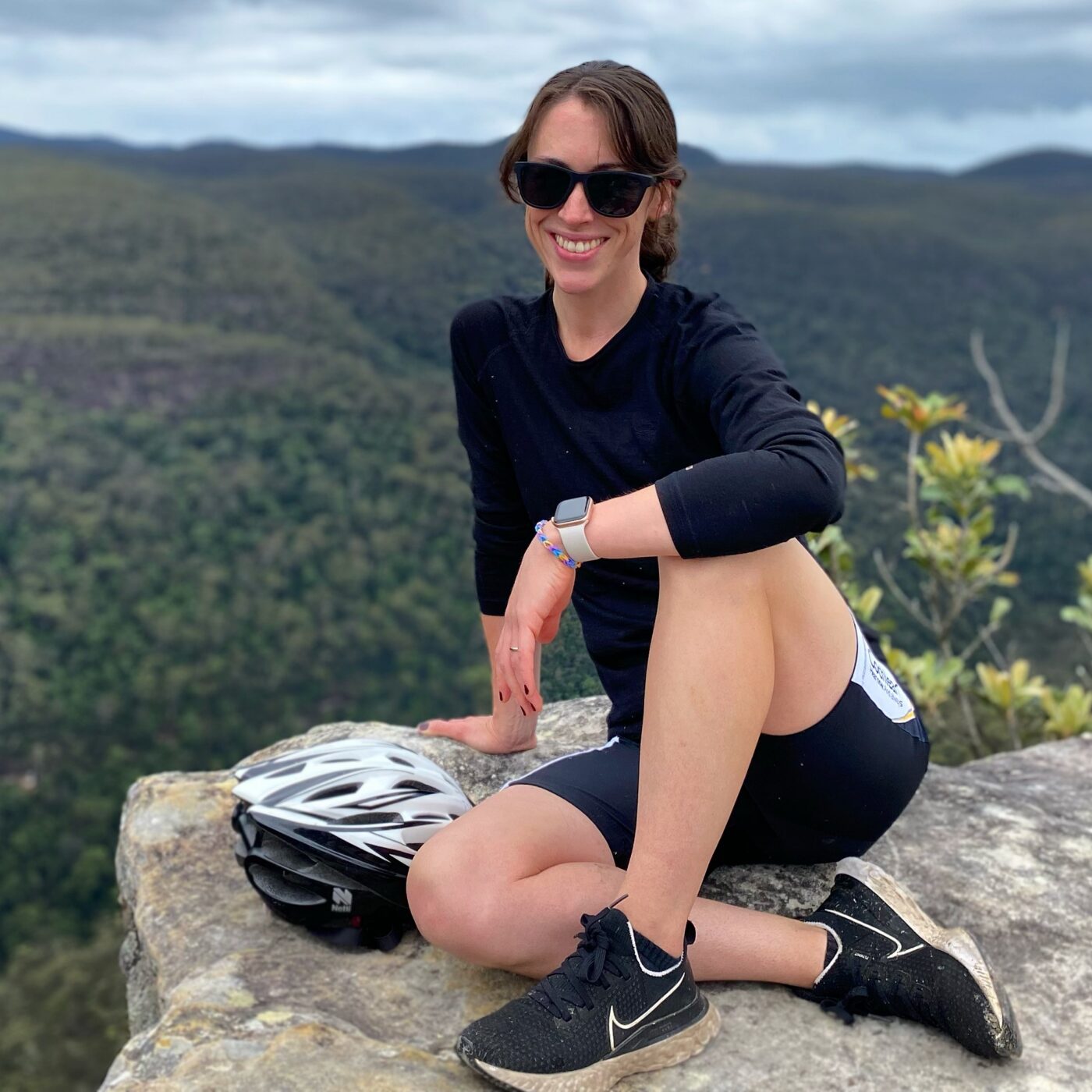
She also loves being outdoors. Living around an hour west of Sydney in the Blue Mountains gives her plenty of opportunities for hiking, trail running and swimming in the creeks during summer.
Her favourite local walk is Mount Solitary. Rising from the Jamison Valley, it offers expansive views back towards Katoomba and the Three Sisters, and across the surrounding landscape.
Further afield, Tasmania is somewhere she returns to repeatedly. She particularly recommends the Three Capes Track, describing Tasmania as “the most magical place I’ve ever been”.
Whether learning an instrument or heading into the mountains, stepping away from work gives Michelle a chance to use her mind differently. “I always find when I return that I’ve got new perspectives and new ideas.”
Staying open to unexpected opportunities
For engineers considering IP, Michelle’s advice reflects her own unconventional route into the profession: find mentors, talk to people and remain open to opportunities that were never part of the original plan.
She also recommends trying to understand what the work really involves before committing to it. “Find a patent attorney and ask them out for coffee,” she suggests. Ask them to explain the fundamentals of patent drafting. “It’ll either really fascinate you or you’ll quickly realise it’s not for you.”
If it is fascinating, Michelle encourages people not to assume they need to fit a particular mould. The profession combines technical expertise with communication, strategy and commercial thinking. That creates room for different backgrounds and different ways of approaching problems.
“If you’re curious and you enjoy learning and solving problems, then it can be a really rewarding career.”
For Michelle, that curiosity has taken her from engineering into a profession she had never originally considered. It now allows her to combine the technical thinking she enjoys with a much wider view of innovation, helping businesses understand not simply how to obtain IP, but how it can support the journey from an idea to commercial success.
Contact Michelle
LinkedIn: Michelle Catto
Firm website: https://www.fbrice.com.au/
————————————————————————————————————–
Meet the IP Professional is a PatWorld interview series exploring the people and perspectives shaping the intellectual property profession. Discover more interviews in the Meet the IP Professional hub, and find out more about PatWorld, a global IP search provider working with IP professionals worldwide to support informed patent, design and trade mark decisions, on our About Us page.
 Order a Search Now