


Meet the IP Professional: Jon Edwards – Where Science, Law and Commercial Strategy Meet
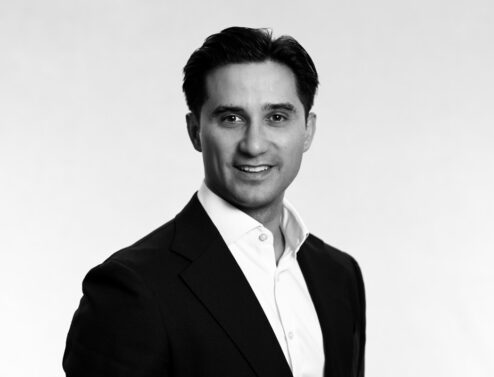
Jon Edwards is an intellectual property solicitor at Stephenson Harwood, specialising in patents, confidential information and trade secrets. With a background in pharmacology and experience across life sciences, technology and international disputes, he combines scientific understanding, legal judgement and commercial awareness to help clients navigate complex questions around innovation and IP strategy.
Quick Profile
Name: Jon Edwards
Role: Intellectual Property Solicitor
Organisation: Stephenson Harwood
Location: United Kingdom
Areas of expertise: Patent litigation, confidential information, trade secrets, IP transactions and licensing
From pharmacology to patent law
Science was always a natural direction for Jon. He studied science throughout school before going on to read pharmacology at university, but his interests were never purely technical. He was equally fascinated by the businesses operating around science and technology and knew he wanted a career that could bring those two sides together.
The turning point came towards the end of his degree when a university module introduced him to patent law and its impact on the pharmaceutical industry. “It was kind of a eureka moment for me,” he recalls. “I thought that sounds interesting and might allow me to achieve what I want to achieve.” After researching the profession and speaking to people working in it, he decided to pursue IP law and, as he puts it, “never looked back”.
His scientific education remains valuable today, particularly when working with pharmaceutical, chemical and life sciences clients, but Jon believes the broader skills developed through science are just as important. Researching unfamiliar material, interrogating technical publications and breaking down complex concepts are all skills that transfer readily into IP practice.
Innovation also means there is always something new to learn. “The things that I studied at university are the building blocks which new innovation is being based on,” he explains. “There’s always an element of having to learn and upskill, and that’s something which I really enjoy.”
Building a rounded approach to IP
Over the course of his career, Jon has worked with a wide range of lawyers and teams, each bringing different perspectives and approaches to IP practice. Those experiences have helped shape his own professional style and reinforced one important lesson: there is no single correct way to do the job well.
“This career is a marathon, it’s not a sprint, it’s a journey,” he says. “I’ve met some amazing lawyers, and I’ve learned so much about how to do this job from different perspectives.”
For Jon, whilst he acknowledges the benefits of having expertise in a particular niche, his overall aim is to be a rounded and trusted IP adviser to innovative businesses. Whether a client’s question involves litigation, licensing, a transaction or another innovation-related issue, he wants to provide advice that is practical, honest and commercially useful.
That breadth is reflected in his current practice. His work ranges from major, high-stakes patent litigation and international disputes, to helping SMEs and smaller businesses looking for focused, practical solutions. He enjoys both. Larger organisations may have sophisticated legal teams and greater resources – and have litigation as part of their overall commercial strategy, while smaller companies may be more concerned with immediate commercial priorities such as funding, transactions or simply resolving an issue quickly enough to move forward.
“I also really enjoy working with SMEs and smaller businesses who are looking for simple, practical, elegant pieces of advice,” he says. “It forces me to frame my advice based on the size of the business that I’m working with and the challenges that they’re facing.”
Upon joining Stephenson Harwood, Jon has been reunited with former Bird & Bird partner, Helen Conlan. Jon works closely with Helen as well as with new joiner, Paul Inman, in helping to grow the firm’s patent litigation practice, and takes on responsibilities across business development, relationship-building, thought leadership and internal initiatives alongside his client work.
Science, law and commercial reality
Jon describes his role as requiring three essential “strings to your bow”: a strong legal foundation, an ability to understand the science and technology, and sound commercial awareness. It is the combination of all three that helps a patent lawyer identify what genuinely matters.
In technically complicated disputes, there is always a risk of becoming absorbed in an interesting scientific point or legal argument. Jon’s approach is to keep returning to the wider questions: what is the actual problem, what are the core applicable legal principles and how does the issue affect the client commercially?
The starting point should always be understanding what the client ultimately wants to achieve and working backwards from there. Once the commercial objective is clear, the legal options can be considered and the relevant science placed within that framework.
Getting to grips with unfamiliar technology involves a mixture of research and collaboration. Jon is comfortable submerging himself in scientific and technical literature to develop an initial understanding, and then builds on that through discussions with clients, technical teams and expert witnesses. That constant exposure to new technologies is one of the things he enjoys most about the profession.
Early in his career, he remembers hearing a senior lawyer recount stories from decades of cases covering a wide variety of technologies. “I just thought that’s amazing and it’s such a rich sort of career to have,” he says. “That’s something which I would love to have as well.”
Seeing disputes from both the claimant and defendant side has also taught Jon to challenge his own thinking. Rather than becoming too attached to a particular argument, he deliberately considers how the other side might respond and where weaknesses may lie. “It’s always important to really take the overall picture,” he says.
That perspective becomes even more important in international disputes, since the arrival of the Unified Patent Court (UPC). Jon compares cross-border patent litigation to a chessboard: each national case – or chess piece – matters both domestically, and as part of the wider global strategy. Good coordination between international teams is essential, particularly where arguments made in one jurisdiction may affect proceedings elsewhere. The UPC has rapidly established itself as one of the most influential pieces on the patent litigation chessboard, creating new opportunities and risks for patentees and defendants alike. Even so, national courts continue to play a vital role, and effective coordination remains the key to a successful strategy.
Protecting innovation in a changing landscape
Alongside patents, Jon regularly advises on confidential information and trade secrets. In his view, the fundamental principles governing the choice between them have not changed dramatically, but the technologies to which those principles are being applied certainly have.
Patents can be attractive where a business wants defined exclusivity and is prepared to disclose its invention, particularly where licensing opportunities form part of the commercial strategy. Trade secrets may be more suitable where valuable know-how could retain its importance for longer than the lifespan of a patent or where technology develops so quickly that resources may be better invested elsewhere.
For many innovative businesses, the strongest answer will usually involve a hybrid approach rather than an absolute choice between one or the other. “It’s about helping clients navigate that balance as to what’s the most ideal strategy for what they want to achieve,” Jon explains.
AI is inevitably one of the areas he is watching closely, both for its impact on legal practice and for the questions it creates around protecting AI-enabled innovation. He is also interested in how increasing connectivity is extending licensing issues beyond traditional telecoms into areas such as vehicles, digital streaming and potentially connected medical devices.
Green technology is another area that has captured his attention, particularly innovation around recycling electrical equipment and recovering valuable materials from chips, circuit boards and other hardware. As data centres and AI infrastructure increase demand for hardware, he expects technologies supporting reuse and a more circular economy to become increasingly important.
The UPC is also reshaping the litigation landscape. Jon sees it as another important forum within international patent enforcement and one that is influencing the roles of both solicitors and patent attorneys. With the system still relatively young, he expects its strategic and professional impact to continue developing.
More than technical expertise
For scientists considering a career as an IP solicitor, Jon believes one of the biggest surprises may be how much more the role requires than technical knowledge.
The science is important, but so too are communication, strategy and commercial awareness. An IP lawyer needs to be able to explain complex issues clearly, understand what a client is trying to achieve and help translate legal advice into a practical business decision.
“The science aspects are a huge part of it,” Jon says, “but that’s often only the beginning of how you end up delivering your legal advice.”
That broader view also shapes how he thinks about teams. Jon is passionate about developing junior lawyers and believes they should be given appropriate responsibility, support, and opportunities to build confidence with clients and in developing their own opinion. For him, good legal service is not simply about individual expertise or client service, but about creating strong teams in which people can develop and contribute meaningfully.
Life beyond litigation
With two young children, Jon does not have much difficulty finding reasons to switch off. Family life provides both a welcome distraction and a valuable sense of perspective. “They force me to switch off because they don’t give me much choice,” he jokes.

Outside family life, he is a keen sports fan, enjoys keeping fit and has a strong interest in food. More recently, that has included experimenting with Texas-style barbecue and spending as long as 12 hours smoking meat in his garden.
Walking has provided some memorable experiences too. Jon climbed Ben Nevis on his honeymoon in 2021, setting off in warm summer conditions before encountering snow at the summit. It remains a walk he would happily recommend, although he is quick to add that it is “not for the faint-hearted”.
Keeping sight of the bigger picture
A consistent theme throughout Jon’s career is the importance of seeing beyond the immediate issue. Scientific knowledge may help him understand an invention, but it has to sit alongside legal judgment and a commercial understanding of what the client is ultimately trying to achieve.
That same outlook shapes the kind of career he wants to build: broad enough to keep learning, commercially grounded enough to remain useful to clients and collaborative enough to help the next generation of lawyers develop alongside him.
For someone originally attracted to IP because it offered a way to combine science and business, that variety remains one of the profession’s greatest attractions. Every new technology, client and dispute brings something different to understand, and that continuing opportunity to learn is still at the heart of what Jon enjoys about the work.
Connect with Jon
LinkedIn: https://www.linkedin.com/in/jonedwards3/
Company Website: https://www.stephensonharwood.com/
Jon will be attending the C5 Patent Litigation Europe Conference in Amsterdam in January 2027 and is happy to connect with others who will also be attending.
Meet the IP Professional is a PatWorld interview series exploring the people and perspectives shaping the intellectual property profession. Discover more interviews in the Meet the IP Professional hub, and find out more about PatWorld, a global IP search provider working with IP professionals worldwide to support informed patent, design and trade mark decisions, on our About Us page.
 Order a Search Now