World IP Day 2025 – “IP and music: Feel the beat of IP” Feel the Beat of Innovation: Exploring Music Tech IP with Iain Russell of Russell IP. Music is more than rhythm and melody — it’s deeply entwined with invention. From the earliest mechanical instruments to today’s AI-generated soundscapes, the intersection of music and technology […]
24th April 2025
World IP Day 2025 – “IP and music: Feel the beat of IP”
Feel the Beat of Innovation: Exploring Music Tech IP with Iain Russell of Russell IP. Music is more than rhythm and melody — it’s deeply entwined with invention. From the earliest mechanical instruments to today’s AI-generated soundscapes, the intersection of music and technology is constantly evolving. And at the core of this innovation is intellectual property (IP), quietly shaping the soundtrack of our future.
This World IP Day, PatWorld sat down with Iain Russell, UK and European patent attorney and founder of Russell IP, to talk about music technology, the role of patents in creative innovation, and what it means to truly “feel the beat” of IP.
Passion Meets Profession
Iain Russell isn’t just a seasoned patent attorney — he’s also a lifelong musician and founder of DefibFest, a music-driven not-for-profit supporting public access to defibrillators. “Music’s always been there,” he says. “It’s my passion, alongside patents.”
This dual perspective gives Iain a unique lens on innovation. He combines legal expertise with hands-on musical insight, making him particularly attuned to the needs of UK-based music-tech innovators.
A Patent Perspective on Music Tech
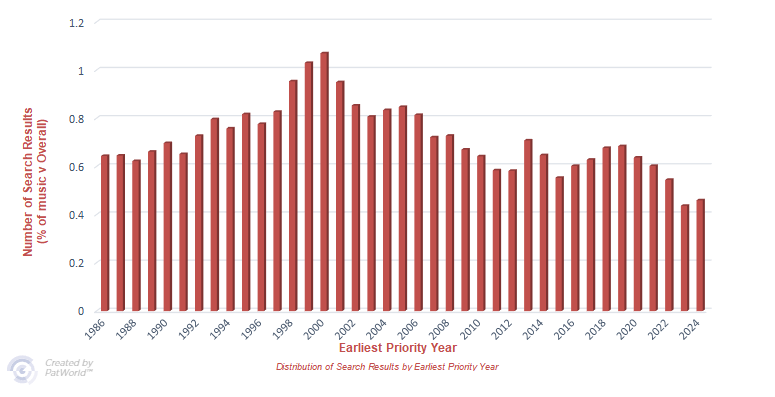
Filing Trends (Music v All %)
The team at PatWorld recently analysed global patent activity in the music technology space. The findings — covering trends over the past 40 years — revealed intriguing patterns. While overall filing volumes have increased significantly, music-related filings have maintained a steady, if relatively niche, share of global innovation, accounting for around 1% of all filings.
“That might sound small,” Iain says, “but when you consider the sheer number of sectors covered by patents — from pharmaceuticals to telecoms — it’s actually quite remarkable that music tech consistently holds its ground. It’s alive and kicking.”
Though fluctuations exist, the data indicates a resilient and relevant sector. “The technology behind music is evolving rapidly,” Iain adds. “A lot of innovation has continued around musical instruments and hardware, and there is increasing growth in areas like software (for example, DAW plugins), and now generative AI.”
Surprising Innovators — and Why They Matter
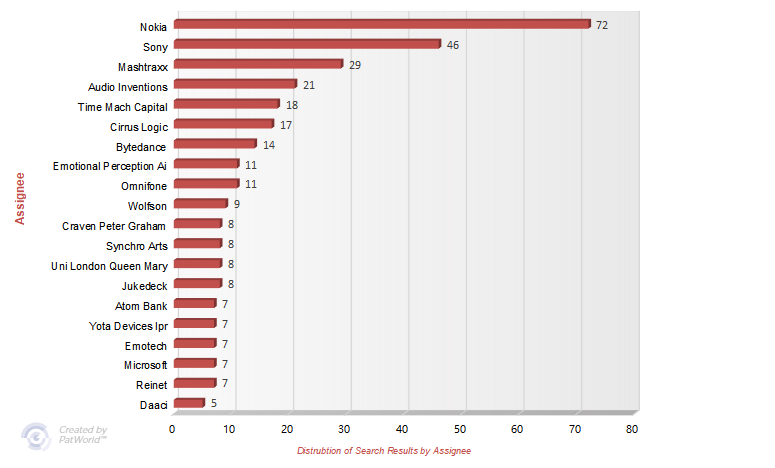
One of the more unexpected findings in the PatWorld data was the presence of non-traditional music companies among the top UK-based patent filers in music tech — names not typically associated with instruments or music.
Assignees
According to Iain, this may reflect how music overlaps with audio, voice recognition, UX design, and even AI platforms. “You start with questions like ‘what is music tech?’ and you realise it blurs into other sectors. Some of these filings may be classified under music, even if music isn’t the core focus.”
These cross-sector innovations highlight the value of due diligence. “For start-ups especially, resources are limited. But understanding who’s working in your space — even tangentially — can help shape a smarter IP strategy,” says Iain.
Prosecution Realities: Music vs. Finance
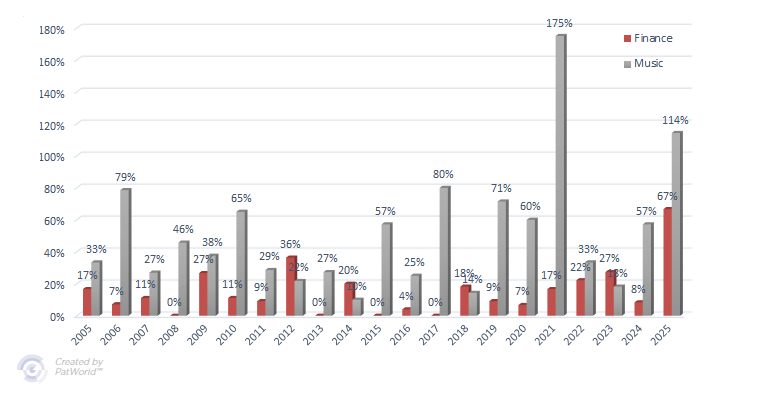
Another striking insight from the data was the comparison between software patent outcomes in music versus finance. In the UK, music-related software patents have consistently higher grant rates than financial software.
Prosecution Outcomes
Why? “Music tech often involves real-world signals — audio captured by microphones, processed, and output in new ways,” Iain explains. “That tends to be seen as more ‘technical’ under UK patent law. Financial software, which some patent offices consider to be about processing more abstract data, faces a steeper challenge.”
The takeaway? Music tech is a relatively fertile ground for software-based patents as well as patents with a hardware focus — a critical insight for inventors unsure about what is patentable.
The Global Soundstage
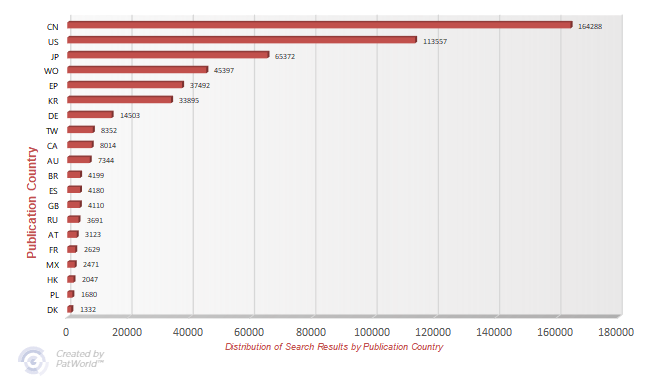
Patent filing activity in music tech is geographically diverse, with strong representation from China, the US, Japan, Europe, and South Korea. For UK-based companies, this raises important strategic questions.
Territories
“Even if you’re just operating locally, you need to think internationally,” Iain advises. “You might not plan to sell in the US or Japan, but someone else might — and licensing or selling your IP could be a revenue stream. The key is to consider your options early.”
Emerging Themes: AI, MIDI and More
Iain is particularly interested in the evolving world of AI-generated music, but his fascination stretches back to what might be seen as the humble MIDI file — a digital representation of the ‘DNA’ of certain types of music.
“Technology lets us record, edit and produce music in ways that were unimaginable when I first started recording music in my parents’ garage 25 years ago,” he says. “With a basic setup, I can now create a full track — vocals, guitar, drums, effects — from my home. It’s endlessly creative, and patents play a part in enabling that creativity.”
As AI continues to redefine what’s possible in music, the lines between creator, instrument, and software can grow increasingly blurred — a challenge for innovators, and an opportunity for those who understand the IP landscape.
Advice for Music-Tech Innovators
For early-stage music-tech companies, Iain offers a few guiding principles:
– Know your IP toolkit: patents, trade secrets, trademarks, registered designs, and especially copyright can all play important roles in music-related ventures.
– Do your research: novelty searches, competitive analysis, and understanding prior art can significantly increase your chances of success.
– Find the right support: working with advisors who understand both tech and music helps make your case clearer to examiners and collaborators.
Above all, Iain encourages innovators not to underestimate what’s patentable: “Even in something as well-established as guitars, there are thousands of patents — pickups, strings, fretboards, you name it.”
Celebrating Music and IP — Together
World IP Day is a reminder that behind every beat, riff, and chorus, there’s innovation at work. It’s in the algorithms, the amps, the apps, the streaming platforms, and the instruments themselves.
And thanks to professionals like Iain Russell, the inventors driving this innovation have someone to help them protect it.
About Russell IP
Iain Russell is a UK and European patent attorney and founder of Russell IP, a firm dedicated to supporting tech innovators. He’s also an inventor and lifelong musician.
DefibFest is a not-for-profit event raising money for life-saving defibrillators through the power of live music. Watch this space for more on their October 2025 event in London.
Postscript: Supporting the Beat Behind the Scenes
This article would not have been possible without the insights and expertise of Iain Russell, whose passion for music and deep understanding of intellectual property shaped every part of this story. Our thanks also go to Casey Higgon, IP Manager at PatWorld, for producing the data-led research and charts that supported the analysis.
At PatWorld, we work closely with patent attorneys and IP professionals to provide the reports and insights they need to support innovators — including those operating in the ever-evolving music technology space. We use intuitive patent search databases, combined with expert-led support and training, helps uncover competitive landscapes, track filing trends, and strengthen client strategies.
To find out how PatWorld can support your firm or in-house team, check out the links below or contact us directly on [email protected].
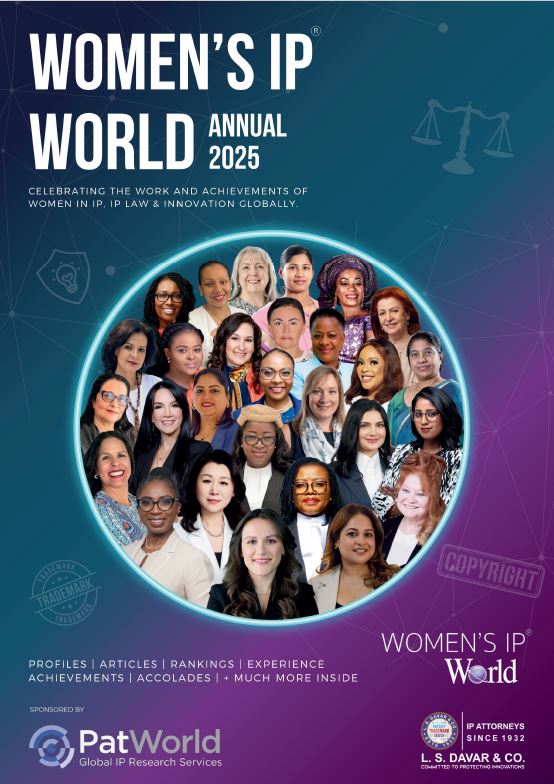
PatWorld is proud to feature in the 2025 edition of Women’s IP World, spotlighting our leadership in IP innovation and education. As co-sponsors of this year’s issue, we share the story behind our new “Introduction to Patent Searching” course — a user-friendly, AI-enhanced training tool designed for IP professionals at every stage of their careers. […]
15th April 2025
PatWorld is proud to feature in the 2025 edition of Women’s IP World, spotlighting our leadership in IP innovation and education. As co-sponsors of this year’s issue, we share the story behind our new “Introduction to Patent Searching” course — a user-friendly, AI-enhanced training tool designed for IP professionals at every stage of their careers.
This year’s highlights include:
A letter from Kathryn Parry, our Sales and Marketing Manager, reflecting on a year of innovation, teamwork, and the expansion of our AI-driven tools.
A deep dive by Digital Marketing Manager Sue Leslie into the creation of our e-learning course — blending practical skills with AI marketing insights.
These features highlight how PatWorld is helping to reshape IP education with accessible, engaging, and practical learning resources. By integrating advanced technology with real-world know-how, we’re empowering professionals to navigate today’s complex patent landscape with confidence.
These articles reflect PatWorld’s ongoing mission to simplify IP research, expand access to quality patent education, and celebrate the role of women in the industry.
Contact us at [email protected] for details of discounts for readers of the Women’s IP World and CIPA Members.
If you’d prefer to leave the searching to the experts, our professional team is here to help. Check out our Search Services for expert-led patent searches tailored to your needs.
Protect Your Ideas and Power Your Innovation For inventors, researchers and innovators, understanding what has already been developed can be an important part of turning an idea into something commercially valuable. Patent searching provides access to a vast source of technical information and can help you investigate existing technologies, identify relevant prior art and gain […]
3rd April 2025
Protect Your Ideas and Power Your Innovation
For inventors, researchers and innovators, understanding what has already been developed can be an important part of turning an idea into something commercially valuable.
Patent searching provides access to a vast source of technical information and can help you investigate existing technologies, identify relevant prior art and gain a clearer understanding of the landscape surrounding an invention.
But effective patent searching is about much more than entering a few keywords into a database. Knowing how to search, and how to refine and interpret what you find, is what makes the difference.
Why Patent Searching Matters
Explore existing technology
A patentability search can help identify earlier patent publications that may be relevant to an invention. This can provide useful information before significant time and resources are committed to further development.
Understand the wider innovation landscape
Patent documents contain a wealth of technical information. Searching them can help reveal how technologies have developed, who is active within a particular field and where opportunities for further innovation may exist.
Make better-informed decisions
A structured search can provide valuable evidence to support discussions about product development and intellectual property strategy.
Different types of patent searches answer different questions, however. A patentability search, for example, should not be confused with a Freedom to Operate search or legal opinion.
Develop a valuable research skill
Good patent searching combines technical understanding with structured research. Learning how to identify concepts, build search strategies, use patent classifications and assess results can help you search more systematically and effectively.
Learn How to Search, Not Just How to Use a Database
PatWorld’s Introduction to Patent Searching course has been developed by experienced patent search professionals to teach the methodology behind effective patent searching.
Rather than being tied to one commercial database, the course focuses on search principles and techniques that can be transferred across different patent-searching platforms.
Practical examples and guided activities use Espacenet, the European Patent Office’s free patent database, allowing learners to put the techniques into practice as they progress through the course.
What Will You Learn?
Across nine modules, the course takes learners through the patentability-searching process, including:
understanding different types of patent searches;
defining and refining the scope of a patentability search;
developing keywords and search concepts;
using truncation, phrase searching, Boolean and proximity operators;
constructing and refining effective search strings;
using patent classifications;
analysing and assessing search results;
understanding the limitations and risks involved in patent searching; and
exploring further search tools, advanced search types, AI and patent analytics.
The emphasis throughout is on developing a structured and repeatable approach to patent searching, rather than simply learning where to click within a particular database.
Practical, Flexible Learning
The course is online and self-paced, so you can work through it when it suits you.
Guided activities, scenarios and practical exercises help turn the theory into usable search skills, while a course handbook and supporting resources provide material you can return to as your experience develops.
On successful completion, learners receive a digital certificate.
Who Is the Course For?
Although patent searching can be particularly useful for inventors and researchers who want to understand the patent landscape around their work, the course is also suited to:
patent and IP professionals developing their searching skills;
IP managers;
patent analysts;
technology transfer and commercialisation professionals;
university and research teams; and
anyone looking to build or refresh their understanding of patent searching.
It is suitable both for those who are relatively new to patent searching and those with some experience who want to strengthen their methodology and approach.
Start Building Your Patent-Searching Skills
Effective searching isn’t simply about having access to the right database. It is about understanding what to search, how to search and how to evaluate what you find.
The Introduction to Patent Searching course gives you a structured foundation for developing those skills, using practical examples and techniques you can apply across different patent databases.
Alternatively, if you’d prefer to leave the searching to the experts, our professional team is here to help. Check out our Search Services for expert-led patent searches tailored to your needs.
In the complex and ever-evolving world of intellectual property (IP), safeguarding innovations is a challenge many businesses face. While patents, trade marks, and copyrights provide legal protection, enforcing these rights can be costly—especially for small and medium-sized enterprises (SMEs). This is where David Bloom, founder of Safeguard iP, comes in. As the UK’s only dedicated […]
20th March 2025
In the complex and ever-evolving world of intellectual property (IP), safeguarding innovations is a challenge many businesses face. While patents, trade marks, and copyrights provide legal protection, enforcing these rights can be costly—especially for small and medium-sized enterprises (SMEs). This is where David Bloom, founder of Safeguard iP, comes in. As the UK’s only dedicated intellectual property insurance broker, David is on a mission to make IP protection accessible and affordable for businesses of all sizes.
In this ‘Meet the IP Professional’ feature, we explore David’s journey from IP litigator to insurance broker, the importance of IP insurance, and how Safeguard iP is helping businesses defend their most valuable assets.
From IP Litigation to IP Protection
David Bloom began his career as a solicitor specialising in IP law, working at the highly respected firm Olswang LLP, followed by Pinsent Masons. During his time as a litigator, he handled numerous patent disputes and trade mark cases, working with both large corporations and small businesses.
“I saw first-hand how devastating IP litigation could be for SMEs,” David recalls. “Many businesses assumed that having a patent or trademark was enough to protect them. But in reality, these rights only give you the ability to take legal action if someone infringes them—and litigation is incredibly expensive.”
Time and again, David encountered clients who, despite having strong IP rights, were unable to afford the high costs of enforcement. For larger corporations, litigation costs could be absorbed within their legal budgets, but for smaller businesses, the financial burden was often insurmountable.
“The system felt unfair,” he explains. “I knew there had to be a better way for SMEs to defend their IP without risking bankruptcy.”
The Birth of Safeguard iP
Determined to create a solution, David transitioned from law to insurance, founding Safeguard iP, the UK’s only dedicated IP insurance brokerage. Unlike general insurance brokers, Safeguard iP exclusively focuses on intellectual property protection.
“There were existing IP insurance products in the market, but they were often too expensive or too limited in coverage,” David notes. “My goal was to help insurers develop policies that truly met the needs of SMEs—affordable, comprehensive, and easy to access.”
Safeguard iP works with businesses to assess their risks and find the right insurance solutions, ensuring they can enforce their IP rights and defend against infringement claims without financial strain.
Why IP Insurance Matters
Many businesses underestimate the risk of IP disputes. However, with over 500,000 new businesses incorporated in the UK each year, the number of potential IP conflicts is rising.
“There’s more IP being created than ever before,” David explains. “As a result, unintentional infringement is becoming more common. Whether it’s a start-up unknowingly infringing on an existing patent or a company facing a trade mark challenge, the risks are significant.”
Without insurance, businesses facing IP litigation often face a tough choice: abandon their claim or risk financial ruin. IP insurance changes the equation by providing financial backing for legal action.
“When a company is insured, they can act decisively,” David says. “In many cases, just informing an opponent that you have IP insurance leads to a faster settlement—because they know you have the funds to fight.”
How Safeguard iP Supports Patent Attorneys
Safeguard iP has built strong relationships with patent and trade mark attorneys, who frequently refer clients to David’s services.
“Many patent attorneys find that clients hesitate to file patents because they worry about the cost of enforcement,” he explains. “By introducing them to IP insurance, attorneys can reassure their clients that their rights can be protected affordably.”
While UK Financial Conduct Authority (FCA) regulations prevent patent attorneys from advising on specific insurance policies, they can educate clients about the existence and benefits of IP insurance, referring them to specialists like David.
“Most attorneys want their clients to feel confident in their IP strategy,” he adds. “By discussing insurance, they’re helping clients make informed decisions about protecting their assets.”
Making IP Insurance Accessible
In the past, getting IP insurance was a complicated and expensive process. Companies had to complete lengthy application forms, and quotes often came back far higher than the expected cost.
David has worked hard to streamline the process.
“Now, all I need is a company’s website address and revenue details,” he says. “I can provide a quote within 24 to 48 hours. For SMEs under £10 million turnover, policies are now significantly more affordable and predictable than they were a decade ago.”
Premiums for £1m of worldwide enforcement and defence cover are circa £3,500 and £2,500 for £500k of cover.
Thanks to these improvements, the number of businesses purchasing IP insurance has grown significantly in the last five years.
The Future of IP Insurance
As the demand for IP insurance increases, David predicts lower prices and broader coverage in the future.
“More policies mean more data for insurers, which helps them refine their risk models and reduce premiums,” he explains. “It’s a virtuous cycle—more businesses buying insurance leads to lower costs for everyone.”
Additionally, coverage is expanding. While policies traditionally covered only defence costs, new offerings now include:
Enforcement coverage (to fund legal action against infringers)
Title disputes (to resolve ownership conflicts)
Patent opposition and invalidity claims (to defend against challenges)
Looking ahead, David hopes insurers will develop policies that cover the loss of IP value—for instance, if a patent’s worth drops significantly due to legal issues.
Final Thoughts
David’s mission is clear: make IP insurance accessible, affordable, and effective. His legal expertise and deep understanding of the challenges SMEs face set Safeguard iP apart in the market.
For businesses with valuable IP assets, David’s advice is simple: “Don’t wait until there’s a problem to think about insurance.” The right coverage can mean the difference between defending your innovations and losing them to legal disputes.
With growing awareness and improved accessibility, IP insurance is no longer a niche product—it’s becoming a critical tool for businesses looking to protect their competitive edge.
Get in Touch with David Bloom
If you’d like to learn more about how Safeguard iP can help protect your business, visit safeguardip.com or connect with David Bloom on LinkedIn: David Bloom | LinkedIn.
How PatWorld Supports IP Protection
At PatWorld, we understand the importance of comprehensive IP protection. We work with companies to provide Freedom to Operate (FTO) searches, Invalidity searches, and a range of other IP-related searches. Our services help businesses mitigate risks, strengthen their IP strategies, and make informed decisions before entering new markets.
To learn more about how PatWorld can support your business, check out the links below.
For Julia D’Arcy, European Patent Attorney and Director at Harrison IP, intellectual property is more than just legal frameworks and technical jargon. It’s a dynamic field that keeps her at the cutting edge of scientific innovation. As a Chartered and European Patent Attorney, Julia has carved out a distinguished career in intellectual property. She specialising […]
13th March 2025
For Julia D’Arcy, European Patent Attorney and Director at Harrison IP, intellectual property is more than just legal frameworks and technical jargon. It’s a dynamic field that keeps her at the cutting edge of scientific innovation. As a Chartered and European Patent Attorney, Julia has carved out a distinguished career in intellectual property. She specialising in the chemical, pharmaceutical, and medical sectors. Her expertise spans a diverse range of technologies, from biocompatible prostheses to advanced drug delivery systems, making her an invaluable asset to inventors and businesses alike.
A Journey into IP Law
Unlike the deep specialisation required in academia, Julia was drawn to intellectual property law for its breadth and variety. “In academia, you are asked to focus on a narrow specialism. Working in IP means that you are involved in cutting-edge developments while maintaining a broader specialism and enjoying a great variety of work,” she explains.
Her passion for the field has only grown, fuelled by the ever-evolving challenges of patent prosecution and strategy. Julia has extensive experience navigating the complexities of the UK and European patent offices, where she emphasises the importance of pre-emptive strategy. “Added matter and sufficiency are key aspects to consider before the EPO. To avoid problems during prosecution, it’s useful to provide an array of fall-back positions, highlight preferred combinations, and include as much experimental data as possible in the specification as filed,” she advises.
Understanding Innovation Across Sectors
One of Julia’s greatest strengths is her ability to work across a range of complex life sciences technologies. Whether dealing with medical devices or pharmaceutical compounds, she believes that the key to understanding diverse innovations lies in communication. “Inventors generally love talking about their inventions. Don’t be afraid to ask questions, and try to put what the inventors tell you into your own words during discussions to check your understanding,” she says.
Her problem-solving skills were put to the test when a UK patent she was responsible for was challenged through the Examiner opinion service at the UKIPO. The case highlighted the importance of cost-effective dispute resolution and reinforced her appreciation for tools available to challenge or defend patent validity.
Emerging Trends in Life Sciences IP
With a keen eye on the evolving landscape of IP law, Julia notes the increasing impact of the Unified Patent Court (UPC). “The UPC is proving popular, although the take-up is mixed depending on the technology space,” she observes. While medical technology companies have embraced its lower litigation costs and quicker decisions, pharmaceutical and biotech companies remain cautious. However, she predicts that as UPC case law develops, its adoption will likely increase across the board.
Julia also understands the significance of intellectual property in driving innovation and investment in the life sciences industry. “IP plays a key role in fostering innovation, attracting investment, and preventing unfair exploitation by third parties,” she states. “Filing a patent application allows the applicant to freely discuss their invention with third parties, including VCs and potential licensors, while also creating barriers for potential competitors.”
Tailoring IP Strategies for Every Client
Working with clients ranging from multinational corporations to start-ups and SMEs, Julia tailors her approach to suit each client’s level of IP knowledge and experience. “We try to ensure that the client knows what’s coming next, in terms of likely next actions, complexity, and length of typical prosecution, with clear estimates of likely costs,” she explains. Clarity and communication are at the heart of her practice, ensuring that even clients without a technical background can make informed decisions.
Beyond the Office
Outside of her professional life, Julia enjoys a balance of work and leisure. A devoted dog owner, she and her family began running with their dogs in the park during the pandemic—a hobby that has stuck ever since. “We aren’t fast, and there are lots of breaks for the dogs to sniff, but it gets us out for some exercise, come rain or shine,” she shares.
A pivotal moment in her career and personal life came when she moved from London to Glasgow in 2001 to start a new role in a patent and trade mark company. “I have stayed ever since,” she says, noting that the move led to both professional success and personal fulfilment—her three children are now proudly Scottish.
A Leader in Life Sciences IP
Julia D’Arcy’s expertise, strategic approach, and passion for intellectual property make her a leading voice in life sciences patent law. Whether guiding inventors through the complexities of patent applications or keeping an eye on the latest industry trends, her commitment to innovation and client success is clear.
For those looking to navigate the ever-changing world of IP in the life sciences sector, Julia’s insights and experience offer invaluable guidance.
Harrison IP – Supporting Innovation with Expert IP Advice
Julia is a valued member of Harrison IP. They are a UK-based intellectual property firm specialising in patents, trade marks, and design protection. With a strong focus on life sciences, pharmaceuticals, engineering, and emerging technologies, Harrison IP provides expert advice to help businesses safeguard their innovations. The firm’s client-focused approach ensures tailored IP strategies that align with commercial objectives, from start-ups to multinational corporations.
For more information about Harrison IP and its services, visit www.harrisonip.com.
Supporting IP Professionals with Expert Search Services
At PatWorld, we understand the challenges that IP professionals like Julia face when handling complex patent matters. Our advanced IP Search services provide the critical insights needed to support robust patent strategies, from prior art searches to competitor intelligence. By equipping professionals with accurate, comprehensive data, we help ensure that innovations are protected and that IP strategies are built on a foundation of strong, reliable information. Whether you’re an experienced patent attorney or an innovator looking for protection, our services are designed to support your success in the ever-evolving IP landscape.
For more insights from IP thought leaders, explore our latest interviews on the PatWorld blog.
In the fast-paced and highly competitive world of therapeutics and pharmaceuticals, staying ahead requires strategic insight, robust IP protection and a clear understanding of the global patent landscape. At PatWorld, our experienced patent analysts support pharmaceutical, biotechnology and therapeutics organisations with specialist patent research designed to help inform R&D, IP and commercial decision-making. The Challenges […]
11th March 2025
In the fast-paced and highly competitive world of therapeutics and pharmaceuticals, staying ahead requires strategic insight, robust IP protection and a clear understanding of the global patent landscape.
At PatWorld, our experienced patent analysts support pharmaceutical, biotechnology and therapeutics organisations with specialist patent research designed to help inform R&D, IP and commercial decision-making.
The Challenges Facing In-House Patent Teams
Therapeutics companies invest heavily in research and development, making intellectual property an important part of their wider commercial strategy.
However, in-house patent and IP teams often face challenges such as:
Data overload – navigating the huge volume of global patent information can be complex and time-consuming.
Time constraints – internal teams frequently need to balance detailed searching with demanding project deadlines.
Complex technologies – biotechnology, pharmaceuticals, gene therapies, personalised medicine and related fields can require highly technical and carefully structured searches.
Changing competitive landscapes – understanding competitor activity and emerging areas of innovation requires ongoing analysis of patent information.
How PatWorld Can Help
PatWorld provides expert-led patent research tailored to the requirements of therapeutics, pharmaceutical and biotechnology organisations.
Our analysts combine specialist technical knowledge with extensive patent-searching experience, using a range of professional patent databases and research tools to develop search strategies suited to each individual project.
Rather than relying on a single source or search approach, we select and refine search techniques according to the technology, jurisdiction and commercial objectives involved.
Specialist Patent Search Services
Our team provides a range of patent research services that can support therapeutics companies throughout the innovation lifecycle.
Freedom to Operate Searches
Freedom to Operate searches can help identify potentially relevant third-party patent rights when developing or preparing to commercialise a new product or technology.
PatWorld can tailor searches according to specific technologies, jurisdictions and project requirements, helping internal teams and their patent advisers assess the information relevant to their FTO strategy.
Patentability and Novelty Searches
Understanding the existing prior art can help inform decisions surrounding new inventions and patent applications.
Our analysts carry out comprehensive patentability and novelty searches designed to identify relevant earlier patent literature and provide clearly structured search results for further assessment.
Invalidity Searches
Where the validity of a patent needs to be investigated, PatWorld can undertake detailed prior art research aimed at identifying publications relevant to particular claims or priority dates.
Patent Landscape and Competitive Intelligence Research
Patent information can provide valuable insight beyond individual inventions.
Landscape and competitor searches can help organisations:
monitor activity within emerging technology areas;
identify organisations active within a particular field;
explore trends in research and patent filing;
assess areas of increasing or decreasing patent activity; and
support strategic R&D and commercial discussions.
Supporting Complex Therapeutics Research
Searches within biotechnology and therapeutics can be particularly challenging because relevant inventions may span multiple scientific disciplines and use highly specialised terminology.
Our analysts can develop search strategies incorporating:
technical keywords and terminology;
patent classification searching;
applicant and inventor searching;
citation analysis;
patent family analysis; and
iterative search techniques designed to identify terminology that may not have been apparent at the beginning of the project.
This allows searches to evolve as new concepts and relevant documents are identified.
Why Therapeutics Companies Work with PatWorld
Organisations working in pharmaceutical, biotechnology and therapeutic innovation choose PatWorld for:
Tailored search strategies – searches developed around the specific technology and objectives of each project.
Multiple professional research resources – access to a range of commercial patent databases and other appropriate information sources.
Clear reporting – results presented in a structured format to help internal IP teams and advisers review the findings efficiently.
Flexible support – from individual searches through to wider landscape, competitor and monitoring projects.
Responsive collaboration – our analysts work closely with clients to understand the technical and commercial context behind each search.
Turning Patent Information into Useful Insight
Patent information can provide much more than a record of existing intellectual property rights.
When searched and analysed effectively, it can help organisations understand emerging technologies, investigate competitors, identify relevant prior art and support better-informed R&D and IP decisions.
For businesses operating in rapidly developing therapeutic fields, having access to experienced patent researchers can provide valuable additional resource and specialist expertise when internal teams are working under pressure.
Strengthen Your Patent Research Strategy with PatWorld
Whether you need support with a focused patentability or Freedom to Operate search, a complex invalidity investigation, or a broader technology landscape or competitor analysis, PatWorld can develop a research approach tailored to your requirements.
Our experienced analysts work with patent attorneys, in-house IP teams, research organisations and innovative businesses worldwide.
Get in touch today to explore how PatWorld’s professional patent research services could support your next therapeutics or pharmaceutical project. Alternatively, book a confidential meeting with our team to discuss your requirements here.
Yann Robin, is a Principal Associate and Patent Attorney at Marks & Clerk. With a career spanning over 17 years, Yann has built a reputation for his meticulous approach to intellectual property, combining technical expertise with a deep understanding of client needs. We spoke to Yann about his journey through triathlons, chemistry and patents, the […]
20th February 2025
Yann Robin, is a Principal Associate and Patent Attorney at Marks & Clerk. With a career spanning over 17 years, Yann has built a reputation for his meticulous approach to intellectual property, combining technical expertise with a deep understanding of client needs. We spoke to Yann about his journey through triathlons, chemistry and patents, the evolving role of foreign languages in patent law, and the importance of tailoring IP strategies to meet diverse client priorities.
Falling into IP: Yann’s Unexpected Path
Unlike some who enter the IP profession with a clear vision, Yann’s path was more serendipitous. After completing his postgraduate studies at the University of Strathclyde, Yann began his career at Thomson Derwent, working on patent classification tools. His work involved assigning codes to patents, particularly in the field of chemistry and polymers. This experience sparked his interest in patents and naturally led him to pursue a career as a patent attorney.
“I didn’t have a lifelong ambition to work in IP; I simply followed the opportunities my career presented,” Yann reflects. “But I’m glad I did. It’s a fascinating and rewarding field.”
The Power of Languages in IP Practice
As a native French speaker, Yann’s language skills have long been an asset in his practice. When he started in the profession in 2007, proficiency in a second language—particularly one of the EPO’s official languages—was highly valued. This was because access to machine-generated English translations was not as widespread as it is today.
While machine translation tools have advanced dramatically, Yann highlights that fluency in foreign languages remains invaluable in certain circumstances. “There are still instances where a precise understanding of a foreign language is essential,” he explains. For example, a recent freedom-to-operate analysis required Yann to review a French competitor’s EP patent and the associated French prior art. In this case, subtle linguistic nuances in the claims and prior art documents meant machine translations could not be solely relied upon. Yann’s fluency in French allowed him to provide his client with the clarity needed to make a sound commercial decision.
Although machine translations will likely continue to improve, Yann believes there will always be circumstances where working with the original language is indispensable. The subtleties of technical and legal terms often defy perfect translation, making human expertise a necessity.
Tailoring IP Strategies to Diverse Client Needs
Yann’s client base is diverse, ranging from individual innovators and start-ups to SMEs and multinational corporations. This breadth of experience has reinforced his belief that no two clients are the same. “The most critical point is to first understand the client’s situation and commercial goals, both short-term and long-term,” he says.
He recalls a client, a local SME specialising in cancer diagnostics, who successfully secured a significant round of funding. Their robust patent portfolio, developed with Yann’s guidance over a decade, played a key role in this achievement. This example underscores the importance of aligning IP strategy with a company’s growth trajectory and commercial objectives.
Yann emphasises that budget constraints often shape the IP strategies of start-ups and SMEs. He and his team at Marks & Clerk address this by offering tailored solutions, including a dedicated Start-up Offering and access to IP Audits to help businesses get a cost-effective start on their IP journey.
Sustainable Innovation: A Personal and Professional Interest
Sustainability is a growing area of importance in IP. I find it exciting both technologically and because it aligns with my belief that we need to find solutions to the environmental challenges we face.
Combining his professional expertise with personal values, Yann is actively involved in Marks & Clerk’s Sustainable Materials Group. This initiative focuses on supporting clients developing eco-friendly and innovative materials. “Sustainability is a growing area of importance in IP,” Yann explains. “I find it exciting both technologically and because it aligns with my belief that we need to find solutions to the environmental challenges we face.”
Building Long-Term Relationships
For Yann, building trusted, long-term relationships with clients is fundamental. “Our job is to advise as best we can, and that means understanding the people behind the businesses,” he notes. Regular dialogue and staying attuned to a client’s evolving needs enable him to deliver advice that is not only legally sound but also commercially practical.
Advice for Aspiring IP Professionals
For those considering a career in intellectual property, Yann offers honest and practical advice: “Be patient and stay humble. It takes time to develop the technical, legal, and client-facing skills needed to become truly independent as a patent attorney. You may come into the profession with an impressive academic background, but you’ll need to embrace the learning process, sometimes at a pace which may feel frustratingly slow”
Beyond the Office: Triathlons, Trail Runs, and Outdoor Adventures
Away from the world of patents, Yann is a passionate outdoor enthusiast. He enjoys trail running, cycling, open-water swimming, and competing in triathlons. “I’ve been doing triathlons for almost 10 years now,” Yann shares. “Like most people who dip into that world later in life, I started with shorter distances like Sprint or Olympic, then moved on to longer distances. I tend to do a couple of events a year. I completed my first Ironman distance last summer in Northumberland, finishing an unexpected third overall. One of the most unusual events I did was a half-ironman night race near Aviemore, starting at midnight with a swim in Loch Morlich in complete darkness, followed by biking through the night and running up Cairn Gorm at sunrise—a truly unique experience!”
He also has a lesser-known trait—a photic sneeze reflex. “I sneeze when I look at bright sunlight,” he laughs. “Apparently, it affects around 20% of people, but it still surprises my colleagues!”
Looking to the Future
Yann predicts that while machine translation tools will continue to improve, the need for human linguistic and cultural understanding will persist. The nuances of IP law and the complexity of technical inventions will always require the expertise of a skilled professional who can interpret beyond the limitations of automated tools.
At PatWorld, we understand the importance of precision and insight in IP research and analysis. We are proud to support professionals like Yann Robin with our expert patent search services, helping firms make informed decisions with confidence. Whether you require a freedom-to-operate search, prior art search, or competitor analysis, PatWorld’s experienced team is here to assist. Find out more and order a search at https://patworld.com/gb/order-a-search/.
PatWorld is committed to spotlighting the professionals shaping the future of intellectual property. Stay tuned for more insights from industry leaders.
For students developing new technologies, products or research ideas, understanding what has already been invented can be an important part of the innovation process. Patent searching can help student innovators explore existing technology, identify relevant prior art and gain a better understanding of the patent landscape surrounding their ideas. It can also develop valuable research […]
11th February 2025
For students developing new technologies, products or research ideas, understanding what has already been invented can be an important part of the innovation process.
Patent searching can help student innovators explore existing technology, identify relevant prior art and gain a better understanding of the patent landscape surrounding their ideas. It can also develop valuable research and analytical skills that are useful both academically and professionally.
Why Patent Searching Matters for Student Innovators
Understanding What Has Already Been Developed
Before investing significant time and resources in an idea, it is useful to investigate whether similar technologies or inventions already exist.
Patent searching can help students identify relevant earlier patent publications and build a clearer picture of the existing state of the art.
Assessing Novelty
A well-structured patentability search can help identify prior art that may be relevant when considering whether an invention appears new.
It is important to remember that an initial patent search does not replace professional patent advice, but it can provide valuable information to support further discussions with technology transfer teams, IP professionals or patent attorneys.
Exploring Technological Trends
Patent databases contain a huge amount of technical information.
By analysing patent publications, students can investigate how technologies have developed, identify organisations active in a particular field and explore areas where further innovation may be possible.
Developing Research and Analytical Skills
Effective patent searching involves much more than simply typing keywords into a search box.
Students learn how to:
identify the important technical concepts within an invention;
develop relevant keywords and alternative terminology;
construct structured search strategies;
use patent classifications;
refine searches as new information is discovered; and
assess the relevance of search results.
These are transferable research skills that can be valuable across academic, scientific and commercial environments.
Introduction to Patent Searching
PatWorld’s Introduction to Patent Searching course has been developed by experienced patent search professionals to provide a practical introduction to effective patent searching.
The course focuses on the methodology behind good searching, helping learners understand how to develop, refine and evaluate a patent search rather than simply learning how to use one particular database.
Practical activities use Espacenet, the European Patent Office’s free patent database, giving students the opportunity to apply the techniques they learn as they progress through the course.
What Will Students Learn?
Across nine modules, learners are introduced to the key stages involved in patentability searching, including:
understanding different types of patent searches;
defining the scope of a patentability search;
gathering keywords and alternative terminology;
using truncation, phrase searching, Boolean and proximity operators;
constructing and refining search strings;
using patent classifications;
analysing patent search results;
understanding database, publication and keyword limitations; and
exploring further search tools, advanced search types, AI and patent analytics.
The emphasis throughout is on developing a structured, repeatable search methodology that can be transferred across different patent databases and research environments.
Key Benefits of the Course
Practical Patent-Searching Skills
Learn how to build and refine structured patent searches using techniques employed by professional patent researchers.
Hands-On Experience
Guided activities using Espacenet allow learners to put the methodology into practice as they work through the course.
Transferable Research Skills
The course develops keyword generation, classification searching, search strategy, analysis and reporting skills that can be applied across different patent-searching platforms.
Flexible Online Learning
The course is available online and can be completed at your own pace, making it easy to fit around university studies, research projects or other commitments.
Digital Certificate
On successful completion of the course, learners receive a digital certificate recognising their achievement.
Who Is the Course For?
The course is suitable for anyone who wants to develop a better understanding of patent searching, including:
undergraduate and postgraduate students;
student innovators and entrepreneurs;
researchers;
university technology transfer and commercialisation teams;
early-career IP professionals; and
anyone interested in developing foundational patent-searching skills.
No previous patent-searching experience is required.
Build Patent-Searching Skills That Support Innovation
Patent searching can help student innovators understand the existing technology surrounding their ideas while also developing valuable research and analytical skills.
Learning how to search systematically — rather than simply relying on a particular database — provides a foundation that can continue to be used throughout academic research, innovation projects and future professional careers.
There may be situations where a student, university research team or spin-out requires a more detailed professional search.
PatWorld’s experienced patent analysts provide professional Patentability, Freedom to Operate, Invalidity, State-of-the-Art, Landscape and other specialist patent searches tailored to individual projects.
Our team can work alongside inventors, university technology transfer teams, researchers and patent professionals to provide expert-led patent research where a more comprehensive search is required.
If you’d prefer to leave the searching to the experts, our professional team is here to help. Check out our Search Services for expert-led patent searches tailored to your needs.
Intellectual property (IP) is often seen as a game of giants, dominated by multinational corporations with deep pockets and extensive legal resources. But Charles Clark, an internationally recognised expert in IP strategy and the founder of IP Arkitek, is on a mission to change that. With over 20 years of in-house experience spanning industries from […]
4th February 2025
Intellectual property (IP) is often seen as a game of giants, dominated by multinational corporations with deep pockets and extensive legal resources. But Charles Clark, an internationally recognised expert in IP strategy and the founder of IP Arkitek, is on a mission to change that. With over 20 years of in-house experience spanning industries from precision engineering to energy, Charles has dedicated his career to helping innovative businesses harness the power of IP to drive growth, secure funding, and compete on a global scale.
We sat down with Charles to discuss his career journey, his thoughts on the evolving IP landscape, and how businesses—especially start-ups and SMEs—can develop winning IP strategies.
From Lasers to IP Strategy: A Career Built on Innovation
Charles’ career began in the UK’s Ministry of Defence (MOD), where he worked as a research scientist developing cutting-edge laser and optics technology for military applications. However, despite the thrill of working on advanced projects (many of which are only now emerging in the field, 25 years later), he felt constrained by the slow pace of innovation and sought a new challenge.
That challenge came in the form of intellectual property. Introduced to patent attorneys during his time at the MOD, and guided by a family friend in the profession, Charles pivoted into IP. His early career took him from private practice to in-house roles at global companies such as Black & Decker and Edwards Vacuum, where he gained first-hand experience in managing IP portfolios that fuelled business growth.
“In-house work gave me the opportunity to get involved in all aspects of IP strategy—beyond just patents and trademarks,” Charles explains. “It was about aligning IP with commercial goals, supporting acquisitions, securing funding, and building long-term business value.”
The Birth of IP Arkitek: A New Approach to IP Strategy
The idea for IP Arkitek was born out of necessity. While leading IP strategy at Centrica, Charles found himself at a crossroads when a corporate restructuring shifted the company’s focus away from new energy ventures. Rather than take on a role that didn’t align with his passions, he decided to carve his own path.
“I took the plunge, set up IP Arkitek, and started consulting—initially with contacts from Centrica who had moved into venture capital,” Charles recalls. “Since then, the business has evolved to help high-growth tech companies navigate the complexities of IP in a way that drives real commercial success.”
Unlike traditional patent attorneys, IP Arkitek doesn’t focus on drafting and prosecuting patents. Instead, Charles positions himself as a strategic advisor, acting as a fractional in-house IP lead for companies that need expert guidance but aren’t yet ready to build a full-scale IP team.
“It is worth pointing out that I don’t compete with patent attorney firms, and I don’t do any prep and pros work—they are much better at that than I am,” Charles explains. “Instead, I work closely with them, often taking on the role of a fractional in-house IP lead. This benefits both the client and the attorneys, as I can smooth the flow of information between them, freeing up attorney time to focus on their other clients while ensuring the business gets the best possible outcomes with high efficiency.”
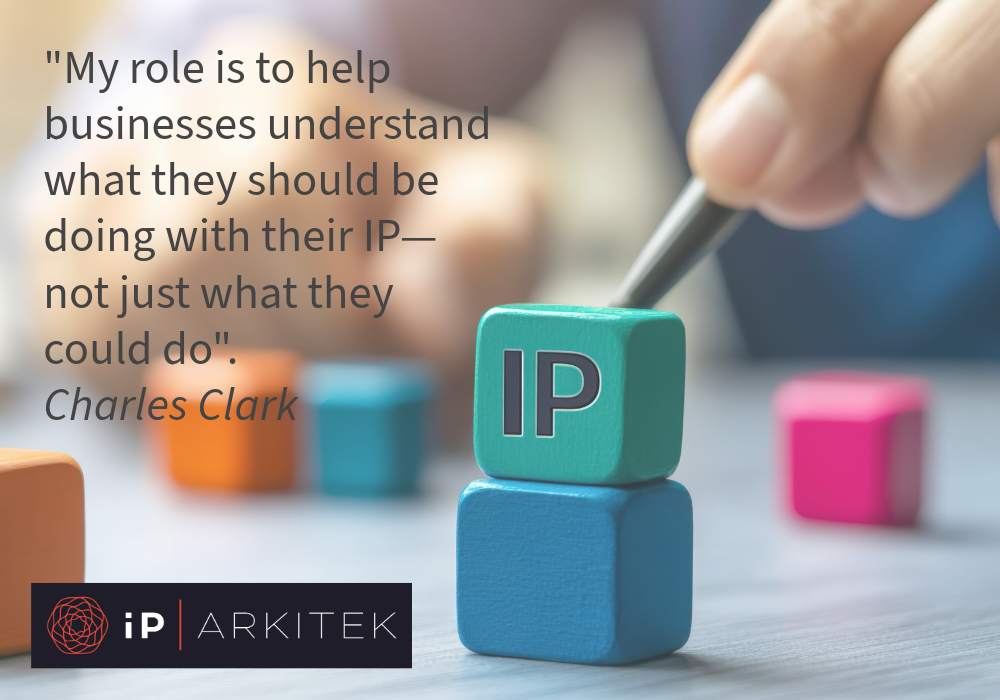
“My role is to help businesses understand what they should be doing with their IP—not just what they could do,” he adds. “It’s about making smart decisions that align with long-term business goals.”
Levelling the Playing Field: Helping SMEs Navigate IP Challenges
One of Charles’ key missions is to level the IP playing field for smaller businesses, enabling them to compete with large corporations that traditionally dominate the space.
“Know what you’ve got and stick to your guns,” he advises. “Really understand the value of your innovation and how it fits into the bigger picture. If you don’t, bigger players will take advantage.”
One of the most striking examples of this came when Charles helped an SME navigate a complex IP issue with a UK regulatory body. The company was poised to participate in a government-funded project but faced a major roadblock: the existing contractual framework meant that any IP generated during the project would belong to the large corporate partners—not the SME.
“If they had gone ahead under those terms, they would have lost the ability to raise future funding,” Charles explains. “We had to educate regulators and corporate partners about why SMEs need to retain ownership of their innovations. It took time, but in the end, we reached an agreement that protected the SME’s IP while still delivering value to the project.”
The Future of IP: Moving Beyond Patents and Trademarks
As technology advances, Charles believes that businesses need to rethink how they approach IP.
“Too many business leaders see IP as just patents and trademarks, but that’s a limited view,” he says. “We need to distinguish between IP—which includes everything from innovative business models to customer relationships—and IPR (intellectual property rights), which are the legal tools used to protect that value.”
One area where this distinction is becoming critical is artificial intelligence. As AI-driven innovations continue to reshape industries, businesses need to understand how to protect and leverage their proprietary algorithms, data, and methodologies.
“This will be debated long after I retire,” Charles notes. “But companies that take a strategic view—understanding the difference between their valuable IP and the IPR mechanisms available—will be in the best position to succeed.”
Advice for Innovators: Building a Strong IP Strategy
For start-ups and high-growth businesses, Charles offers three key pieces of advice:
1 Start with the business case.
“Focus on what makes your business unique—your USP—and then identify the IP that underpins it. From there, you can determine the best IP protection strategy.”
2 Foster an IP-aware culture.
“Make sure your team understands the value of their ideas. An engaged team that sees the importance of IP will be more proactive in protecting and developing it.”
3 Plan for the long term.
“Budgeting for IP is critical. Many start-ups see patents as ‘too expensive’—but they’re only expensive if you don’t plan for them. A well-structured IP budget over three to five years can prevent costly surprises down the line.”
An IP Strategist with a Mission
Reflecting on his career, Charles is most proud of the path he has forged and the impact he has had on businesses navigating the complex world of IP.
“I see myself as an ‘attorney in recovery,'” he jokes. “My background in the profession gave me a solid foundation, but stepping away from traditional practice has allowed me to make a bigger impact.”
With IP Arkitek, Charles continues to challenge outdated approaches to IP strategy, ensuring that innovative businesses—no matter their size—have the tools, knowledge, and confidence to protect their ideas and thrive in competitive markets.
Meet the IP Professional is a PatWorld interview series exploring the people and perspectives shaping the intellectual property profession. Discover more interviews in the Meet the IP Professional hub, and find out more about PatWorld, a global IP search provider working with IP professionals worldwide to support informed patent, design and trade mark decisions, on our About Us page.
PatWorld to Attend Key Conferences in Dubai! We are thrilled to announce that Tim Parry, Director at PatWorld, will be visiting Dubai as part of a Welsh Government Export Market Visit. During his visit, Tim will be attending two prestigious events: the Arab Health Conference and the IIPLA Conference. Meet Tim Parry in Dubai Tim […]
Tim will be available for meetings from 27th to 30th January 2025. This is a fantastic opportunity to connect with him and discuss how PatWorld can support your intellectual property needs. To schedule a meeting, please email Tim at [email protected].
About PatWorld
At PatWorld, we provide expert-led intellectual property search services to help businesses, innovators and IP professionals make informed decisions. Our key services include:
IP Search Services: We provide professional patent, design and trademark searches, tailored to your specific requirements and carried out by experienced analysts.
Introduction to Patent Searching Course: Our self-paced online course teaches the methodology behind effective patent searching, helping learners develop practical and transferable search skills.
Why Connect with PatWorld?
Networking with Tim Parry at these conferences is an excellent way to explore how our services can benefit your business. Whether you are looking to protect a new invention, stay ahead of competitors, or learn more about patent searching, PatWorld is here to assist you.
Don’t miss this opportunity to engage with an expert in the field of intellectual property. We look forward to connecting with you in Dubai!
For more information about the Arab Health Conference, visit Arab Health. To learn more about the IIPLA Conference, visit IIPLA.
Feel free to reach out to Tim Parry at [email protected] to schedule a meeting or for any inquiries.
Let’s make the most of this opportunity to network and collaborate! Email [email protected] or connect on LinkedIn.
Stay tuned for more updates from PatWorld. Safe travels, Tim! 🌍✈️
PatWorld Global IP Research Services
Patent, Design, and Trademark Research Experts with a combined experience of over 200 years in Intellectual Property searching. Highly trained, dynamic in-house research teams specialising in a wide range of subject matter. All our analysts follow a training program developed by former IPO Examiners. Our teams are available to discuss any specific technical points regarding your search enquiries.



















 Order a Search Now